Europe is storing huge reserves of the rare metals of the future
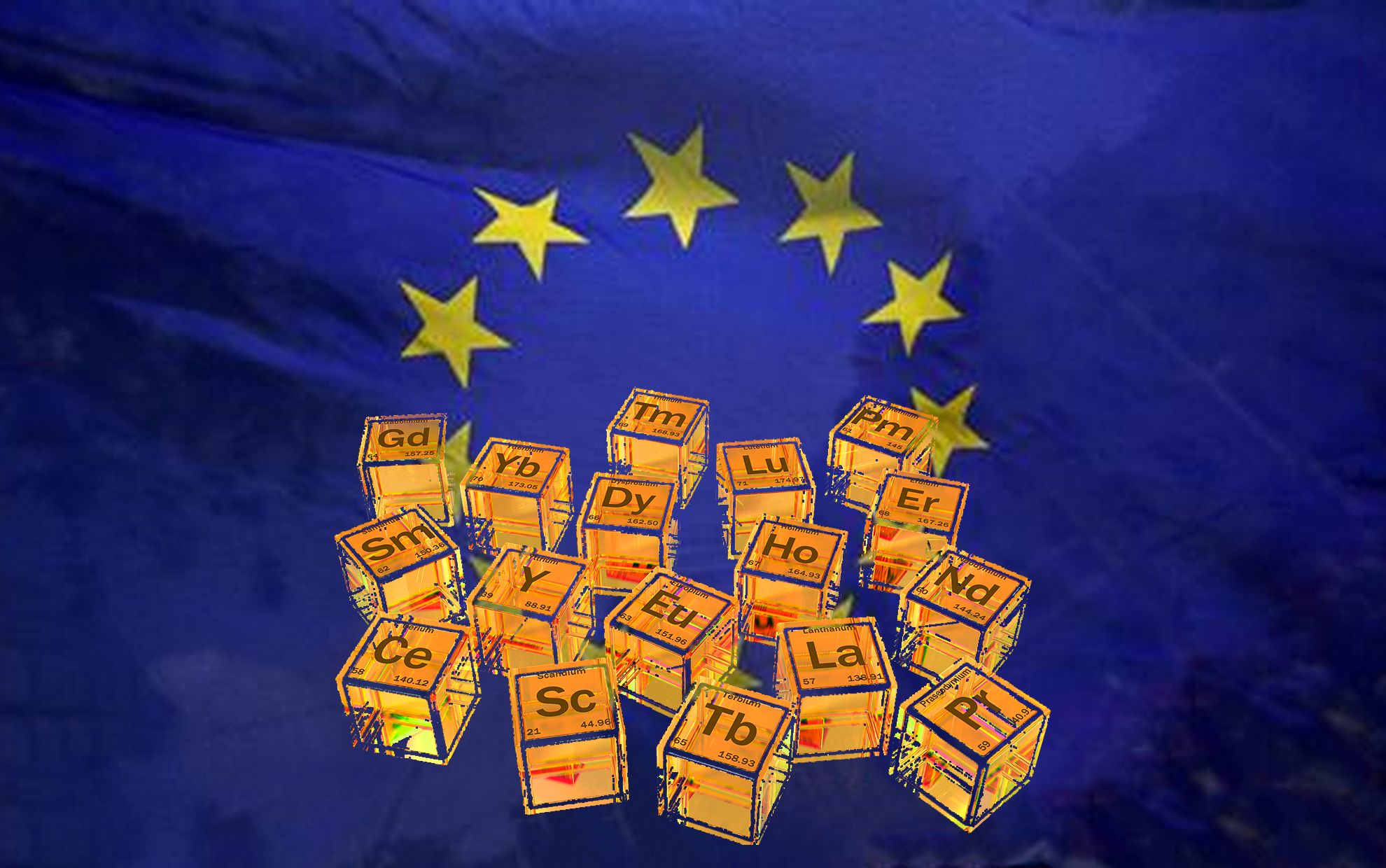
Last Thursday, the European Union revealed its intention to build “strategic reserves” to avoid disruption to the supply of raw materials vital to its industry, especially rare metals and lithium whose supply in the world is controlled by China.
Speaking in this regard, European Commission President Ursula von der Leyen told the European Parliament that “processing of about 90% of rare metals and 60% of lithium takes place in China… We’ll identify strategic projects along the supply chain from mining to Refining, from processing to recycling, and we will build strategic reserves where supplies appear to be threatened”.
The economic competition for rare metals is not limited to the US and China, but extends to include important international powers such as Europe.
Modern technology, with its advanced products, has added a special importance to some of the mineral wealth hidden in the ground, known as rare earth minerals, as it relied entirely on them.
It has become impossible to have one of these technological products without the use of such minerals.
They’re used in everything from rockets to wind turbines, medical devices, electrical appliances, mobile phones, to hybrid and electric car engines.
It may be possible to obtain such rare minerals in various parts of the world, but it is very difficult for countries to have reserves in high quantities, or to have the ability to extract these minerals, develop them and expand their uses, which made competition for control and ownership almost limited.
Among the most powerful economic forces; China, the United States and Europe.
If the balance is more likely for China, as it is the dominant force in the market for these minerals and controls the supply chains; it is the largest producer and largest exporter and has the largest reserve of rare metals.
Its production volume in 2020 is estimated at 140 thousand tons, representing 58% of the estimated global production of 240 thousand tons, in addition to owning a reserve of 44 million tons of the total global reserves estimated at 120 million tons, according to estimates in 2020.
This prompted the US to intensify its efforts to end Chinese domination of the market for these minerals, by taking great strides to advance the supply chain of rare earth minerals, and to develop alternatives to mining these elements, as the American production of these minerals amounts to about 38,000 metric tons, which constitutes 16% of its production.
The concept of rare earth minerals was not familiar to non-specialists in the fields of biology, chemistry, geology and engineering, but with the advent of modern technology, these minerals have gained great momentum due to their unique properties and important uses, as the US Geological Survey indicates that they are relatively abundant in the earth’s crust, except that due to the nature of the difference between this type of minerals and other minerals due to their being more difficult to mine, hence the name rare, because the probability of their presence in concentrations high enough for economic use, is small, and the processes of extraction, processing and refining are very difficult.
The list of these rare metals includes 17 elements divided into light and heavy subgroups based on their atomic weights: Lanthanum, Cerium, Praseodymium, Neodymium, Promethium, Samarium, Europium, Gadolinium, Terbium, Dysprosium, Holmium, Erbium, Thulium, Ytterbium, and Lutet-Scandium, and Yttrium.
This type of metal gains its importance from its entry into many industries for technological goods, and even the simplest of these products contain rare earth elements, and the use of these minerals is evident in modern cars, and it is one of the largest consumers of rare metal products, as it is used in dozens of electric motors, In addition, modern media and communication devices – mobile phones, televisions, computers – all use rare metals.
In light of the economic competition over the dominance of the rare earth metals market, the crisis in Myanmar emerges as a model of conflict, especially in light of Myanmar’s distinguished position in the market for the manufacture of these rare earths, as it contains half of the world’s rare earth ores, and its mineral wealth is exported heavy rarities to China; To extract and process it, and then export it to the world, due to the geographical proximity to China on the one hand, and the ideological rapprochement between them, as well as the large area of integration between China and Myanmar, which prompted China to seek to distance American influence from Myanmar, which is a major source of China’s imports of these metals.