More than 100 dead as a result of the confrontations between Armenia and Azerbaijan
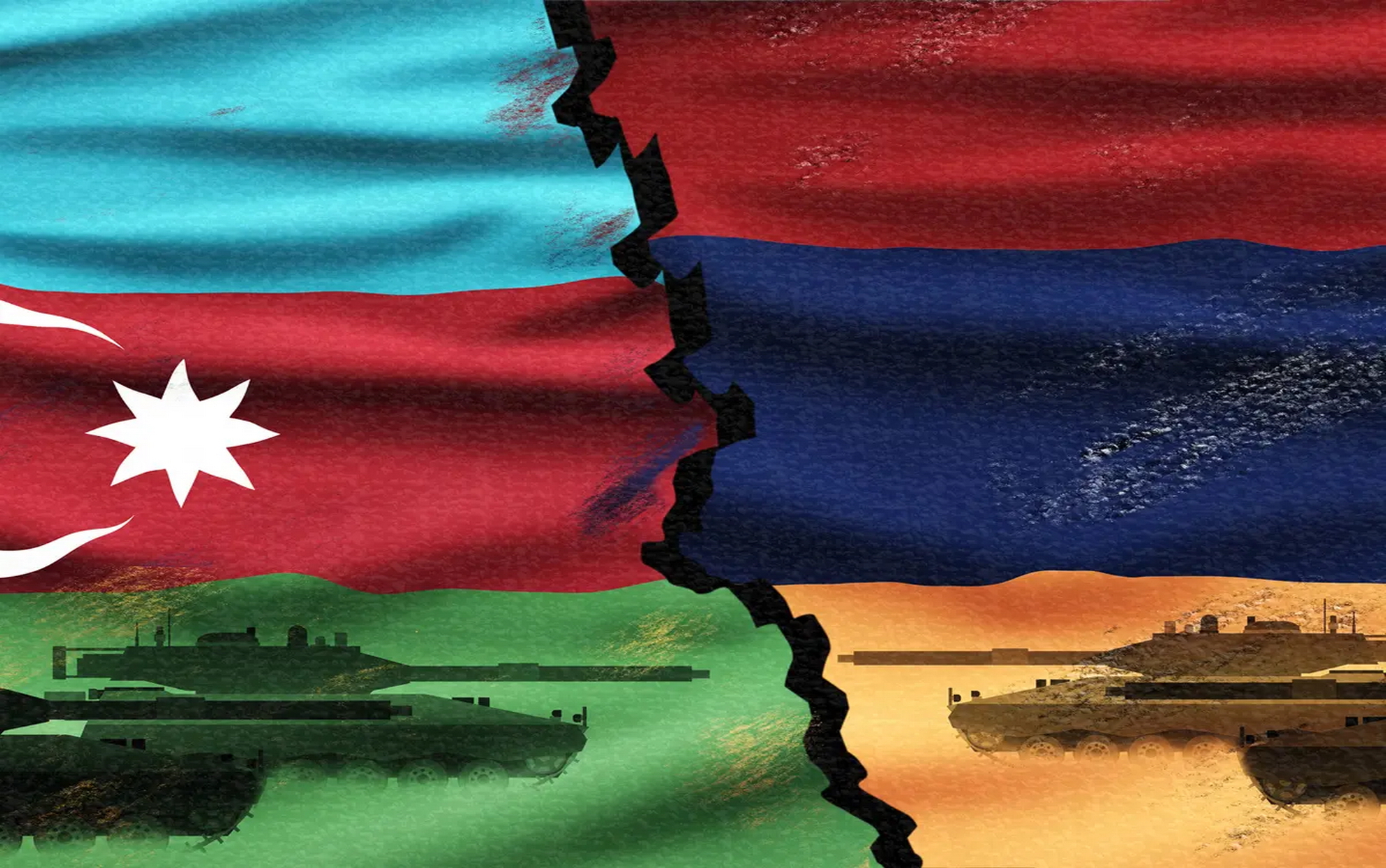
At least 100 Armenian and Azerbaijani soldiers were killed on Tuesday in the fiercest battles since the war between the two countries in 2020, and the international community called for restraint and a peaceful settlement of the conflict.
In the evening, the Azerbaijani Defense Ministry announced in a statement that “50 Azerbaijani soldiers were killed after a large-scale Armenian provocation” at the border between the two countries.
For his part, Armenian Prime Minister Nikol Pashinyan announced in the morning the killing of 49 Armenian soldiers during an intervention in front of the parliament in Yerevan, explaining that “unfortunately, it is not the final outcome”.
The two countries accuse each other of starting confrontations.
The outbreak of violence comes as Moscow, which deployed a peacekeeping force in the region after the 2020 war, continues its military offensive in Ukraine.
Russia announced a ceasefire that has been in effect since 06:00 GMT, while Azerbaijan accused Armenia in the afternoon of violating it extensively.
“Despite the ceasefire… units of the Armenian armed forces… opened artillery fire at the positions of the Azerbaijani army” at the Azerbaijani-Armenian border, the Azerbaijani Ministry of Defense said, noting that “measures were taken to respond to these fires”.
Azerbaijan confirmed that it had achieved all its goals on the border with Armenia.
In the afternoon, the Armenian Ministry of Defense announced that “despite the significant decline in the intensity of the bombing, the enemy is trying to continue its advance”.
There have been two wars between Armenia and Azerbaijan, the former Soviet republics of the Caucasus, during the past three decades for control of the Nagorno-Karabakh region, the last of which was in 2020.
The new battles that broke out at night show how tense the situation is.
Pashinyan called on the international community to act, during talks with many foreign leaders, including Russian President Vladimir Putin and French President Emmanuel Macron.
The European Union demanded a halt to the fighting and announced that the President of the European Council, Charles Michel, who is leading mediation between Yerevan and Baku, will hold talks with the warring parties.
US Secretary of State Antony Blinken called the leaders of Azerbaijan and Armenia to urge them to make peace. United Nations Secretary-General Antonio Guterres called on the two countries to “take immediate steps to defuse the crisis”.
French President Emmanuel Macron called on his Azerbaijani counterpart Ilham Aliyev to “return to respecting the ceasefire” and urged him during a phone call to “put an end to the fighting”.
Kremlin adviser Yuri Ushakov told reporters that Russia was “extremely concerned” and called for restraint.
The Security Council of the Collective Security Treaty Organization (CSTO), the military alliance led by Moscow, met Tuesday evening via closed-circuit video with the participation of Vladimir Putin at the request of Yerevan, according to the Kremlin.
The Kremlin stressed that Putin “personally intervened” and was making “every possible effort to help reduce tension”.
Although there have been regular clashes between the two countries along their shared border since the end of the 2020 war, Tuesday’s fighting is an unprecedented event.
“The escalation is the result of the stalemate in the peace talks,” said analyst Tatul Hakobyan, who believes that “the conflict in Ukraine has changed the balance of power in the region,” especially since Russia, which supports Armenia, is “in a difficult situation”.
He said Baku would like to take advantage of this situation “to obtain concessions from Armenia”.
But Farid Shaviev, head of the Center for Analysis of International Relations in Baku, believes that the “main obstacle to peace” is simply the “illegal presence of Armenian soldiers” in Azerbaijan, referring to Nagorno-Karabakh.
The historically complex relations between Yerevan and Baku are still strained by the dispute over Nagorno-Karabakh, an Armenian-majority region that seceded from Azerbaijan with the support of Armenia.
After a first war that left 30,000 dead in the early 1990s, Armenia and Azerbaijan clashed in the fall of 2020 over Nagorno-Karabakh.
The last war killed about 6,500 people and ended with a Russian-brokered truce.
Yerevan ceded significant territory to Azerbaijan, as part of the agreement with Baku that also included the deployment of peacekeepers in Nagorno-Karabakh.
This result was seen as an insult in Armenia, where a number of opposition parties have been demanding Pashinyan’s resignation since then, accusing him of making too many concessions to Baku.