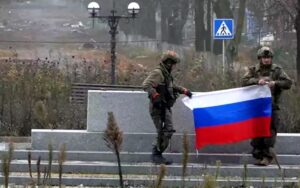
Yedioth Ahronoth: 50,000 soldiers didn’t able to sustain control a single village!
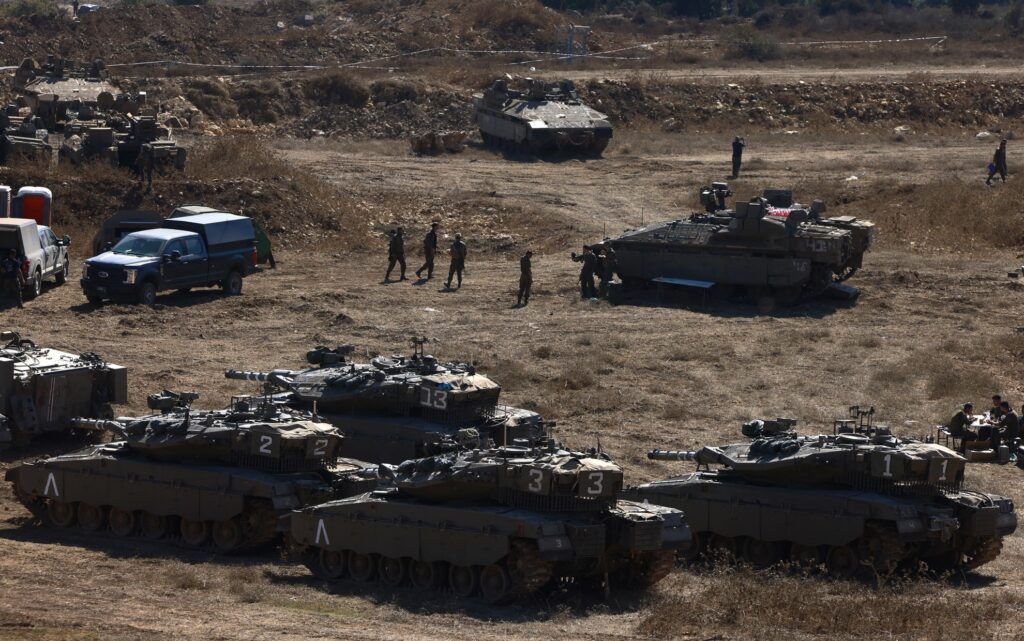
The discussion within Israel about the war in Lebanon began to take on a critical detour, based on many Israeli army officers prospective.
Although, many in Israel believe that they achieved great accomplishments by striking the leadership of Hezbollah and destroying its facilities on the border, and therefore the Israeli government must reach a political settlement.
The discussion about the settlement isn’t separate from the developments on the ground.
Meanwhile, concern is growing about Hezbollah’s recovery and its ability to achieve strikes that will erode the achievements and drown in the Lebanese quagmire.
According to Orna Mizrahi, of the Institute for National Security Studies, she called for a ceasefire agreement that includes the necessary changes to create an improved security reality along the border, while preserving Israel’s freedom of action if Resolution 1701 is found to be not being implemented.
She said that “the presence of an international force cannot be abandoned… In the past, proposals have been made to include Western forces from the United States, Germany, and Britain, but chances of that happening seems to be slim… Accordingly, Israel shouldn’t abandon UNIFIL forces as long as there is no agreement on other forces, and Resolution 1701 should be used as the basis for any agreement, given Lebanon’s commitment to it as the basis for UNIFIL operations”.
Mizrahi added, “At the same time, there must be an effective mechanism to enforce Resolution 1701, in part by strengthening UNIFIL’s capabilities”.
She believed that the deployment of the Lebanese army should be linked to the existence of a mechanism to supervise the personnel deployed in southern Lebanon to ensure that no Hezbollah presence are deployed and to closely monitor the equipment and weapons supplied to it”.
As for Yossi Yehoshua who wrote in Yedioth Ahronoth under the title “Either a settlement or a war of attrition and the security belt,” quoting a senior IDF army officer that the army is expanding the ground operation to an area that is important in terms of restoring security, and as time passes, difficult questions arise”.
The same officer was quoted as saying, “The end point won’t be affected by the occupation of another village, and as long as a sustainable agreement isn’t reached, the army will have to work harder, because the goal is to get Hezbollah, the Lebanese government and mediators, from the United States to Russia, to accept terms favorable to Israel”.
According to the senior officer, “The goal now is to finish on time in order to maximize the achievements… This increases the likelihood that the army will receive orders to continue the maneuver activity even beyond the original plan”.
He added, “It’s either a settlement or a war of attrition, and if we reach a war of attrition, we will have to establish a security zone, which will ensure that the residents return to their homes”.
However, the operational context seems different according to a report by Yedioth Ahronoth, which indicates that after a month of ground confrontation, five Israeli military divisions with a reserve brigade have failed to advance and position themselves in southern Lebanon.
“We’re talking about more than 50,000 soldiers, three times the soldiers who participated in the July 2006 war,” the reports say.
“Despite the firepower possessed by the Israeli army and its use of the air force, it has failed to sustain control even a single village in southern Lebanon”.
The report attributed the failure to the effectiveness of Hezbollah’s smart field tactics, which are based on tracking the course of the war on a number of defense lines that include fixed and mobile lines equipped with all kinds of shells that accurately target armored vehicles, tanks, and Israeli soldiers.
Hezbollah also uses the technique of concealment, as the Israeli army often doesn’t detect the sources of fire that surprise it, and its plans to advance have failed so far.
The Israeli air force is also useless with forces hidden in geographically difficult areas, so it resorts to striking infrastructure and civilians.
The report pointed out that the IDF’s failure to advance is due to the difficulty of drawing an accurate map of the positioning of Hezbollah forces, as it is surprised with every advance by a terrifying intensity of fire, and what increases the danger of the advance are the small drones that cannot be confronted.
In an interview conducted by the Israeli newspaper with Colonel Jack Neriah, a reserve officer in the Israeli army, an intelligence officer of Lebanese origin who has worked on Lebanon files since 1978 and was an advisor to Israeli Prime Minister Yitzhak Rabin, Neriah points out that Hezbollah fighters allow the Israeli army to advance in preparation for attacking and ambushing, and this is the worst-case scenario for Israeli forces, including elite forces such as Golani and the rest of the commando forces.
He added that the cost of any advance by the army, especially the human cost, will be high and perhaps more than the death toll of the Israeli army throughout the wars it has fought since the late 1940s until the Hamas attack, on October 7, 2023.
“Therefore, the Israeli army will enter a war dilemma if it advances and will face a terrible scenario,” he concluded.