Wall Street Journal: Where is Assad and his family’s wealth?
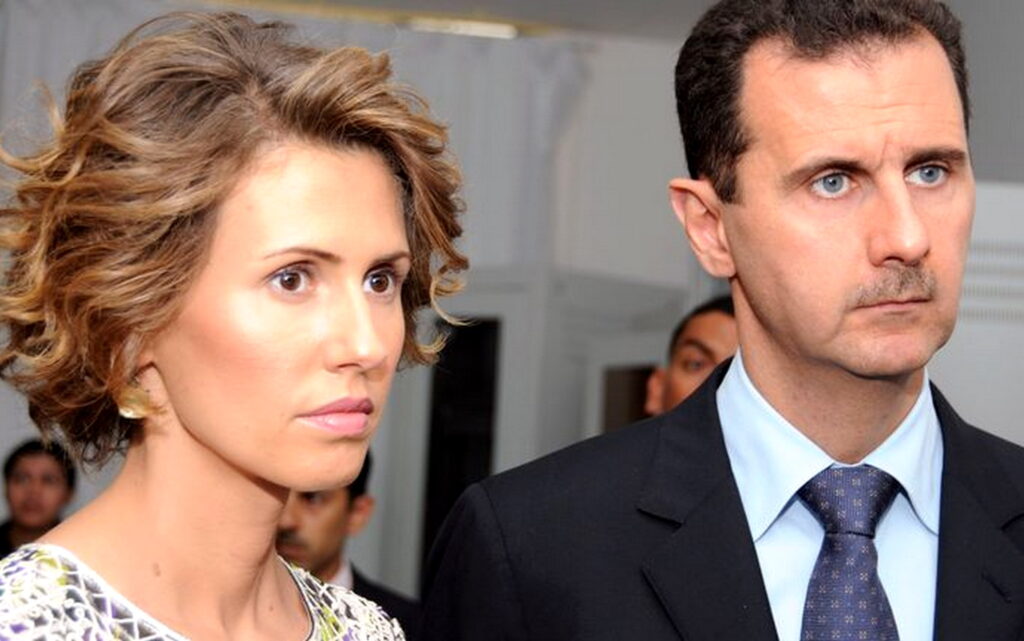
Since Syrian President Bashar al Assad fled to Russia on December 8, efforts have intensified to locate the Assad family’s vast fortune, according to a Wall Street Journal investigation published Sunday, December 15.
“There will be a global effort to find the wealth of the Assad family and members of the regime who had ample time to hide assets,” said Andrew Tabler, a specialist on sanctions against the Syrian regime at the Washington Institute.
The search for the Assad family’s fortune has been sparked, at least through media investigations.
The WSJ reported that Assad and his relatives hold £55 million ($67 million) in an HSBC bank account in London.
British politicians, including Conservative MP Iain Duncan, have called on the government to act so that this family’s illicitly acquired wealth is used for the reconstruction of Syria.
Bashar al Assad succeeded in circumventing international sanctions by transferring approximately $250 million to bank accounts in Russia between 2018 and 2019.
To evade international scrutiny, Assad transferred approximately two tons of $100 and $500 banknotes to Moscow during that period.
This is only the tip of the iceberg of Assad’s wealth that he has smuggled out of Syria.
Accurately identifying the former dictator’s assets is a nearly impossible task.
“First, we must differentiate between what Assad owned when he ruled Syria and the combined wealth of the Assad family,” says Scott Lucas, a Middle East and North Africa specialist at the University of Birmingham in the UK.
Indeed, some estimates place the Assad family’s fortune at a massive $12 to $16 billion.
However, “these estimates don’t take into account all assets, such as the tons of gold bullion that Assad was unable to transport out of the country when he fled,” says Scott Lucas.
This is the figure the US government assigned to the Assad revolution in 2022, although Washington itself acknowledges that these figures may not be accurate.
The Assad family has succeeded in filling its coffers, particularly through controlling entire economic sectors such as telecommunications, contracting, banking, and trade since Bashar’s father, Hafez al Assad seized power in 1970,” according to Lynn and Bliss, a British lawyer at Latimer Partners, which was the first legal firm to attempt to estimate the Assads’ wealth in 2012.
Sanctions that have weighed heavily on Syria haven’t necessarily affected the upper echelons of power, rather, they have contributed to the enrichment of officials because all commercial transactions affected by the sanctions now necessarily pass through channels controlled by the ruling family.
The same thing was noted by US authorities, who uncovered the money hoarded by Asma al Assad, Bashar’s wife.
She was accused of diverting millions of dollars allocated for humanitarian aid, pumped in by international organizations over the years, to charitable works in Syria, a portion of which Asma al Assad controls.
Bashar al Assad also exploited the fruits of the drug trade, primarily Captagon pills, which were overseen by his brother Maher al Assad.
The former Syrian regime earned billions of dollars from the Captagon trade, turning it into a “narco-state”.
For US authorities, these are just a few examples of how Assad and his entourage have enriched themselves, increasing their wealth at the expense of an economy devastated by the outbreak of civil war in 2011.
In Russia, the Assad family owns 18 luxury apartments in some of the largest skyscrapers in Europe, but that’s only the tip of the iceberg.
Bashar al Assad is suspected of holding several bank accounts in the country where he has sought refuge.
Bashar al Assad also didn’t put all his “wealthy eggs” in one basket.
He distributed his assets across several destinations, starting with Russia, which is facing international sanctions, as he owns assets in Dubai and other Gulf states, as well as countries in Europe and Asia.
Assad is also suspected of holding bank accounts in Hong Kong, and his uncle, Rifa’at al Assad owns a building in the heart of London worth more than 31 million Euros.
According to Scott Lucas, “The task of inventorying the Assad family’s assets will be extremely complex, in addition to the difficulty of opening legal cases, organizing international coordination, and then finding the best way for the Syrian people to benefit from them… It’s not impossible, but it will take a long time, and Syria urgently needs the money”.
The French example confirms, in any case, that the Assad family’s assets aren’t safe.
Rifa’at al Assad was ordered to return €90 million in illicit assets, a precedent that will serve as a first test of how these assets will be returned to Syria.
This is a difficult and lengthy task for NGOs, including “Sherpa” which in 2021 contributed to the passage of a law facilitating the recovery of illicit funds.
However, this process is extremely lengthy and may take several years.
“Will Bashar al Assad enjoy a peaceful life in Moscow? It’s not that easy,” says Scott Lucas, who concludes, “it depends on Vladimir Putin’s position: Will he allow Bashar access to his lawyers and his accounts? The Assad family will receive decent housing and food, but they won’t get everything they want”.