Wall Street Journal: Washington seeks to prevent Moscow from arming the Houthis
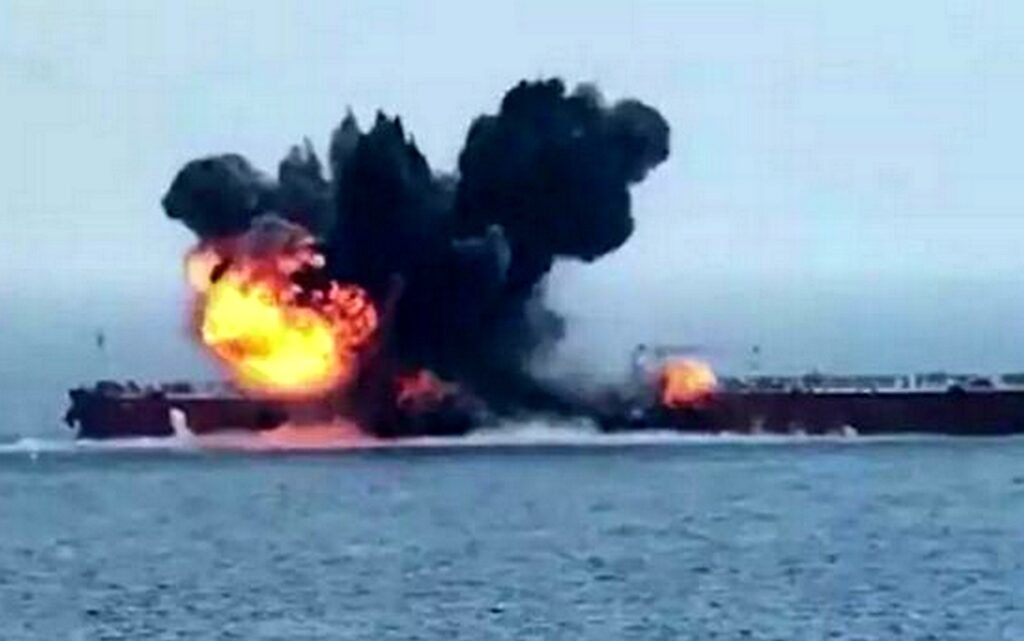
The Wall Street Journal said that US intelligence agencies warn of the possibility of arming Russia of the Houthis in Yemen with advanced anti-ship missiles, in response to the support of the administration of US President Joe Biden for Ukrainian strikes inside the Russia with US weapons.
The new information comes as Gen. Michael Eric Corella, commander of US Central Command in the Middle East, advised in a confidential letter to Defense Secretary Lloyd Austin that military operations in the region fail to deter Houthi attacks on ships in the Red Sea and that a broader approach is needed.
The White House has launched a covert campaign to try to prevent Moscow from delivering missiles to the Houthis who are attacking ships in the Red Sea in solidarity with Palestinians in Gaza, in a new spotlight on the Houthi threat after a drone hit – which the Israeli military said took off from Yemen-Tel Aviv on Friday.
The US administration’s diplomatic efforts to prevent Moscow from transferring missiles to Yemen include using a third country to try to persuade Russian President Vladimir Putin not to join the Iran in providing weapons to the Houthis, according to US officials who declined to identify that country.
Intelligence that Moscow may be planning to provide military support to Yemen, and warnings from the commander of US Central Command, have raised the question of whether the White House is doing enough to stop attacks in the waterways.
Some US officials say more could have been done to better protect commercial shipping, including striking larger weapons storage facilities, targeting Houthi leaders and selecting targets with a higher number of potential victims.
Moscow has raised deep concern among US officials by cementing ties with Northern Korea and Iran and securing China’s assistance in boosting Russia’s defense industry, and its decision to arm the Houthis would mark an escalation in its confrontation with Washington, which was about conflict in Ukraine alone.
But some analysts say the Russians may be threatening to send anti-ship missiles to Yemen to dissuade the administration from allowing Ukrainian forces to use the US-supplied tactical missile system against airports on Russian soil.
In his letter, Corella called for intensifying the entire government efforts against the Houthis to discourage attacks on ships in the Red Sea and the Bab al Mandab Strait, and an official defending the current policy said the United States and its partners had destroyed a significant amount of Houthi capabilities, including hundreds of missiles, launchers, hundreds of attack drones and dozens of weapons and equipment storage facilities.
But some Central Command officials say their forces haven’t been able to prevent the Houthis from threatening commercial shipping, because they haven’t been approved to carry out a wide range of strikes, so Houthi attacks have continued to disrupt shipping and keep the United States and its allies constrained.
The Houthis have a diverse arsenal of weapons to attack ships, such as attack drones, ballistic missiles, cruise missiles and unmanned boats, but the possibility of obtaining advanced Russian missiles poses a new danger, and will represent a qualitative leap that adds more power to the current maritime threat.
London-based Middle East Eye reported that Russia had previously considered providing anti-ship cruise missiles to the Houthis, and since then US officials have seen persistent indications that Russian President Vladimir Putin may provide the missiles.
Last month, Putin explicitly warned that Moscow could provide weapons to US adversaries because of White House policy in Ukraine, telling reporters at an international economic forum in St. Petersburg, Russia, “The response may be asymmetrical, and we’ll think about that”.
US officials say the Houthis and their Iranian backers use commercial ship tracking sites to identify and then target commercial vessels, and have called on companies providing these data services to take steps to prevent the Houthis from accessing shipping information, as warned foreign governments where the companies are located.