US Vice President: A significant progress in negotiations between the US and Iran to extend the ceasefire agreement

US Vice President J D Vance said Thursday that the United States and Iran had made significant progress toward an agreement to extend the ceasefire, but that Donald Trump wasn’t yet ready to approve it.
“We’re exchanging views on some language points… We’ve made significant progress,” Vance told reporters hours after US sources announced that Washington and Tehran had reached a framework agreement.
He added, “We hope to continue making progress and that the president will be in a position to approve the agreement, but that is clearly still uncertain”.
On Thursday, the US and Iranian negotiators have reached a framework agreement to extend the ceasefire for 60 days in the Middle East war, noting that they are still awaiting President Donald Trump’s approval.
However, a source within the Iranian negotiating team denied this information to the Tasnim news agency, as he stated, “This is incorrect; the text hasn’t yet been finalized”.
These reports came after both sides exchanged accusations on Thursday of violating the ceasefire in the war that erupted in the region following a US-Israeli attack on the Islamic Republic on February 28.
In Washington, sources confirmed that the United States and Iran had reached an agreement on a memorandum of understanding to extend the truce and begin negotiations on the Iranian nuclear program.
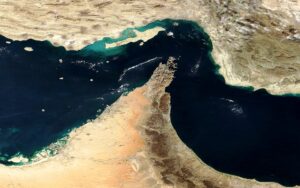
The memorandum of understanding, transit through the Strait of Hormuz would be unrestricted and without fees or harassment, explaining that Iran is obligated to remove all mines from the waterway within 30 days.
In return, Washington will lift its blockade on Iranian ports, but only in proportion to the volume of commercial shipping that will resume through the strait, and Tehran will be allowed to sell oil under a suspension of US sanctions.
The memorandum of understanding, stipulates an Iranian commitment not to pursue nuclear weapons.
Among the first issues to be discussed during the 60-day period is how to dispose of Iran’s stockpile of enriched uranium, as Tehran denies seeking to acquire a nuclear bomb.
In the negotiations sponsored by Pakistan, Washington is demanding the reopening of the Strait of Hormuz, which Iran has effectively closed since the start of the war, causing fuel prices to rise due to supply shortages.
Oil prices rose on Thursday after news of the tit-for-tat strikes, following a decline the previous day amid rising hopes for a deal.
For its part, Iran, in addition to seeking a ceasefire and an end to the US blockade of its ports, is also seeking the release of $24 billion in frozen assets.
The ISNA news agency reported that it would receive half of this amount upon signing a preliminary memorandum of understanding.
Reaching an understanding is becoming increasingly important given the exchange of fire on Wednesday night into Thursday, which is the most serious since the ceasefire was declared on April 8.
US forces said they intercepted five attack drones in and around the Strait of Hormuz, and prevented the launch of a sixth from the Bandar Abbas area, while, Tehran responded by targeting a US base.
In response, the Iranian Revolutionary Guard announced in a statement on Thursday that following the aggression launched by the invading US army this morning on a site in the vicinity of Bandar Abbas Airport… the US airbase that was the source of the attack was targeted”.
The Revolutionary Guard didn’t specify the base, but Kuwait announced it had repelled missile and hostile drone attacks, expressing its condemnation of the attacks, which it described as a dangerous escalation.
The US military considered Iran’s launching of missiles and drones at Kuwait to be a flagrant violation of the ceasefire.
Iranian forces also fired warning shots at four ships that attempted to cross the Strait of Hormuz, according to the official Iranian Broadcasting Corporation, without providing details about the type of ships or their identities.
Iranian Foreign Ministry spokesman Ismail Baghaei confirmed that Tehran “will take all necessary measures to defend its national sovereignty,” also condemning the continued US violations of the ceasefire.
On the other side, a US official stressed that the military actions were deliberate, purely defensive and aimed at maintaining the ceasefire, while the Iranian Revolutionary Guard threatened a decisive response if the attacks were renewed.
On Thursday, US Treasury Secretary Scott Bessent threatened to impose sanctions on Oman if it helped enforce Iran’s transit fee regime in the Strait of Hormuz, after Trump warned it on Wednesday in response to a question about a possible short-term arrangement that would allow it and Iran to manage the strait.
Oman mediated US-Iranian talks in Geneva before the war, and was also subjected to Iranian attacks during the conflict.
He described my continued presence as a threat directed at the Sultanate of Oman as a worrying sign of the normalization of chaos and intimidation in international relations.
On another front, shelling and fighting continue in Lebanon despite the ceasefire declared on April 17.
An Israeli airstrike targeted an apartment in the Choueifat area south of Beirut, as an Israeli army spokesman announced a precise attack in the Beirut area.
This is the second time Israel has targeted southern Beirut since the ceasefire was announced.
The Israeli army announced earlier on Thursday that it had struck “Hezbollah infrastructure in the Tyre area” in southern Lebanon, after ordering residents of specific buildings to evacuate and move to the north of the Zahrani River.
Lebanon’s official National News Agency reported two waves of Israeli airstrikes on the city and an area to its east, with one strike targeting a building and causing a fire.
The Lebanese Ministry of Health announced that at least 23 people, including three children, were killed as a result of Israeli raids on southern Lebanon.
On Wednesday, the Israeli army designated large areas of Lebanon south of the Zahrani River, about 40 km from the border, as a “combat zone,” warning residents to evacuate for the first time since the ceasefire, coinciding with heavy shelling of southern and eastern Lebanon.
On Thursday, it announced that a female soldier in its ranks was killed on Wednesday in a drone attack launched by Hezbollah near the border with Lebanon, bringing its death toll since the beginning of March to 24 soldiers.