Trump’s announcement on lifting sanction on Syria surprised and confused his cabinet
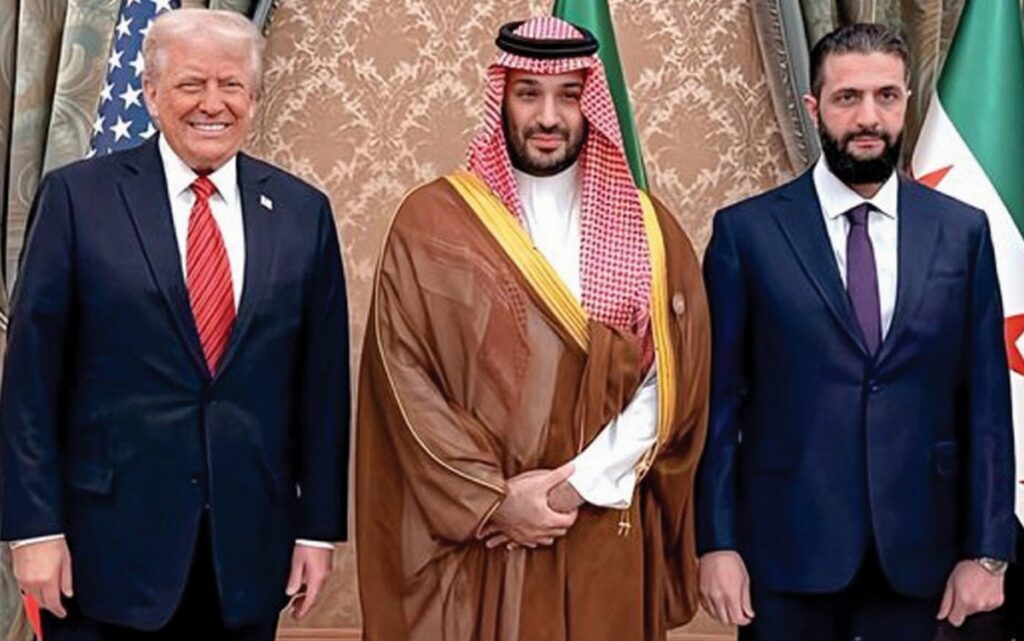
When President Donald Trump announced in Saudi Arabia on Tuesday that he would lift all sanctions on Syria, the decision, which would bolster a country devastated by 13 years of war, surprised many in the region, and it also surprised some members of his administration.
In Washington, senior officials at the State and Treasury Departments scrambled to understand how to lift the sanctions, many of which have been in place for decades, according to four US officials familiar with the matter.
A senior US official told Reuters that the White House didn’t issue a memo or directive to sanctions officials at the State Department or Treasury Department to prepare for the disengagement process and didn’t alert them to the president’s imminent announcement.
The sudden lifting of sanctions appears to have been a classic Trump move—a sudden decision, a dramatic announcement, and a shock not only to allies but also to some of the officials themselves implementing the policy change.
After the announcement, officials were confused about how the administration would ease the layers of sanctions, which ones would be eased, and when the White House wanted to begin the process.
The senior official said that by the time Trump met with interim Syrian transitional President Ahmed al Sharaa in Saudi Arabia on Wednesday, officials at the State and Treasury departments were still unsure how to proceed.
“Everyone is trying to figure out how to implement it,” a US official said, referring to the president’s announcement.
Following the ouster of former President Bashar al Assad last December, officials from the State and Treasury Departments drafted memoranda and options to help guide the administration on lifting sanctions on Syria if the administration chose to do so.
But senior White House and national security officials, as well as some lawmakers in Congress, have been discussing for months the possibility of easing the sanctions, given al Sharaa’s past ties to al Qaeda, as he severed ties with the group in 2016.
A senior US official said that before Trump’s visit to Saudi Arabia, there was no clear indication—at least to officials within the State and Treasury departments working on sanctions—that the president had made a decision.
A White House official told Reuters that Türkiye and Saudi Arabia had asked Trump to lift sanctions and meet with Sharaa.
In his announcement, Trump said he did so to give Syria a chance for a better future.
Trump’s decision may not have been entirely surprising, as Jonathan Schanzer, a former senior US Treasury official and current executive director of the Foundation for Defense of Democracies, who met with Syrian officials during his visit, said that senior Syrian officials were in Washington last month and exerted intense pressure to lift all sanctions, however, it doesn’t appear that easing sanctions on Syria is imminent.
A White House statement about Trump’s meeting with the Syrian leader said the president demanded that Syria adhere to several conditions in exchange for sanctions relief, including requiring all foreign terrorists to leave Syria, deporting “Palestinian terrorists,” and assisting the United States in preventing the resurgence of ISIS.
Lifting sanctions is rarely straightforward and often requires close coordination among multiple agencies and Congress.
But this poses a particular challenge in the case of Syria, given the multiple layers of measures that isolate it from the international banking system and prevent many international imports.
The United States first designated Syria a state sponsor of terrorism in 1979 and has since added additional sets of sanctions, including several rounds following the country’s 2011 uprising against Assad.
Edward Fishman, a former US official and author of “Choke Points,” said that lifting the sanctions on Syria, which were imposed through a combination of executive orders and laws, could take months.
However, he noted that the US Treasury Department has previous experience easing sanctions on Iran under the 2015 nuclear deal.
Complicating the task are sanctions imposed under the Caesar Syria Civilian Protection Act, also known as the Caesar Act, which was passed in 2019 and extended late last year immediately after the fall of the Syrian government.
The law imposed strict sanctions not only on the Assad government but also imposed secondary sanctions on companies or foreign governments that dealt with it.
Repealing the bill requires congressional action, but it includes a provision allowing the president to suspend sanctions on national security grounds.
Trump could also issue a general authorization to suspend some or all of the sanctions.
Fishman said he would be surprised if all sanctions were lifted as part of Trump’s order, adding that some specific individuals or entities in Syria sanctioned for specific behavior, such as supporting a terrorist group, may not be removed from the sanctions list.
Meanwhile, it was reported that US Treasury Secretary Scott Bessent announced that his department has begun taking practical steps to lift sanctions, with the aim of facilitating Syria’s return to political and economic stability.
Besant wrote on X that the department has begun sanctions relief procedures to facilitate Syria’s recovery process.