The United States is heading to raise interest rates on the US dollar
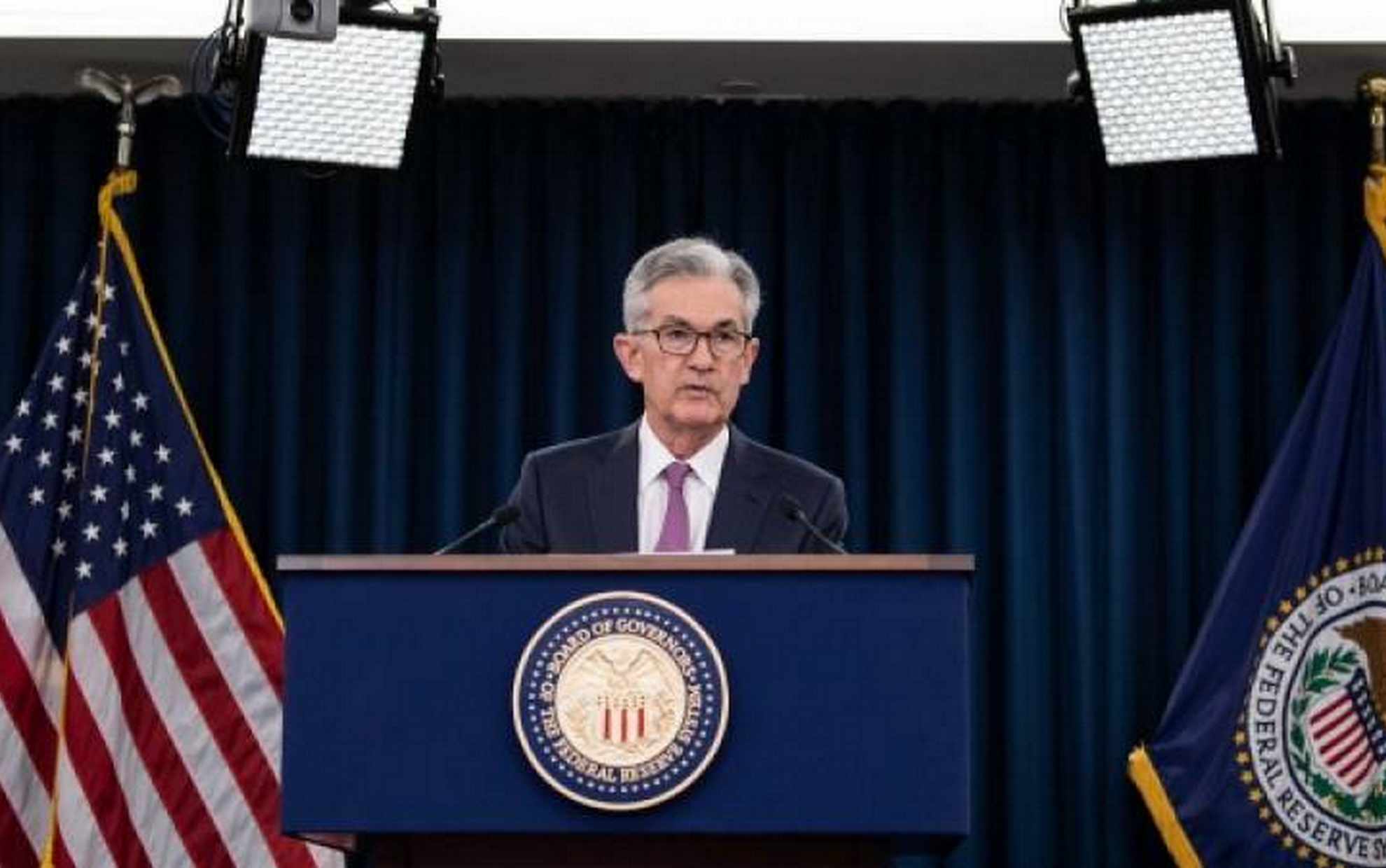
Last Tuesday evening, the US Central Bank revealed its readiness to end cheap financing and raise interest rates on the dollar in the first half of next year.
As a result, major investors began reviewing their investment accounts and re-evaluating their investment portfolios with major financial instruments next year.
The Federal Reserve Chairman Jerome Powell admitted, for the first time, that “inflation risks have risen a lot and are no longer a temporary thing as previously thought,” as he indicated in his testimony to the Senate Banking Committee, that the risks of the Omicron mutator may lead to disruption in supply chains, and thus increase the rate of inflation.
In the opposite direction, the new variable may interact to affect the increase in the unemployment rate and the decline in income levels in the United States in the event that the country resorts to economic closures, as happened last year.
Amid this confusion and these contradictory data, analysts believe that the growth of the US economy is very strong, and that inflation pressures are high, and therefore calls for tightening monetary policy.
Therefore, expectations indicate that the US interest rate will rise more quickly than their previous expectations, and automatically will be followed by an increase in interest rates in Europe, Asia and the Gulf states whose currencies are pegged to the dollar.
Analysts at Oxford Economics believe that the rise in the interest rate on the US dollar will have a direct and significant impact on stock markets and global exchange rates due to the size of the huge US economy, estimated at $23.17 trillion this year, as well as due to the size of the US stock market estimated at 48.57 trillion US dollar.
In this regard, the Director of Macroeconomic Strategies at Oxford Economics believes that raising the interest rate will have a significant impact on global economies due to the size of the US economy.
But it seems that the biggest headache for investors around the world, especially emerging markets, is the current high US dollar exchange rate, which is expected to rise further in the next year, as tightening monetary policy and raising interest rates will mean an increase in the US dollar and the assets denominated in it.
So far, most US banks, led by “JP Morgan” and “Citibank Group”, expect the dollar to rise at a significant rate during the next year.
Among the countries that will be affected by the rise of the US dollar, in addition to the oil-importing countries, are those that have short-term debts in US dollars, such as Egypt, Turkey, Pakistan and some poor African countries.
These countries will suffer from high debt service and may also suffer from a shortage of US dollar liquidity.
As for the Arab Gulf countries, analysts believe that they will benefit from the strong US dollar for two reasons.
The first is that it will sell oil and natural gas at a higher price for the US currency.
It is also noted that most of its imports come from China and South Asian countries and not from the United States.
Thus, it will pay the bill for imports in high dollars and buy in low-currency markets; Accordingly, it won’t be among the importing countries of high US inflation, or that will be affected by the high import bill.