The Times: Iran’s War and the Five end scenarios!
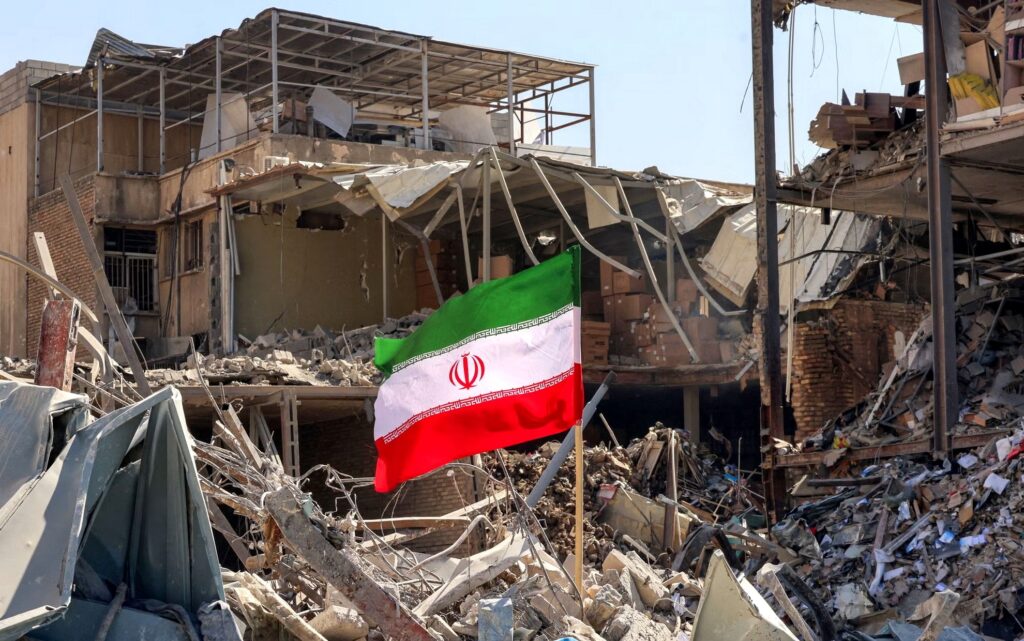
According to an analysis by the Times of London, writers Richard Spencer and Samer al Atrush, as the US-Israeli strikes inside Iran expand, the question in regional and international capitals is no longer when the war will stop, but what kind of Middle East will be born next?
The analysis proposes four possible scenarios for the end of the war on Iran, in light of an unprecedented US-Israeli escalation, and the media has talked about a fifth scenario.
Between threats to expand operations and contradictory statements about the ultimate goals, the end of the confrontation seems open to multiple tracks, in which the military and the political, and the regional and the international overlap.
According to the analysis, its current Middle East correspondent, start with US President Donald Trump’s remarks in which he hinted at the possibility of sending ground troops, saying, “I don’t rule out having troops on the ground”.
In an interview with CNN, Trump escalated his tone, by saying, “We haven’t started hitting them hard yet… The big wave is yet to come”.
What Trump hasn’t yet clarified is what this major wave will look like and what form the Iranian administration is expected to take after the war ends.
There is still uncertainty about the form of governance that Washington wants in Tehran after the end of the operations.
While the authors have limited the outcome of this war to four possible scenarios, there is another scenario that can be added to this.
First: The survival of the system
The airstrikes alone rarely bring down established regimes, and Trump and Israeli Prime Minister Benjamin Netanyahu may declare victory after destroying the nuclear program and military structure, with a reconfiguration of the leadership from within the regime.
Names are being floated to succeed the late Supreme Leader Ali Khamenei, including his son Mojtaba, Hassan Khomeini, or former President Hassan Rouhani if the regime wants to send a signal of openness to the West.
There are those who promote the possibility of intensified diplomatic intervention by Moscow and Beijing to impose a ceasefire settlement in exchange for broader regional security arrangements, with Russian President Vladimir Putin condemning the targeting of the Iranian leadership as a serious violation of regional stability.
Putin had offered himself as a potential mediator, contacting the leaders of the Gulf states (UAE, Bahrain, Saudi Arabia, Qatar) and asserting Moscow’s willingness to use its ties with Iran to help de-escalate regional situations and push the two sides of the conflict toward de-escalation.
This role shows the Kremlin’s attempt to present itself as an influential diplomatic actor, taking advantage of its ties with Tehran and its proximity to Washington, but at the same time not pushing for a direct confrontation with either side.
China, has also called from day one for a cessation of hostilities and political dialogue, and held all parties responsible for avoiding a wider conflict.
Second: modification of the system
The analysis compares it to the Venezuelan scenario following the overthrow of President Nicolás Maduro by US forces, where the power structure has continued with changes in the political facade.
Ali Larijani’s name stands out as a figure that can be dealt with, despite his hardline rhetoric, in which he said, “We’ll fiercely defend our civilization that spans 6,000 years at any cost”.
Third: Regime change
Dissidents in exile see the moment as ripe for the overthrow of the Islamic Republic and the establishment of a pro-Western democracy, and the name of Reza Pahlavi, the late Shah’s son, who has presented himself as a transitional leader, stands out.
But his father’s legacy remains controversial inside Iran, and Maryam Rajavi, the leader of the historic opposition, People’s Mujahedin of Iran “MEK” is posing as an alternative, despite its problematic history.
Fourth: Collapse and Chaos
Although Iran isn’t sectarianly divided, according to the analysis, the continued bombing could open the door to ethnic and regional unrest: a Baluchi insurgency in the east, a Kurdish movement in the north, and tensions in Arab and Azeri regions, which could lead to the collapse of the security apparatus and thus turn the scene into multilateral chaos.
Fifth: A wide regional war
The confrontation could expand to Lebanon, Iraq, or the Gulf, with the involvement of Tehran’s allies, and UN Secretary-General António Guterres has warned of the danger of the region sliding into an uncontrollable conflict.
“We’re witnessing a serious threat to international peace and security,” he said, warning that the ongoing military operations carry “the risk of a series of events that no one will be able to control in the world’s most volatile regions”.
This path means broader counterstrikes, a threat to navigation in the Strait of Hormuz, and a sharp rise in energy prices, putting the major powers to a direct test.
Based on the above, it can be said that the end of the war won’t be determined only by the size of the bombing or the number of leaders targeted, but also by the extent to which the parties are able to translate the military gains into a viable political formula, and between negotiated containment, regime recycling, radical change, or prolonged chaos, Iran is at a historical crossroads, and the entire region is holding its breath for the rhythm of its results.