The Russian Nord Stream 2 project provoke the United States and Ukraine
By: Syrializm – contribution
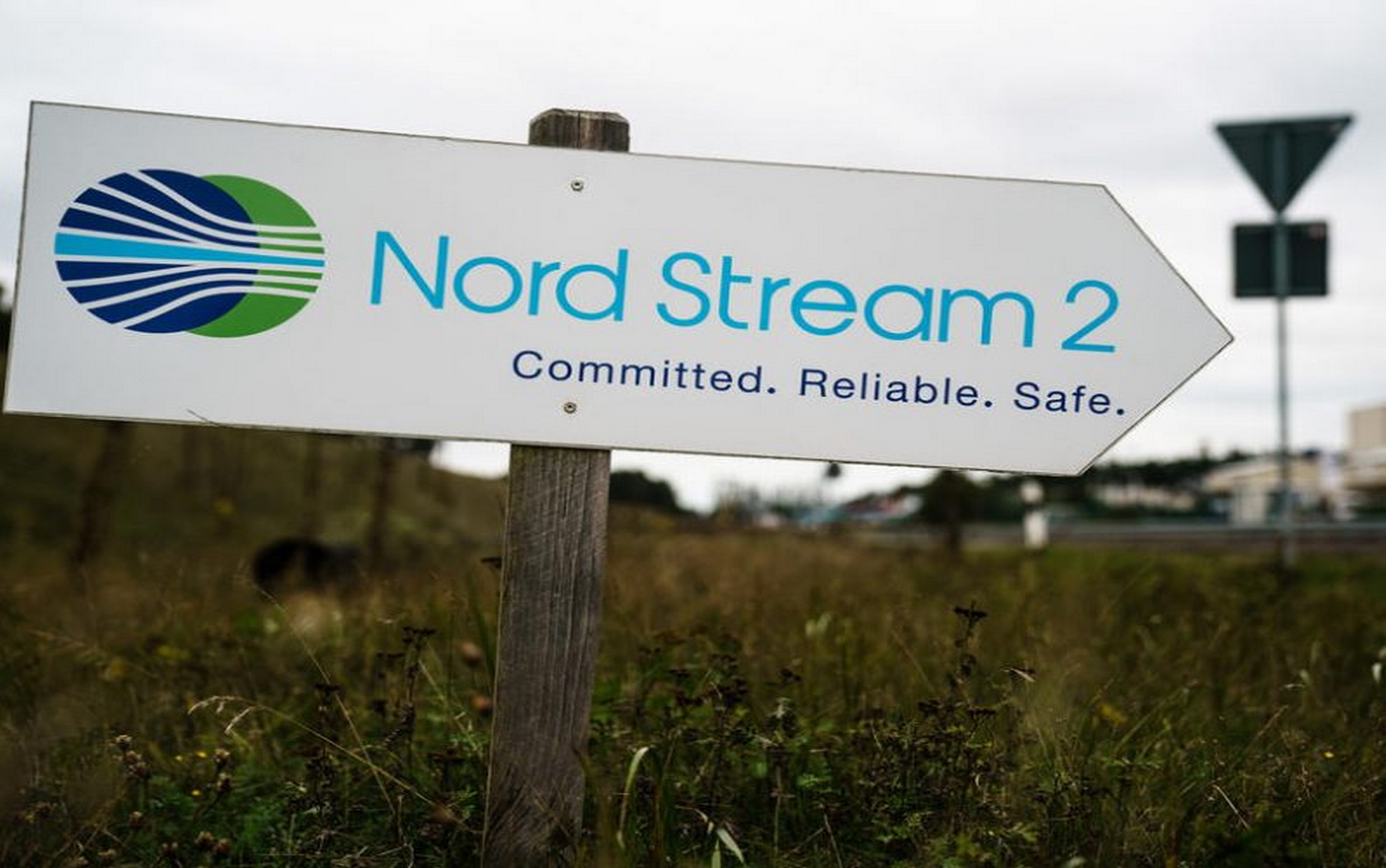
The Nord Stream 2 is a project to transport gas directly from Russia to Germany through the Baltic Sea with a double pipeline, the length of each branch of which exceeds 1200 km, thus making it the longest undersea pipeline in the world.
The Russian energy company, Gazprom, announced the project in 2017, and work began on it in 2018, with a budget set at the time of about $8 billion.
According to the Gazprom, the pipeline can transport an annual amount of gas of about 55 billion cubic meters, meaning that it is able to meet the entire European need for blue fuel.
Therefore, Ukraine and the United States are at the forefront of the opposition to this project, as they, along with the Ukrainian loss factor, see that it will establish Russia’s control over the energy market in Europe, and will be used later for geopolitical purposes.
Washington obstructed the project for several months by imposing sanctions on the companies implementing and participating in its construction, but it lifted them after the election of US President Joe Biden, arguing that the project “has become a fait accompli”.
According to observers, Biden sought to improve his country’s relations with Berlin after they had worsened under the rule of his predecessor, Trump, but he stipulated that German guarantees be provided to Kiev that Russia would not use the project to pressure Ukraine.
Although Ukraine was the second country in the former Soviet Union in terms of energy sources and the ability to produce them, and it inherited many plants and mines from it, energy today is a deep wound in its faltering economy, on which Russia puts salt whenever it wants to put pressure.
In order to realize the extent of this legacy, it is sufficient to know that Ukraine has 4 nuclear power plants (after the Chernobyl plant was decommissioned in 1986), a large number of thermal and electric power plants, hydroelectric power plants on the Dnieper and Dniester rivers, and many coal mines that were Provides raw materials for thermal and electrical power generation.
In addition, Ukraine inherited from the Soviet Union the second largest gas transmission and distribution network in Europe, after Russia, which includes about 37.1 thousand km of main pipelines, with 72 pressure stations, and 13 underground storage facilities with a capacity of about 32 billion cubic meters, equivalent to about 21.3% of the annual need for gas across the European continent.
However, in addition to its political crises, Ukraine’s economy is groaning today about the crises of the need for energy in general, and for gas and coal in particular, especially after the country’s relations with Russia deteriorated since 2014.
Today, Ukraine is on the cusp of an “economic catastrophe”, as officials describe it, due to the Nord Stream 2 gas transportation project.
The Russian-German line completely bypasses the Ukrainian transport networks, and threatens Kiev with a loss of about two billion to three billion dollars annually in transit fees.
Thus, its launch threatens to transform Ukraine’s gas transportation networks, from wealth into scrap, if you will, with many threatening to lose their jobs.
The beholder from inside and outside the fund may well realize that the main pressure and influence cards in the global energy crises are in the hands of Russia, which is heading – day after day – towards dominating the energy market.
Even voices in Ukraine are explicitly alluding to importing electricity from Russia and neighboring Belarus regardless on the state of hostility and tension existing with it.
In a previous article, Yury Vitrenko, CEO of the Ukrainian energy company NAFTOGAZ, said that “many Ukrainians will feel betrayed after the operation of Nord Stream 2, Ukraine will lose a large part of its domestic product, and this will be a severe blow to us”.
After Russia offered to “save Europe” by increasing gas supplies to the region amid price frenzy, experts said one thing is becoming clear: European countries are now largely at Russia’s mercy when it comes to energy, just as the United States has warned.
“Europe has now left itself hostage to Russia in its energy supply”, veteran economic analyst Timothy Ash said in a research note, describing the situation as “incredible”.
“It is quite clear that Russia sees Europe (the EU and the UK) in an energy stalemate, and Europe (and the UK) in a weak position about it,” he added, viewing it as a form of ‘energy blackmail’.
He said that Europe “trembles” because it fears that with the approach of winter, Russia will stop the energy pipelines, until it reaches its goal and the Nord Stream 2 (NS2) line is approved.