The National Interest: A rising regional alliance is changing the rules of engagement in Syria!
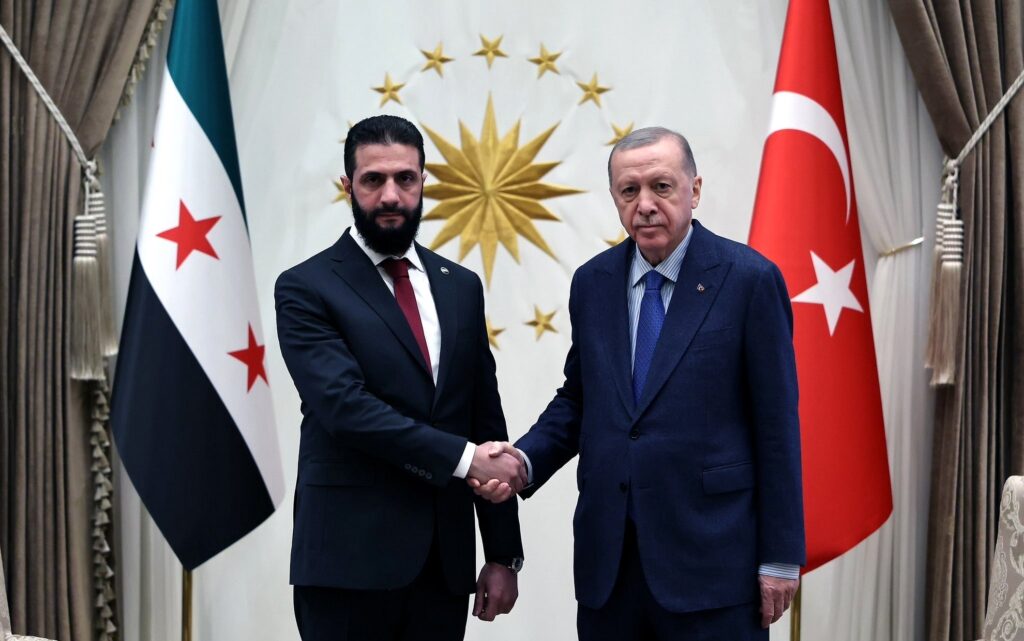
The National Interest magazine published a political analysis examining regional changes in the Middle East following the fall of the Syrian Assad regime.
The report focuses specifically on the reshaping of the balance of power in Syria and the region, highlighting the transformations that the regional situation witnessed after the fall of the ousted regime in December 2024.
The analysis examines the rise of a new axis in Syria, led by Türkiye, following the inauguration of the new Syrian president, Ahmed al Sharaa, a figure who previously played a role in organizing Hay’at Tahrir al Sham.
The report notes that despite Türkiye’s support for this axis, the current situation presents numerous security and political challenges that could impact regional stability.
The analysis also examines the positions of international and regional powers regarding this shift in the Syrian situation and its impact on relations between major powers.
The report examined developments in the relationship between the United States and its regional allies in light of the new reality in Syria.
The analysis emphasized the need to strike a delicate balance to avoid security vacuums that could be exploited by unstable actors, with also, addressing the importance of coordination between international and local forces in Syria, emphasizing the need to push the new Syrian government toward implementing comprehensive political reforms that contribute to the country’s stability.
The report discussed several strategies the United States could pursue to support stability in Syria, including linking the easing of sanctions on the Syrian regime to a genuine political reform process.
It also highlighted the need to support Syrian civil institutions and enhance coordination with various components of Syrian society to ensure the establishment of a stable, pluralistic political system.
Following the fall of Assad, the rise of a Sunni axis supported by Türkiye appears on the horizon, seeking to consolidate its influence in Syria.
The report indicates that the United States may find itself confronting this axis, which may share some of its goals with Iran and the “axis of resistance” in the region, such as pressuring US forces in the Middle East and opposing Israel.
The report addressed Israeli reactions to the changes in Syria, particularly with the growing Turkish influence in the region, as it stated that Israel is concerned about Türkiye’s attempts to strengthen its military presence in Syria, especially in light of the growing influence of Hay’at Tahrir al Sham, which Israel considers a threat to its security.
The report also emphasized that Israel may adopt preventive strategies such as launching airstrikes on Turkish or Syrian targets to ensure that strategic military installations in Syria aren’t reached.
According to the report, the United States may find itself in a difficult position in dealing with Türkiye, a NATO member, while preserving its interests in the Middle East.
On the other hand, the report presents several proposals for dealing with extremist Syrian factions such as Hay’at Tahrir al Sham, including increasing pressure on them to implement political reforms, including removing jihadist elements from the new government.
The report emphasizes the need for the United States to double its support for allied countries such as Lebanon and Jordan, which may face increasing threats from Turkish-backed groups or Sunni extremist groups, noting that supporting minorities in Syria, such as the Druze, Kurds, Alawites, and Christians, could be part of a US strategy to ensure regional stability and protect Western interests.
The report concludes by emphasizing that stability in Syria requires a diplomatic approach and caution in dealing with new axes in the region, while the fall of Assad has weakened Iranian influence, the emergence of the Turkish-backed axis could reshape the region, potentially creating new, more complex equations.
Therefore, the United States and other international actors must adopt flexible and comprehensive strategies to ensure Syria’s stability and prevent it from becoming a launching pad for new security threats.