The Economist: Why is China expanding to build strategic warehouses?
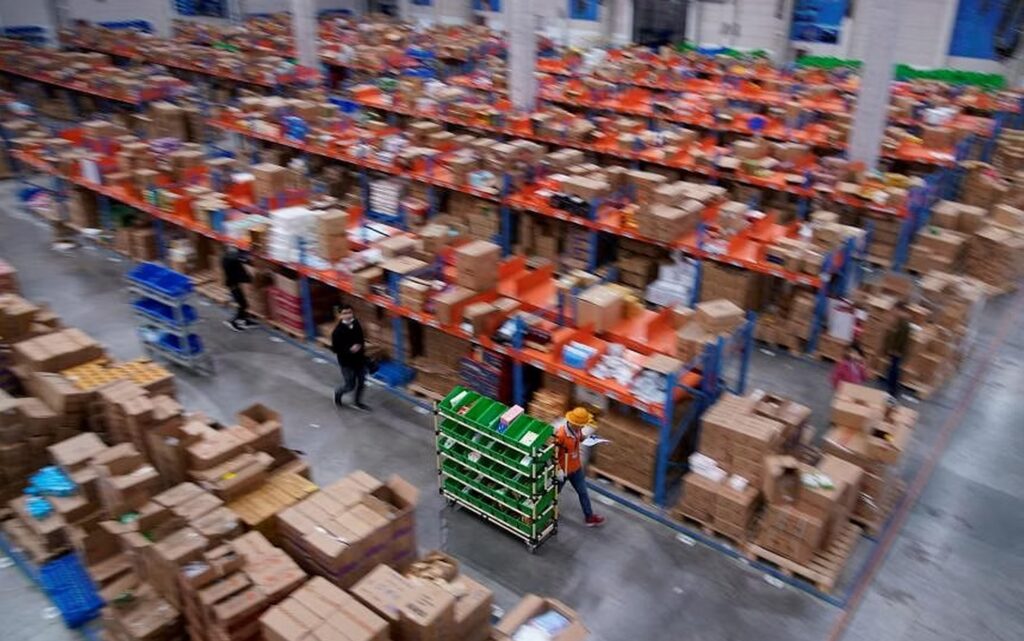
The Economist magazine discussed China’s effort to expand building warehouses to store strategic products.
For years, local governments in China have been calling on some cities, especially the northern ones, to preserve and store food to avoid winter periods when it’s difficult to supply them with goods.
The Economist pointed out about the increase in Beijing’s opening of additional warehouses and warehouses to store vital goods in secret places throughout the country.
According to a report by the Economist last week, vital commodities include grains of all kinds, oil and natural gas, and some types of vital minerals in many industries.
Data from China’s customs authority shows that its merchandise imports increased 16% over the past year, coinciding with challenges the country is facing, explaining that the increase in imports isn’t to meet demand.
Although China is nicknamed the factory of the world because it’s the largest exporter of goods, it’s also a major importer of many goods, especially raw materials for manufacturing, as well as equipment.
For example, based on data from the Chinese Customs Authority, the Economist reports that Beijing is now able to provide about 60% of the population’s food needs, but the rest is imported.
According to a previous report by JPMorgan, China is building dozens of LNG storage tanks along its coast, and the total storage capacity is expected to reach 85 billion cubic meters by 2030.
The USDA expects that by the end of the current planting season, China’s wheat stocks will account for 51% of the world’s stock as a whole, and maize 67%, up 5 to 10% from 2018.
Between 2018 and 2023, China’s imports of soybeans, one of the vital imports from the United States, rose 90% to 38.5 tons, and could reach 42 million tons by the end of this year.
China faces a package of challenges, mostly external, which may push it to be more cautious in storing goods inside the country, to avoid any escalation, especially with the West.
The trade war is Beijing’s first challenge, although the trade war with the United States and the West has begun to escalate further by increasing tariffs on Chinese goods.
Last May, US President Joe Biden signed a decision to raise tariffs to an average of 60% on goods coming from China, and up to 100% on goods such as cars.
The European Union followed suit, temporarily imposing tariffs of up to 38% on imported Chinese electric cars, ahead of a final decision in November.
That will add to an earlier 10% on Chinese cars, bringing the figure for some cars to 48%.
Also, Western sanctions on Russia may serve as a free lesson for China, which may once again be Moscow’s place in these sanctions, due to East-West tensions.
Today, China has full control over the currency market and the movement of its local currency, the yuan, a decades-old system to prevent any Western control over yuan’s exchange rate movements.
Beijing also controls 100% of its Internet today, which explains why the entire population can only access Western websites via VPN to circumvent established regulations.
Beijing is trying to reach self-sufficiency in various types of vital goods and services, in order to avoid any escalation with the West that results in Western sanctions on trade, currencies, access to Internet services, and financial payments.
Among the challenges is to hedge against China’s exposure to a Coronavirus-like health pandemic, which makes the country prepare for any of these scenarios, to which may be added several months later by the return of Donald Trump to the White House again.