The Director of the International Atomic Energy Agency: Syria may consider building small-scale nuclear reactors in the future
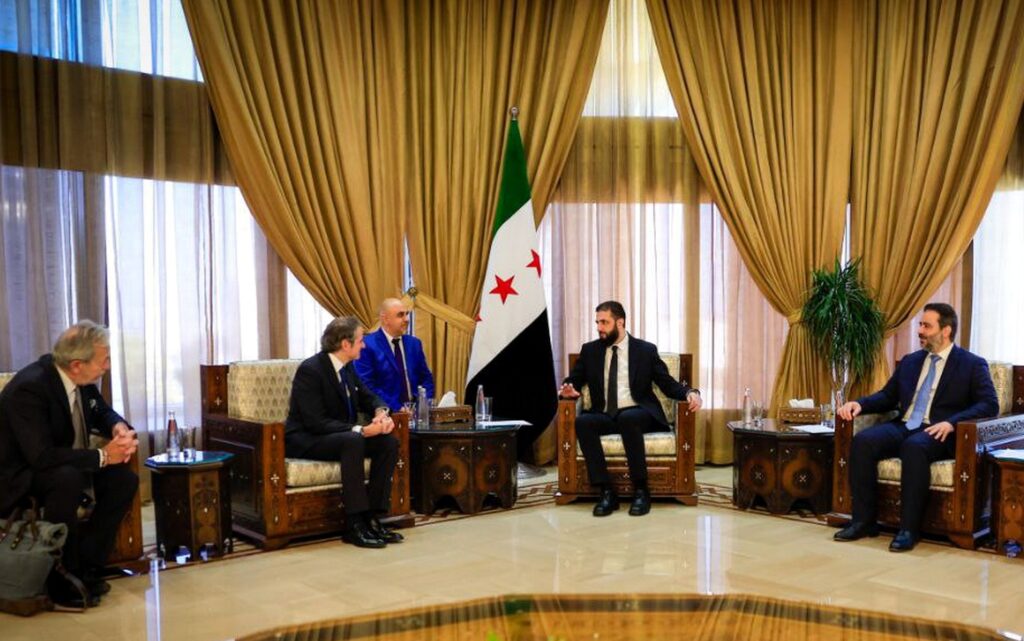
Director General of the International Atomic Energy Agency (IAEA), Rafael Grossi, visited the Syrian capital, Damascus, on his first official visit since the fall of the Assad regime.
During his meeting with Syrian transitional President Ahmed al Sharaa and Foreign Minister Asaad al Shaibani, he discussed ways to launch new cooperation in the nuclear field, with a focus on peaceful uses of energy.
In a post on X, Grossi praised President Ahmed al Sharaa’s clear cooperation in turning the page on the past, referring to previous disagreements over Syria’s nuclear program.
The IAEA has repeatedly called on Damascus to provide full transparency regarding reports of a secret nuclear reactor in the Deir al Zour in the east of the country.
Grossi announced that the Syrian authorities had formally agreed to grant IAEA inspectors immediate access to former nuclear sites, a step considered pivotal toward resolving outstanding issues.
In an exclusive interview with the Associated Press from Damascus, Grossi revealed that the agency is seeking to clarify past activities believed to have been linked to nuclear weapons development, expressing hope that inspections will be completed in the coming months.
Grossi explained that the international team will head to the Deir al Zour site, in addition to three other relevant facilities.
Although no radioactive leaks have been detected, the agency expressed concern about the possibility of enriched uranium stored in an unknown location, which could be reused or smuggled illegally.
Regarding peaceful uses, Grossi confirmed that the IAEA has already begun discussions with the Syrian government on the possibility of introducing nuclear energy into vital sectors such as health and agriculture, stressing the importance of this cooperation in overcoming the past and building a more transparent future.
The IAEA also expressed its willingness to transfer advanced nuclear medicine equipment and contribute to the rehabilitation of infrastructure related to radiotherapy and oncology diagnosis and treatment.
In a related context, Grossi indicated that Syria may in the future consider building small-scale nuclear reactors, which are less expensive and technically easier to implement than larger conventional reactors.
It’s worth mentioning that Grossi had visited Syria in March 2024 and met with former President Bashar al-Assad.
That visit came in response to an official invitation to verify the country’s nuclear facilities, however, today, the atmosphere appears more open, with a renewed commitment from both sides to support transparency and constructive cooperation.