Newsweek: Why is China reluctant to sign an agreement to inaugurate the Power of Siberia 2 gas pipeline?
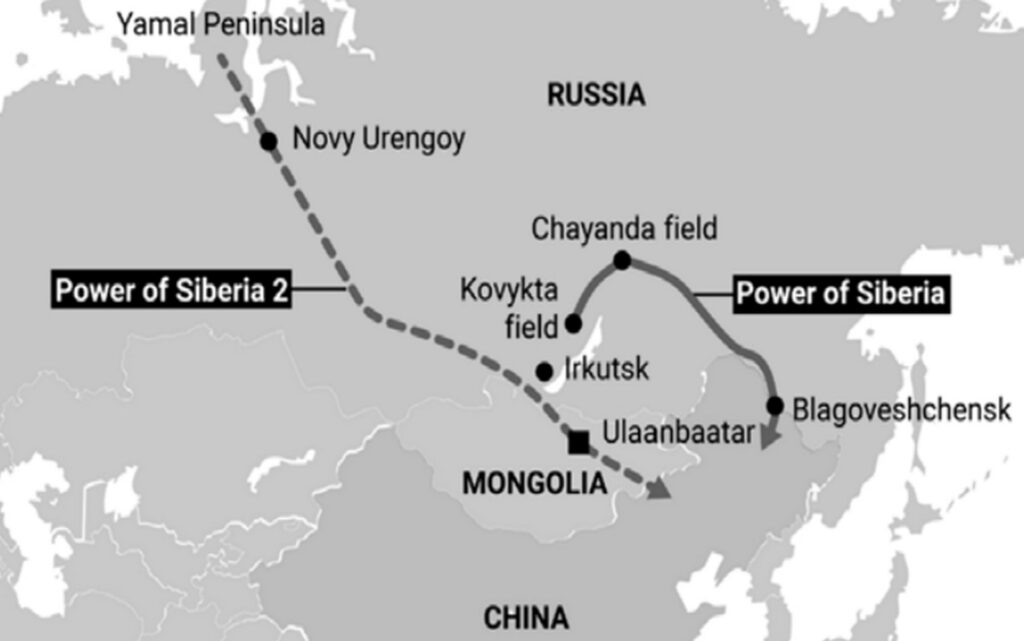
Russia is seeking a deal with China to build the Power of Siberia 2 gas pipeline, with the aim of providing an alternative market after losing much of the European market following the Ukrainian war, however China seems reluctant to respond to those Russian ambitions.
At the end of his visit to Beijing on May 17, Russian President Vladimir Putin announced the interest of Russia and China to continue work on the Power of Siberia 2 project.
Putin pointed out that the growing Chinese economy needs reliable energy resources, stressing that Russia is the most trusted partner, and that the project will be protected from Western sanctions, according to a report from the Causes platform for political and strategic studies.
Putin’s remarks highlight the importance of the project to Moscow as it seeks to redirect gas exports from Europe to Asia.
Russia has repeatedly tried to revive Power of Siberia 2 negotiations with China since the Ukrainian war, but has made little progress over the past two years, despite visits by leaders between the two countries.
If approved, the Power of Siberia 2 pipeline would pump about 50 billion cubic meters of Russian gas annually to northeastern China, roughly equivalent to the amount of gas that the stalled Nord Stream 1 pipeline was transporting between Russia and Germany.
This is in addition to the 38 billion cubic meters currently transported by the Power of Siberia 2 pipeline, which is expected to reach full capacity soon.
Despite Putin’s recent visit to Beijing, no final agreement on the Power of Siberia 2 has been reached.
Analysts believe Beijing is waiting for concessions from Russia to bear the construction costs.
Russia’s attempts to reach a grand deal with China have been hampered by China’s unreasonable demands on prices and offers.
According to reports, China is asking for prices close to Russia’s subsidized domestic prices and committing to buy only a small fraction of the planned annual capacity of the 50 billion cubic meters of pipes.
The large Chinese market gives Beijing great bargaining power.
China is set to receive a 28% discount on Russian gas from this year until 2028.
Russia’s Gazprom has suffered significant losses due to falling gas sales to Europe and is considering directing its exports to Central Asia as an alternative source of gas destined for China, Newsweek reported.
Although Russia will continue to seek to build the Power of Siberia 2 pipeline, Beijing is in no hurry to sign the agreement.
China intends to wait until its energy needs are met from multiple sources to avoid dependence on a single supplier.
It’s estimated that the cost of the 2,600-kilometer Power of Siberia 2 pipeline could reach $13.6 billion.
The pipeline will transport gas annually from the Yamal region in northern Russia to China via Mongolia.
After the Russian invasion of Ukraine, Russian gas exports to Europe dropped dramatically, prompting Moscow to turn to Asian markets.
Russian gas supplies to China via the Power of Siberia 2 pipeline increased from 10 billion cubic meters in 2021 to 22.7 billion cubic meters in 2023.
Russia doesn’t rule out joining the TAPI gas pipeline that runs through Turkmenistan, Afghanistan, Pakistan and India.
Russia faces challenges in implementing its strategy to expand gas exports, including the prospect of an EU ban on Russian liquefied gas (LNG) and US sanctions on new liquefied gas projects.
These sanctions complicate access to needed Western technology and restrict shipping, slowing Russian gas production.
Since the outbreak of the war in Ukraine, China hasn’t concluded any new agreements with Russia on gas, preferring to sign deals with other suppliers such as Qatar, the US and Oman, to avoid relying on a single supplier subject to international sanctions such as Russia.