Newsweek: Türkiye Doesn’t Deserve Membership in the F-35 Fighter Club!
Newsweek magazine published an article titled “The United States shouldn’t sell arms to Türkiye,” by researchers Sinan Ciddi and Jonathan Schanzer of the Foundation for Defense of Democracies in Washington.
The article began by pointing out Türkiye’s recent announcement of a $20 billion arms purchase from the United States.
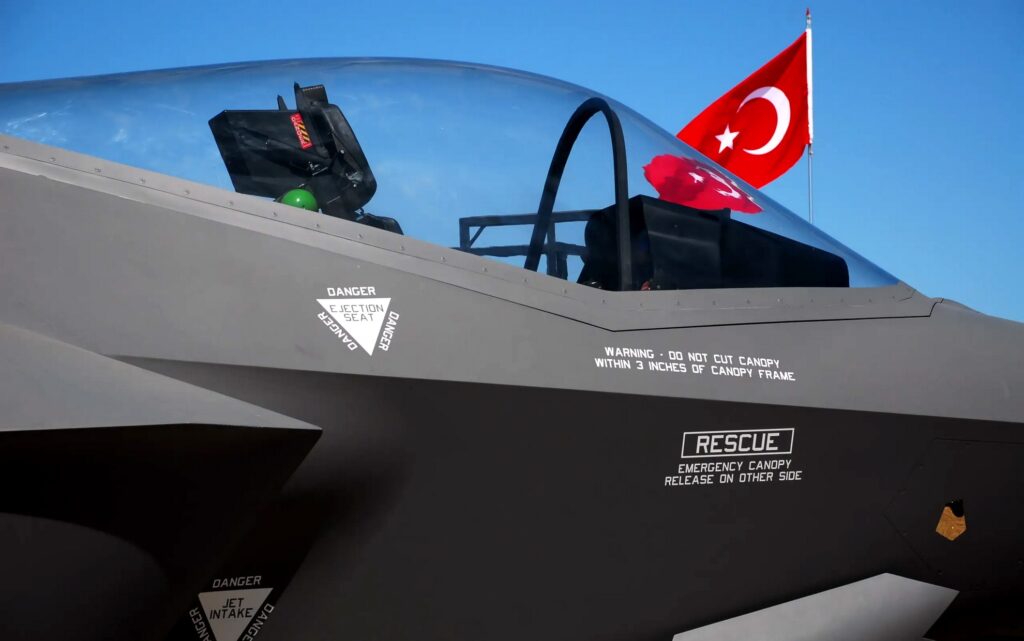
Türkiye wants to rejoin the club of countries eligible to purchase the advanced F-35 fighter jet, after being expelled in 2019 following its purchase of the Russian S-400 missile system—in clear defiance of US warnings.
The article argued that as long as Türkiye hasn’t abandoned the Russian missile system, Washington should reject Ankara’s request to purchase American weapons.
According to the article, Trump administration imposed sanctions on Türkiye in 2020 under the Countering America’s Adversaries Through Sanctions Act, which penalizes foreign governments that purchase advanced weapons from Russia—such as the long-range S-400 missile system.
The club of countries that currently possess the F-35 includes only 20 countries: The United States and 19 close allies, who benefit from the capabilities of the world’s most advanced fighter jet.
Members of this club include Australia, South Korea, the United Kingdom, Israel, and Italy.
Membership in this club is a strong demonstration of mutual trust with Washington, according to the article.
Only 20 countries currently possess the F-35: The United States and 19 close allies, who benefit from the capabilities of the world’s most advanced fighter jet.
Although Türkiye is a member of NATO, it doesn’t deserve membership in this special club.
The article said that the problem goes beyond Türkiye’s possession of the Russian S-400 missile system; Turkish Foreign Minister Hakan Fidan, who is now courting Washington, is at the heart of it.
The article explains that before becoming foreign minister, Fidan served as head of Turkish intelligence from 2010 to 2023.
During this period, Fidan worked to distance Türkiye from its Western allies and, in turn, draw it closer to Islamist organizations and extremist movements.
Ankara’s support for Islamists was most evident in Syria, where Fidan backed jihadist factions linked to al Qaeda and the so-called Islamic State, or ISIS.
Since the fall of the Assad regime in December 2024, Fidan has boasted of Ankara’s role in empowering Hay’at Tahrir al Sham—designated by the US as an al Qaeda affiliate—to power.
The group now governs Syria with Turkish support.
The article also saw Türkiye as a threat to America’s regional allies, pointing to ongoing skirmishes between the Turkish fleet and its Greek and Cypriot counterparts.
The article noted that Greece is a member of NATO and that Cyprus is a member of the European Union, questioning the magnitude of the threat that a confrontation between these two countries and Türkiye could pose if the latter acquires American F-35 aircraft.
There are also shortcomings in Türkiye’s democracy, according to the authors, who point to the suffering of state institutions in Türkiye under Erdogan, who has held power for more than twenty years.