National Interest: Washington should turn to Africa’s rich resources
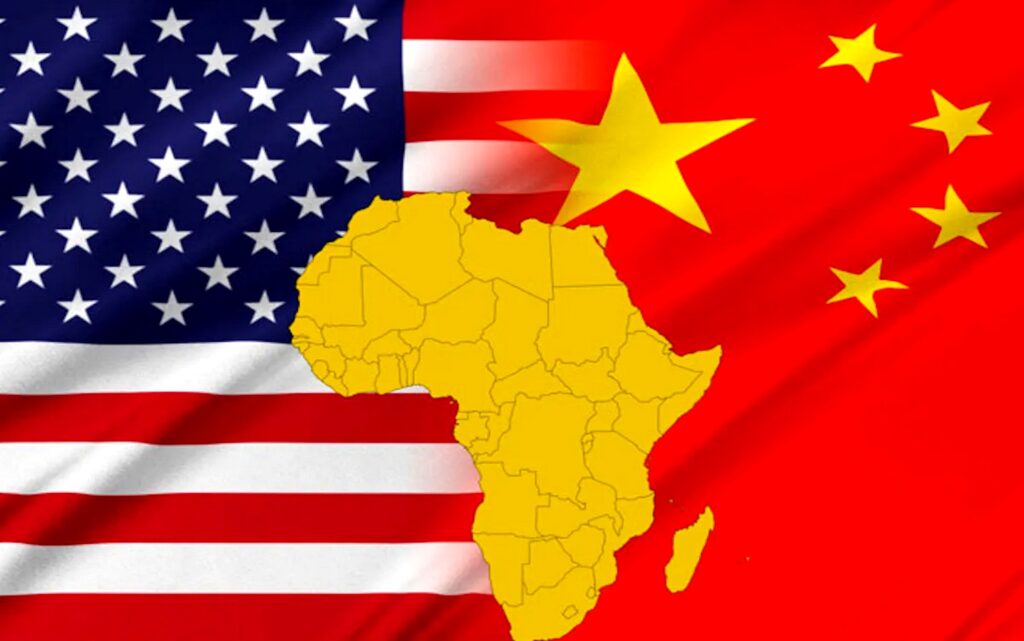
The National Interest said that with Africans alienated from the West and relations strained between the US and Europe, it’s time for Washington to focus on the continent’s wealth rather than ceding the stage to China and Russia.
Africa has become a theater for growing Chinese influence.
Anti-Western sentiment, particularly toward France, has given China a decisive advantage.
Previously, Washington found itself constrained by the African public’s reactions to European missteps.
However, the highly publicized dispute between Washington and the European Union over Ukraine provides an opportunity for the United States to engage more productively with its African partners without worrying about sensitivities related to the legacy of European imperial powers.
With French forces withdrawing from Niger, Burkina Faso, Mali, and Chad, China and Russia stepped in, while the United States remained neutral.
However, Beijing’s rapid expansion of influence in Africa—a continent rich in natural resources and with the world’s fastest-growing population—deserves Washington’s involvement.
For the fifteenth consecutive year, China remains Africa’s largest trading partner.
Trade between the two countries exceeded US$295 billion in 2024, a 4.8% increase over the previous year.
In 2022, Chinese companies constructed 31% of construction projects on the continent valued at US$50 million or more, while Western companies accounted for only 12%.
By contrast, American and European companies accounted for 85% of construction projects in 1990.
In 2024, at the Forum on China-Africa Cooperation (FOCAC) summit in Beijing, Chinese President Xi Jinping pledged $51 billion in loans, investments, and aid to Africa.
Between 2013 and 2021, Chinese foreign direct investment in Africa surpassed that of the United States, rising from $75 million in 2003 to $5 billion in 2021.
China is purchasing African resources to enhance its global standing.
Back in 2007, by providing $5 billion to the Democratic Republic of the Congo to build vital infrastructure, Beijing gained access to the DRC’s valuable and vital minerals, such as cobalt, copper, nickel, and uranium.
The People’s Republic of China now owns the majority of cobalt mines, which contain most of the world’s reserves.
China’s share of the continent’s mines has grown by 21% since 2019.
Chinese companies have made major acquisitions in copper mining in Botswana and Zambia, copper and cobalt mining in the Democratic Republic of the Congo, and lithium mining in Zimbabwe and Mali.
The materials needed to fuel China’s green energy boom and maintain the refining of vital minerals come from Africa.
China is also focusing on ports to control all aspects of trade, and its companies are involved in 62 African port projects.
A new container terminal at Egypt’s Dekheila Port, Nigeria’s Lekki Deep-Dock Port, and a terminal at Egypt’s Abu Qir Port are scheduled to be operational by 2025.
China is also investing heavily in domestic travel in Africa, as the Chinese companies have built or upgraded more than 10,000 km of railway lines, 100,000 km of highways, and more than 80 major energy facilities.
The scale of Chinese investments contributes to a positive image of China among Africans.
Resentment over a history of colonial rule has pervaded African identity, presenting opportunities for Beijing and Moscow.
Among the many advantages China enjoys over Western countries in the eyes of African leaders is its clear policy of non-interference in internal affairs.
In addition to securing its own interests, such as the extraction of strategic minerals, Beijing receives significant diplomatic support from African countries in international forums such as the United Nations.
For example, only one African country, Eswatini, maintains diplomatic relations with Taiwan.
Historically, the United States has been reluctant to obstruct other Western countries’ engagement in Africa.
However, the growing rift between the US and the European Union following US Vice President J.D. Vance’s speech at the 2025 Munich Security Conference may open new horizons in Africa, where Washington is perceived as less respectful than London or Paris in Africa, since France has lost credibility in the eyes of many Africans.
For decades, Paris focused on controlling the financial systems of its former colonies and gaining access to cheap raw materials in West and Central Africa.
During the 1960s, French authorities established informal ties with African elites, who guaranteed Paris privileged access to natural resources in exchange for military protection.
France turned a blind eye to the actions of African leaders who safeguarded French interests, but supported coups against regimes whose policies undermined its position.
Paris managed African countries’ financial policy through the CFA franc, which was pegged to the euro in 14 West and Central African countries.
In exchange for guaranteed convertibility, until 2019, these countries deposited half of their foreign exchange reserves with the French treasury.
If they needed more funds, they had to borrow from France at interest.
Given the current anti-colonial backlash, it’s not surprising that France is losing ground.
For example, the French Orano Group, which extracted 20% of Niger’s uranium needed to power Paris’s nuclear power plants, lost its mining rights after the military junta took power in the country in July 2023.
Major French companies, such as TotalEnergies and the Orange Group, are also facing tax harassment and the loss of government contracts.
France isn’t the only country whose African policy has provoked anti-Western reactions.
Belgium’s post-colonial interventions in the Congo and Rwanda were ineffective and contributed to increased Chinese influence in Central Africa.
British policies across Africa tend to provoke less direct anti-Western reactions, but the behavior of British companies continues to attract public criticism.
In all cases, the story is similar: former colonial powers are struggling to retain their colonial-era influence, spoiling opportunities for American and non-colonial Western investors.
Policymakers in Washington should seize the opportunity for a more proactive US policy based on investment and economic ties in Africa to counter competition from China and Russia, freed from the burdens of the post-colonial era.