Maariv: An unexpected development… Israeli officials met with Ahmed al Sharaa!
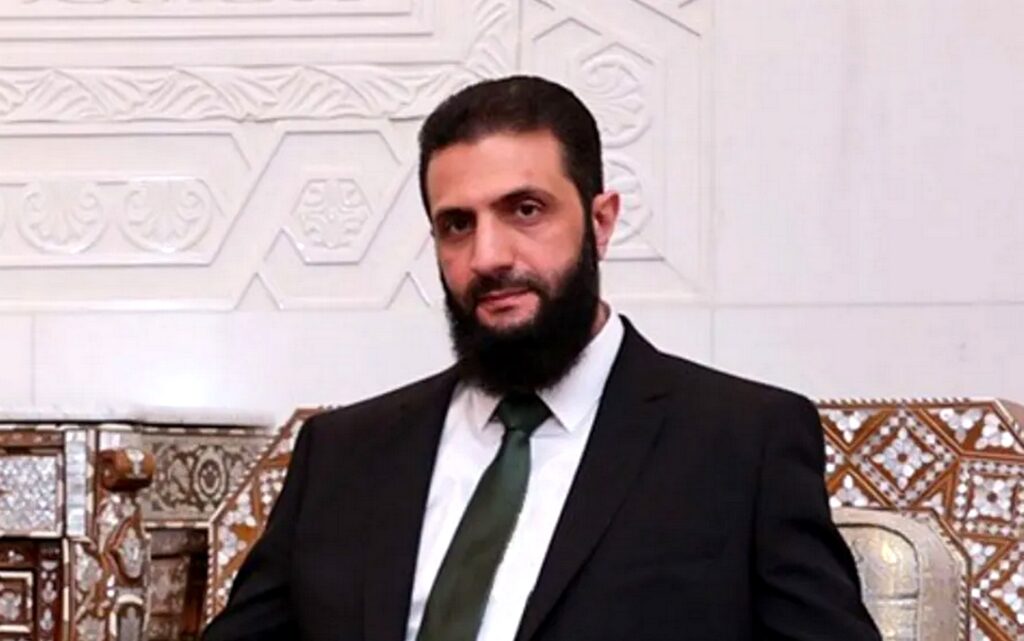
In a rare and secret meeting, Dr. Jack Neriah, a former political advisor to Yitzhak Rabin and a prominent researcher at the Jerusalem Center, revealed that Hay’at Tahrir al Sham leader Abu Muhammad al Julani (the current Syrian transitional president Ahmed al Sharaa) fears that Israel’s growing ties with the Druze and Kurds could weaken his authority and threaten the survival of his regime.
According to a report by Maariv newspaper, the meeting took place in Abu Dhabi on April 13, attended by Ahmed al Sharaa and a number of former senior Israeli security officials.
This move could mark a shift in the tense relations between Israel and Syria, however, the question remains: Is it the beginning of a real breakthrough or merely a tactical maneuver?
Dr. Jack Neriah believes there is a rare overlap of security interests between Syria and Israel, explaining that Abu Muhammad al Julani “is concerned about Israeli cooperation with minorities such as the Druze and Kurds, which could threaten the stability of his rule… On the other hand, Israel doesn’t want jihadists and militias to reach its borders”.
Dr. Neriah added that the understanding could be reached through an undeclared agreement that would grant Israel the right to intervene to prevent any infiltration by hostile militias into the Golan Heights, in exchange for the Syrian regime’s pledge not to target the Druze or Kurds.
“This way, the two sides can coexist,” he says.
A key topic of discussion at the meeting was security arrangements in the Mount Hermon area.
Neriah commented, “This mountain has always been Israel’s eyes and ears… It’s a strategic point that offers a comprehensive view of the south, the north, and even Damascus”.
He pointed out that if Israel is convinced of the Syrian regime’s sincerity, then discussions could be reopened regarding new security arrangements along the border, including buffer zones, and new foundations could be laid for the next fifty years.
Following these talks, reports emerged of the arrest of Islamic Jihad members in Syria, but Neriah rejects this as a gesture toward Israel, explaining, “al Julani has internal opponents, including Hezbollah, Hamas, the Iranians, and Islamic Jihad, and he is fighting them as part of his effort to impose order”.
He added, “Syria today lacks stability… There are approximately 20 jihadist groups under al Julani’s command, many of which don’t fully submit to his authority… Therefore, his priority now is survival and consolidating his rule in the short term”.
Neriah believes the risk of opening a dialogue is justified, saying firmly, “I don’t think there’s any risk… I remember what Rabin told me: If the path to peace leads to an encounter with the devil, we’ll go and meet him… We’ve to try everything”.
From a broader strategic perspective, Dr. Neriah emphasizes Syria’s importance in the regional balance map, explaining: “Syria is a pivotal element in the strategic equation surrounding Israel… Through it, an alternative axis can be created to counter Iranian influence extending from Lebanon, through Syria, to Iraq, and southward toward Saudi Arabia and the Gulf states… However, Israel, like the United States, remains cautious”.
Dr. Neriah concludes, “The Americans want to see practical steps before considering easing sanctions, which are essential to the survival of the Syrian regime… Ultimately, the real test will be in actions, not words”.