Le Monde: How has the war in the Middle East exposed Western double standards?

The stark contrast in the West’s handling of the Ukraine-Russia war on the one hand and the war in the Middle East on the other has reinforced the idea that Nordic diplomacy remains stuck in colonial times.
This reflects the concerns of several prominent figures, including Rony Brauman, Agnès Levallois and Noël Mamère, in an article published in Le Monde.
In the West Bank, one of the war’s fronts, Israel’s ruling coalition, which includes the far right, wants to tighten the noose: new settlements, mass expulsions, and the killing of more than 700 Palestinians over the past year.
The UN Coordinator for the Middle East Peace Process and UN Representative in Palestine, Tor Wennesland, confirms that Israeli settlement activity in the West Bank, including East Jerusalem, and settler attacks have expanded significantly in conjunction with the continuation of military operations in the Gaza Strip.
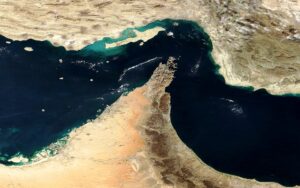
Regionally, Israeli strikes know no bounds in the skies over the Middle East; Israel has targeted Iran and its military installations.
On September 27, in his speech to the United Nations, Israeli Prime Minister Benjamin Netanyahu rejected a proposed truce with Hezbollah that had been put forward by Washington and Paris and supported by several Gulf states.
Shortly thereafter, he ordered the bombing of Beirut and the assassination of Hezbollah Secretary-General Hassan Nasrallah.
Today, some wonder whether Netanyahu will consider the assassination of Yahya Sinwar “victory enough” to change his mad course.
Since October 7, all calls for a ceasefire in Gaza and Lebanon have gone unheeded.
For a year now, all we have heard has been about “Israel’s security”.
We’ve heard little about the security of the Palestinian people, whether physical, food or health.
After the October 7 attack, European countries felt that Israel had every right to retaliate, forgetting the four deadly wars that Israel had waged on Gaza.
No one could have imagined the scale of the Israeli war on Gaza.
A year later, the Strip was a pile of rubble, with more than 40,000 people killed.
The coincidence of the wars in Ukraine and the Middle East highlighted the Western countries’ unequal handling of these crises.
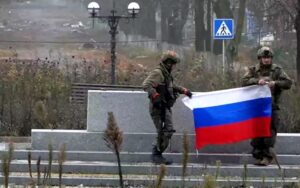
On the one hand, there was strong support for Ukraine’s desire for independence in the face of the Russian attack, and severe sanctions were imposed on Russia, in addition to the widespread opposition and condemnation that the West aroused.
On the other hand, these countries didn’t recognize the rights of the Palestinian people, and didn’t hold Israel responsible for the killing, destruction, displacement, and brutality that the people experienced.
The Israeli response to Hamas received great support, as if everything had started on October 7.
Attempts to exonerate Israel emerged despite its targeting of hospitals, tents for displaced people, mosques, medical personnel, children and women.
It wasn’t acknowledged that it committed war crimes in the Strip, or that it used civilians as human shields.
Europe, which has stood almost unanimously in opposition to Vladimir Putin in the Russian-Ukrainian war, and has expanded the scope of sanctions against Russia, hasn’t taken any substantive measures against Israel and its government.
If Western countries want to regain a credible voice, they must abandon the logic of double standards.
They must do everything in their power to give international law and international justice a chance, finally recognize that sanctions are necessary, and provide unwavering support to the International Criminal Court, which has requested arrest warrants for the Israeli Prime Minister and his Defense Minister Yoav Galant.