JCPA: Ahmed al Sharaa follows Anwar Sadat’s approach

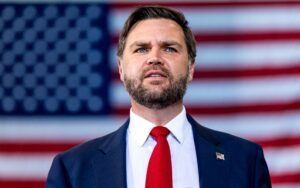
The Jerusalem Center for Foreign and Security Affairs (JCPA) believes that Syrian President Ahmed al Sharaa may be moving toward following the approach of late Egyptian President Anwar Sadat in normalizing relations with Israel.
The report indicated that, for the first time in a decade, tangible indications have emerged of a potential rapprochement between Israel and Syria, with quiet US-mediated talks and indirect communications between the two sides underway.
The report noted a growing understanding on both sides that regional stability is a shared interest.
For its part, Israel, according to the report, asserts that it has no intention of relinquishing the Golan Heights, but is willing to consider any steps that would achieve a comprehensive ceasefire.
Israeli Foreign Minister Gideon Sa’ar reflected this position when he declared, “Israel has an interest in peace with Syria, as long as our security interests are preserved”.
The report addressed the potential outlines of any future agreement, which could include a gradual Israeli withdrawal from buffer zones in the occupied Golan Heights by the end of 2024, in exchange for a Syrian commitment to refrain from hostilities.
It also noted the possibility of establishing an internationally supervised zone in the Golan, resembling a “peace park,” without fully restoring sovereignty to Damascus.
However, the report stressed that there are significant obstacles to any agreement, as the Syrian people remain unwilling to reconcile with Israel as long as the latter clings to control the 1967 territories.
It also noted that the Golan Heights issue remains a major point of contention, and that any concession thereof could be considered a betrayal in Syrian circles.
The report added that the challenges are not limited to the Syrian side alone, as its difficult to imagine the current right-wing Israeli government agreeing to any substantive concessions, especially after the events of October 7, 2023.
It also pointed to Türkiye’s pivotal role in any future settlement, given its significant influence in northern Syria.
Regarding the new Syrian president, the report noted that Ahmed al Sharaa lacks sufficient legitimacy for such a bold move, but noted a shift in his political approach, as he frequently recalls the example of Anwar Sadat, who signed a historic peace agreement with Israel in 1979.
The report concluded by emphasizing that the road to any agreement remains long and thorny, but noted that the region could witness political surprises, as “the coming political turmoil in the Middle East could erupt in the least expected place: Damascus”.
Israeli Prime Minister Benjamin Netanyahu confirmed that Syrian President Ahmed al Sharaa had opened a channel of communication and provided an opportunity for peace, noting that the Syrians would lose if they returned to conflict, but the opposite would happen if they moved toward peace.
“I think everyone understands that the situation has changed,” Netanyahu added, amid reports of a new security agreement between Israel and Damascus.
“Before, Iran effectively ran Syria, directly through Hezbollah… Today, Hezbollah has been forced to surrender, and Iran is out of the picture,” said.
Netanyahu added, “So I believe this creates opportunities for stability, security, and ultimately peace”.
He continued, “I think this has also become possible because the president opened a channel of communication. They have a lot to lose if they return to conflict, and a lot to gain if they move toward peace… I think the president has provided this opportunity”.
Netanyahu also didn’t answer a question about whether there were “direct talks between Israel and the new regime in Damascus”.
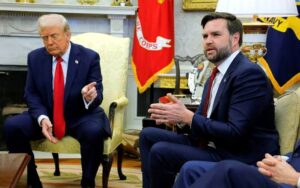
For his part, Trump revealed that Netanyahu had also asked him to lift sanctions on Syria.
Trump said, “At the request of many Middle Eastern countries, including Bibi (Netanyahu), we have lifted sanctions on Syria”.
He added, “I met the new leader (referring to al Sharaa), and I was very impressed with him… Someone told me: He comes from a tough environment… I said: Well, that’s not surprising… It’s a tough part of the world, but I was really impressed with him… We lifted the sanctions because we wanted to give Syria a chance… They didn’t have a chance as long as the sanctions were in place”.