Foreign Policy: Hezbollah will remain a threat to Israel even after the war
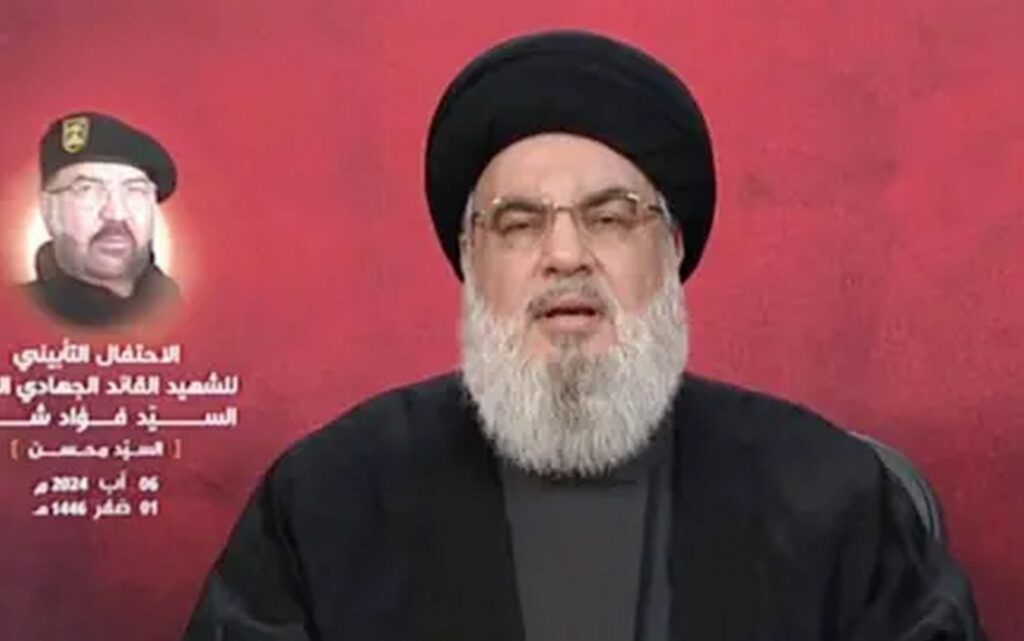
The Foreign Policy magazine said that the conflict in Lebanon may turn from a limited war into a comprehensive conflict, stressing that if Israel launches a comprehensive war, it will be a difficult and destructive battle for it, and not only for Lebanon.
The Foreign Policy stressed that after the guns stop firing in this extended war, Israel will find that its conflict with Hezbollah hasn’t been resolved, and that it has gained little from this conflict on the strategic level, even if it wins militarily, noting that it would be better for it to try to strengthen deterrence, even if that means the threat posed by Hezbollah will continue to appear.
The Foreign Policy recalled what happened after the end of the July 2006 war, when Iran helped rearm Hezbollah, and pumped reconstruction money into Lebanon, which enabled the party to score political points with communities that were harmed by the war.
It also returned its fighters to the borders with occupied Palestine.
The Foreign Policy confirmed that Iran’s support for Hezbollah has not diminished since 2006, and that Tehran continues to work closely with it, and is likely to provide significant financial and military support to it if the conflict with Israel is renewed.
The Foreign Policy magazine believed that the outbreak of war means that Israel will find itself in a critical position regarding enduring the conflict in Lebanon for a long time, after the IDF has exhausted its forces after about a year of war in Gaza, as thousands of reserve soldiers have served there several times, and spare parts, ammunition and other necessary things aren’t sufficient to wage a long-term war.
The Foreign Policy concluded that any large-scale war is likely to be limited in duration, which would enable Hezbollah to withstand the storm.
The Foreign Policy added that Hezbollah is also capable of prolonging the war, taking advantage of the fact that Lebanon is much larger than Gaza, and that Israel cannot simply push its forces into the entire country in a short period of time.
Realistically, the best Israel could do, according to the magazine, is to reoccupy parts of southern Lebanon, as it did between 1982 and 2000.
The magazine noted that during that period, Israel was suffering steady losses from attacks, which eventually led it to withdraw.
The Foreign Policy pointed out that Hezbollah has become stronger today, and the majority of its forces are able to withdraw away from the border area and simply return when Israel leaves, or launch regular attacks, at the time it chooses, if Israeli forces remain.
Israel’s problem with world public opinion will also worsen, and it will face another wave of international and American criticism if it’s considered the aggressor in a broader conflict with Lebanon.
Even the Arab regimes, which hate Hezbollah, won’t be able to confront their people and support operations against Hezbollah.
Hezbollah announced that it would stop the attacks if there was a ceasefire in Gaza, stressing that if this approach wasn’t satisfactory to Israel, then unsatisfactory deterrence is better than a destructive war that ends in an unsatisfactory end.
The Foreign Policy magazine acknowledged that politicization and short-term thinking dominate the calculations and govern the decision-making process in Israel, not strategy, and that Israel, after ten months of fighting in Gaza, lacks a realistic end.
Foreign Policy concluded that this tendency in the short term may push Israel to strike first, then try to reach a long-term goal later, stressing that it is necessary for the United States and its allies to continue to pressure Israel to avoid a comprehensive war that may be costly and unproductive.