Financial Times: Thousands of vacancies at the arms manufacturing companies in Europe and the US
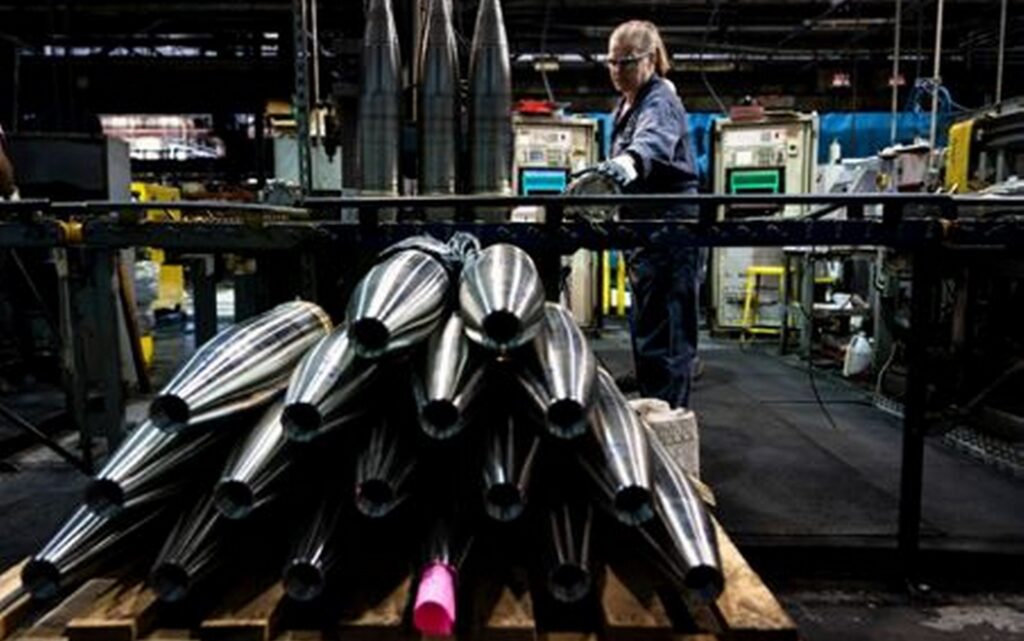
The global defense industry faces a severe shortage of skilled manpower, and as demand for weapons and cutting-edge technologies increases, competition to attract top talent becomes fiercer.
According to a recent Financial Times report and a survey of about 20 US and European companies in this field, there is a frantic race to attract talent.
Russia’s invasion of Ukraine more than two years ago, combined with rising geopolitical tensions, has dramatically increased global military spending.
Spending in 2023 reached $2.4 trillion, the highest record ever recorded, according to the Stockholm International Peace Research Institute.
The United States controls 37% of global military spending, while China comes in second with 12%, while Russia and India rank third and fourth with 4.5% and 3.4%, respectively.
Due to the growing demand, the arms industry is facing a labor crisis that threatens its ability to meet its security obligations and develop modern technologies.
Major defense companies such as Lockheed Martin, Northrop Grumman, and General Dynamics, whose total market capitalization exceeds $250 billion, have sought nearly 6,000 jobs.
Another 10 companies are looking to hire 37,000 new employees, equivalent to 10% of their total workforce.
These jobs range from trainees, engineers, software developers, analysts, and senior executives.
The increasing demand for skilled labor isn’t limited to the defense industry, but also includes many other strategically important sectors.
In the UK, for example, the Nuclear Skills Delivery Group suggests that the nuclear energy sector alone will need more than 30,000 new jobs this decade.
Russia’s war against Ukraine showed the importance of having a reliable supply chain and the ability to produce ammunition continuously, as Moscow faced significant logistical challenges in the early months of the war.
Therefore, the United States is taking steps to reduce its dependence on Chinese suppliers in the defense industry.
Bessie Pleasant, from the Nuclear Skills Delivery Group, told the Financial Times that the arms industry is witnessing a dramatic increase in recruitment and training activities.
Colonel Kris Saling, the Director of innovation at the US Army Recruiting Command, emphasized the urgent need to recognize and develop the importance of non-traditional career paths in the defense industry.
Vocational trainings, increased work flexibility and streamlined security clearance processes in private sector recruitment can help address workforce shortages.
At the same time, government agencies and the armed forces are offering incentives, such as rewards for cyber talent, to attract and retain workers.