Financial Times: The move of the International Criminal Court is a crushing blow to Israel
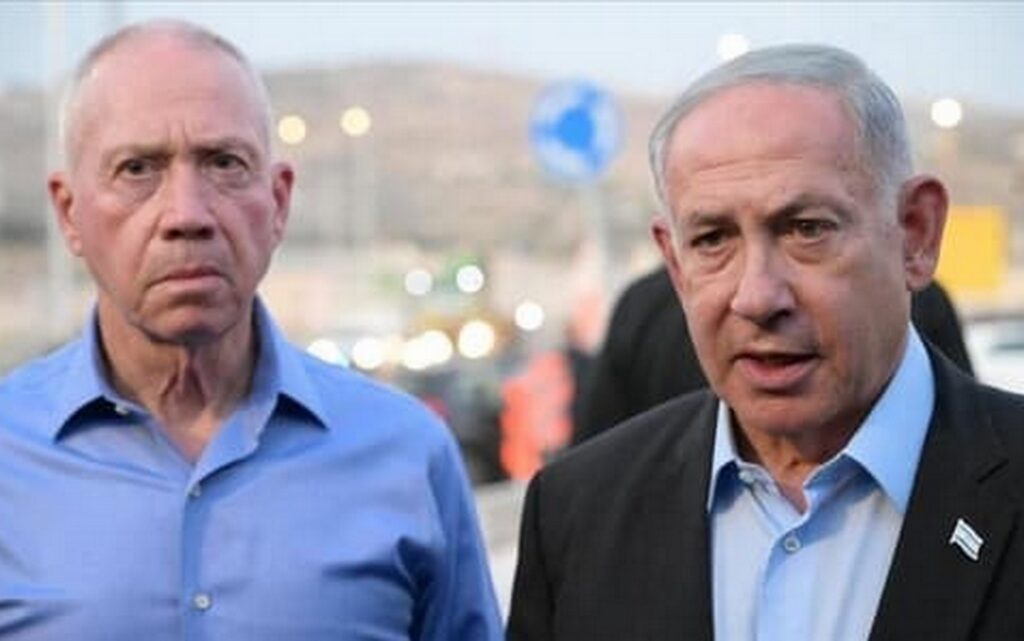
British journalist Gideon Rachman described the decision of the Prosecutor of the International Criminal Court (ICC) to request an arrest warrant for Israeli Prime Minister Benjamin Netanyahu and Defense Minister Yoav Galant as “a crushing blow to Israel and a huge gamble for the court,” according to his article in the Financial Times.
The repercussions of the move will be strong, Rachman said, noting that four key questions arise immediately.
First, what will be the internal impact in Israel?
Second, how will the decision affect the war in Gaza and the Middle East in general?
Third, has the ICC gone too far and put its future at stake?
Fourth, and related to the previous question, how will the United States respond to the proposed indictment?
The ICC prosecutor’s request to issue arrest warrants for Hamas leaders alongside Netanyahu and Galant won’t mitigate the blow Israel has received.
Rachman, the FT’s chief commentator for foreign affairs and the scion of a Jewish family, explained that Monday’s decision comes at a time when Netanyahu is under increasing pressure to step down, with war council member Benny Gantz threatening him that he would resign from the government unless he laid out a new strategy for the war in Gaza and beyond.
Gantz, who is untouched by the indictment, joined the unanimous Israeli voices to condemn the ICC, but many Israelis are trembling at the idea of becoming a pariah state, so getting rid of Netanyahu and installing a new prime minister could become a more attractive option over time as Israel seeks to restore its international standing.
Moreover, Rachman points out, the indictment will have severe practical implications for Netanyahu’s ability to do his job.
Foreign trips will certainly become more difficult, because they will be at risk of arrest in the 124 member states of the Rome Statute that established the International Criminal Court (not including the United States, Russia or China).
Optimists themselves will hope that, in the long run, the ICC decision will convince Israel that its strategy in Gaza “leads it to crash into a wall,” as Gantz put it.
This could persuade the next team of Israeli leaders to take the two-state solution with Palestine seriously.
Israelis now know that the path to regaining acceptance on the international stage must include a new peace process and the marginalization of Netanyahu.
As for the question of the US response, it’s now a critical one.
The White House has announced that it doesn’t support any indictment of Israel by the ICC on the grounds that it doesn’t have jurisdiction over the case.
But this US objection is relatively calm and limited when compared to what Donald Trump – the former president and candidate for the 2024 presidential election – can do, along with voices from the American right calling for US sanctions on the International Criminal Court and its judges.
The prospect of US sanctions on the court highlights the magnitude of the move it has taken with this indictment against Netanyahu and Galant, which could put its future at stake.
ICC Prosecutor Karim Khan may have felt that he had no choice but to do so, and if the ICC wants to retain its international legitimacy, it must do something about war crimes, whoever and wherever they are committed.
However, the Tribunal operates within a political context; It has indicted Russian President Vladimir Putin, with little chance of putting him on trial.
If Netanyahu can also resist the indictment, the court would put itself in a position of helpless and useless.