Election campaign officially starts in Germany after Bundestag dissolved
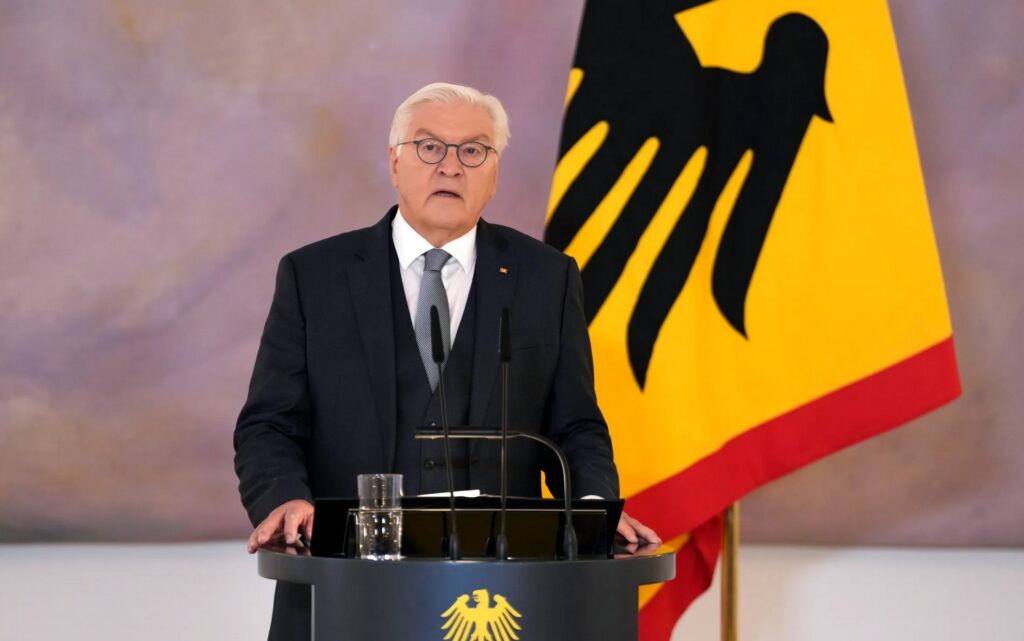
Germany has officially entered an electoral race after President Frank-Walter Steinmeier decided to dissolve Bundestag and set February 23 as the date for early legislative elections amid an economic crisis sweeping the country.
The decision comes after a two-month election campaign, instead of seven months if the election date had not been brought forward, as a result of the collapse of the government coalition of Social Democratic Chancellor Olaf Scholz.
Voting intentions indicate that the Christian Democratic Union, led by Friedrich Merz (32%), will win the elections, followed by the far-right Alternative for Germany (19%), the Social Democratic Party (15%) and the Greens (13%), according to a weighted average of opinion polls released on Friday.
Given the current balance of power, the most likely scenario for the next government is a coalition between the Christian Democratic Union and the Social Democratic Party, after all German parties expressed their refusal to cooperate with the Alternative for Germany.
While waiting for the formation of the government, President Steinmeier reminded that German democracy remains in place even in the transition period.
Both the government and Bundestag are in charge of managing affairs until a new coalition is formed, but the executive authority, which doesn’t have a majority, is unable to pass new projects without the support of the opposition.
The government coalition in place since late 2021 between the Social Democrats, the Greens and the liberal Free Democratic Party collapsed on November 6 following the dismissal of Olaf Scholz, the liberal finance minister, due to irreconcilable differences in economic and budgetary policy.
The chancellor, who has since lost a parliamentary majority, called a vote of confidence in the Bundestag in mid-December to withdraw confidence from him and set the stage for early elections, the date of which Steinmeier confirmed on Friday.
This rare measure in the history of German politics comes in the context of a deep crisis that is ravaging Europe’s largest economy, which was once an example of political stability.
“Stability, especially in difficult times like these, requires an effective government and a trustworthy majority in parliament,” Steinmeier said in his speech on Friday.
He considered that early elections would allow for facing the “challenges of this era, most notably the “turbulent economic situation”.
In Germany, which is facing an economic recession for the second year in a row, the industrial model is at stake.
Scholz is calling for easing debt rules to stimulate investments in order to revive the economy, while the conservative opposition insists on restricting debt, according to controls stipulated in the German constitution.
Among other issues on German minds, Steinmeier mentioned the wars in the Middle East and Ukraine and issues of immigration control, integration and climate change.
Right-wing and far-right parties have drawn a link between immigration, security and the December 20 attack on the Christmas market in Magdeburg that killed five people and injured more than 200.
Following the attack, carried out by a 50-year-old refugee, the Alternative for Germany party held a demonstration at the scene, calling for the closing of the borders to mad, angry people coming from all countries.
“We don’t want potential criminals like this in our country,” conservative leader Friedrich Merz wrote in a message to his followers, noting that the number of serious crimes committed by migrants in Germany has been increasing for about ten years.
The German government, under increasing pressure, has pledged a swift and thorough investigation into the incident and any failures the authorities may have made to prevent the attack.
Olaf Scholz has called on Germans to come together in this ordeal.
“There is no place for hatred and violence in this election campaign,” the German president said in his speech on Friday, which he hoped would be conducted through fair and transparent means.
He denounced foreign interference, without naming Russia, which is often accused of orchestrating disinformation campaigns to promote candidates who serve its interests in Europe.