DW: The end of the Merkel era
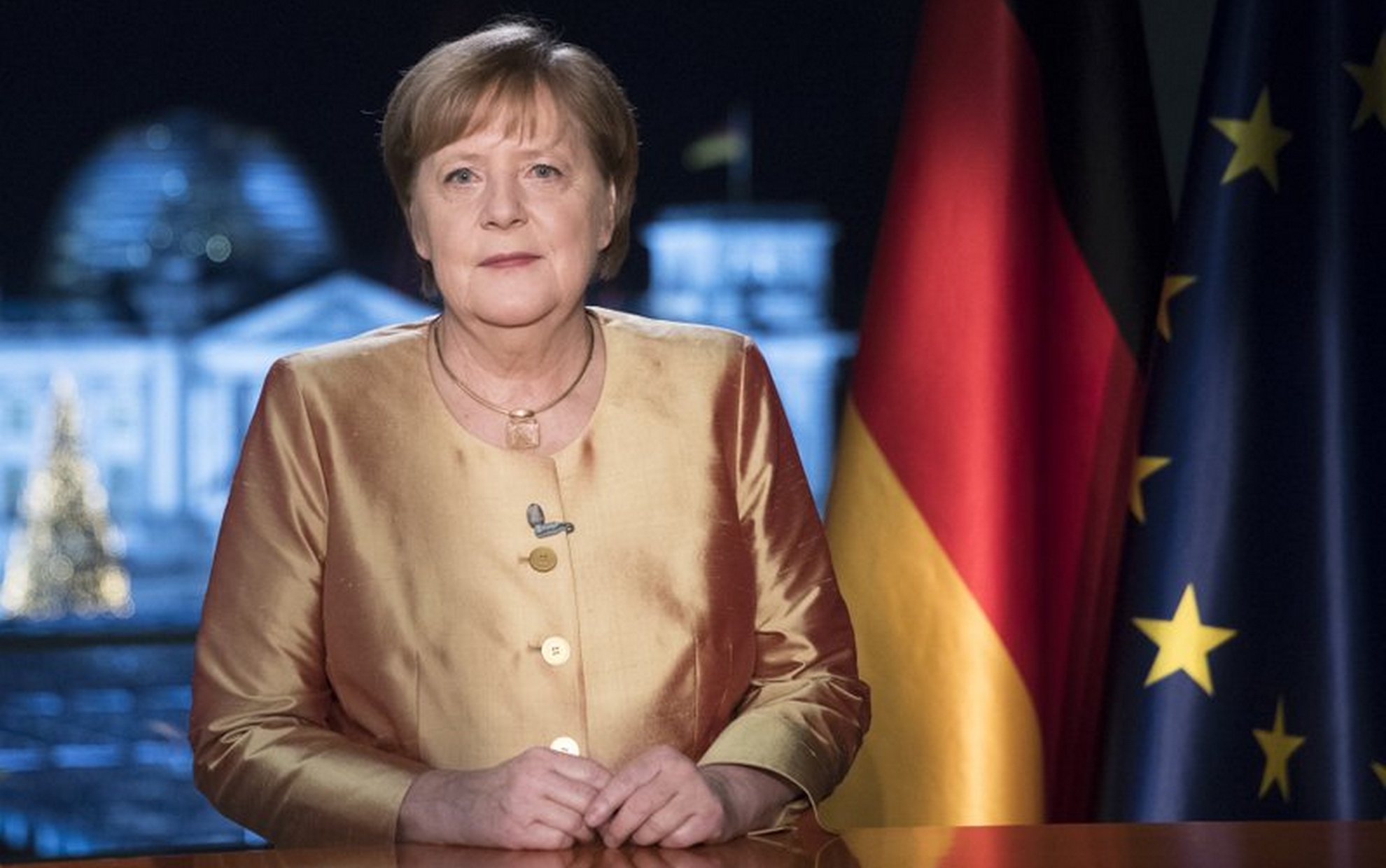
After 16 years in power, Angela Merkel’s era is officially over after the next general election.
But this time, the Christian Union is not only facing the challenge of the departure of its leader, but also its decline in popularity and the risk of its disintegration, what are the reasons?
Is the Christian alliance entered the stage of danger?
The popularity of the Christian Democratic Party (CDU), to which Chancellor Angela Merkel belongs, continues to decline in opinion polls in Germany due to what many German residents see as poor management of the Covid pandemic, especially since the second wave.
But one of the biggest ones who paid the price for this decline is Merkel herself, although she will not be a candidate in the elections, and her political legacy will pay the price for this slide, especially the nature of the alliance she led for a long time between her party and the Bavarian Christian Social Party (CSU).
Officials from the Christian alliance defend Merkel’s outcome during her chancellery years in Germany, and believe that the German population in general trusted the alliance.
It may also be true before the pandemic, but during that time many residents believe that the party that leads the government did not succeed in the test to confront Covid, as the measures it announced did not succeed in stopping the spread of the virus and thus more infections and deaths.
Covid-19 affects the popularity of the coalition
The measures in the first months gave good results, but with the passage of time, the defect began to appear, especially the reluctance to take new measures at the start of the second wave, the mismanagement and the slow in distributing the vaccine, and the masks scandal in which officials from Merkel’s party were involved, all of which had a negative impact about its future.
For many Germans, the slow pace of the vaccination process (the number has increased recently since private clinicians were able to participate) is a sign of inefficiency within the government.
A spokesman for the Christian Alliance, Jurgen Hart, admits that the federal government has faced problems with the vaccination process, but this is due to European coordination and weak production operations in Europe, pointing to the need to coordinate vaccination efforts at the European level, so there will be no great benefit if vaccination is done.
All Germans, but the inhabitants of the rest of the European countries are still the opposite.
Reluctance to take new measures at the start of the second wave, mismanagement, slow distribution of the vaccine, and the masks scandal greatly affected the coalition.
In the last year of Merkel’s tenure, her Christian alliance suffered from a series of scandals, but the most influential on its image was the gags scandal after it was revealed that officials from both Christian parties received huge funds from companies in order for the latter to win deals announced by the government on the supply of masks.
Signs of danger
The first results were in the regional elections in the states of Baden-Wuerttemberg and Rhineland-Palatinate, where the CDU party recorded its worst outcome in decades, and then this was confirmed when the star of the Green Party rose and became competing with the CDU party, although the Greens were considered a small party years ago with no more than 15 Percent of votes.
If the polls are accurate, the collapse of the Social Democratic Party (SPD), ranked in the center of the left, will be followed by the collapse of the Christian Union, which is ranked in the middle of the right in the next general elections, as a 10 percent decline in the percentage of voters who vote for the two coalition parties was counted Christian, what might make this union live its last months and thus the danger of disintegration.
The issue is not only related to the Christian Union, for the idea of bipartisanship that several European countries witnessed in the second half of the twentieth century is also under threat, but on the other hand, the transformation process in the political alliance inside Germany was lagging behind in comparison with neighboring countries, and at a time when similar alliances fell in Europe, the Christian Union was gaining confidence before the Coronavirus wave came to affect its reality.
The Christian Alliance trusts Armin Laschet, the prime minister of North Rhine-Westphalia, to be its candidate in the upcoming elections, after a frantic internal rivalry between it and Marcus Söder, the prime minister of the state of Bavaria.
Hart expresses confidence in Laschet winning the position of chancellor.
Foreign policy is in the balance
However, the challenges are not only internal, as Germany’s foreign policy in recent years is also the subject of controversy, including widespread criticism of the gas pipeline with Russia, “Nord Stream 2”, especially that the United States and Eastern European countries oppose this project, especially with the fear that the deal will enable Moscow to Wider influence in Europe as the European Union grows more dependent on Russian energy.
Hart does not see that economic relations with Russia threaten Germany’s security, but he admits that German foreign policy needs to be re-evaluated, noting that Russia and China have a record inconsistent with German and European values, and he also talks about that the foreign policy of the European Union should be reconsidered.
Even a balance between political concerns and economic interests.