Daily Mail: Three nightmares await the US army in case moving towards ground invading Iran

With talk of a possible ground operation in Iran mounting, and reports of 5,000 US Marines being sent to the Middle East, Iran’s rugged terrain is returning to the forefront as one of the most important natural deterrents.
The Daily Mail highlighted three major challenges, which it described as nightmares, that could turn any full-scale ground invasion into a strategic nightmare that outweighs the wars in Vietnam, Afghanistan and Iraq combined.
- Vast mountain ranges hide nuclear assets;
Iran has an enormous mountainous terrain, with three main ranges, with the Zagros mountains (990 miles) overlooking the Gulf, the Alborz mountain that protects Tehran from the north and includes the highest peak (Mount Damavand at 18,405 feet), and the Makran Mountains.
The vast majority of Iran’s military and nuclear assets are hidden deep in these mountains.
Fighting in this environment, according to NATO’s Centre of Excellence, means facing difficult access, harsh weather, and steep slopes that isolate military units and make them vulnerable to ambushes by Iranian guerrilla forces in their terrain.
- Salt deserts and swamps… A Tank hell;
The only low-lying area is Khuzestan province on the Gulf, but any force that invades it will run into the problem of wide swamps that make the movement of heavy vehicles such as tanks nearly impossible, and forces soldiers to take predictable routes that are easy to target.
Iran also includes vast salt deserts such as Dasht-e-Kavir and Dasht-e-Lut, where temperatures reach 50 degrees Celsius, soldiers suffer from water shortages, and salt dust causes electronic equipment to wear down and disable it.
- Strait of Hormuz: The dead gate of oil;
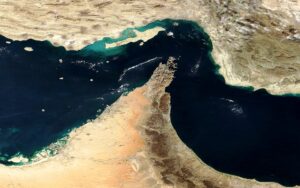
Any US airdrop would depend on control of southern waters, but Iran dominates the Strait of Hormuz, the artery through which 20% of the world’s oil passes daily.
Tehran has made it clear that it won’t allow a single liter of oil to pass through if the shipments are destined for the US or Israel, turning any hostile ships in the Gulf or Gulf of Oman into easy targets for Iranian speedboats.
Invasion In this context, Professor Thomas Bonnie James argues that the most likely scenario isn’t a full-scale invasion, but rather a specialized, limited operations targeting sensitive nuclear facilities such as Natanz, Fordow and Isfahan, with a focus on speed, accuracy and rapid withdrawal.
On the other hand, Chatham House’s Dr. Neil Quilliam warns that these same operations would be high-risk, complex and protracted in a highly hostile and heavily protected environment, making all military options difficult and costly.
As such, Iran’s geography remains its strongest ally, turning any dream of a ground invasion into a logistical and strategic nightmare, and limiting war options to limited air strikes that do not achieve a decisive victory.