Concern over shortages of basic materials haunts Venezuela amid crisis with Washington
Venezuelans fear a US blockade of oil tankers could lead to shortages of essential materials, despite President Nicolás Maduro’s assertion that his country is self-sufficient, with the severe shortage crisis of 2016 and 2017 still fresh in mind.
University professor Orlando Bustamante said: “The specter of material shortages is still present in our memory… We’ve not forgotten those days of suffering”.
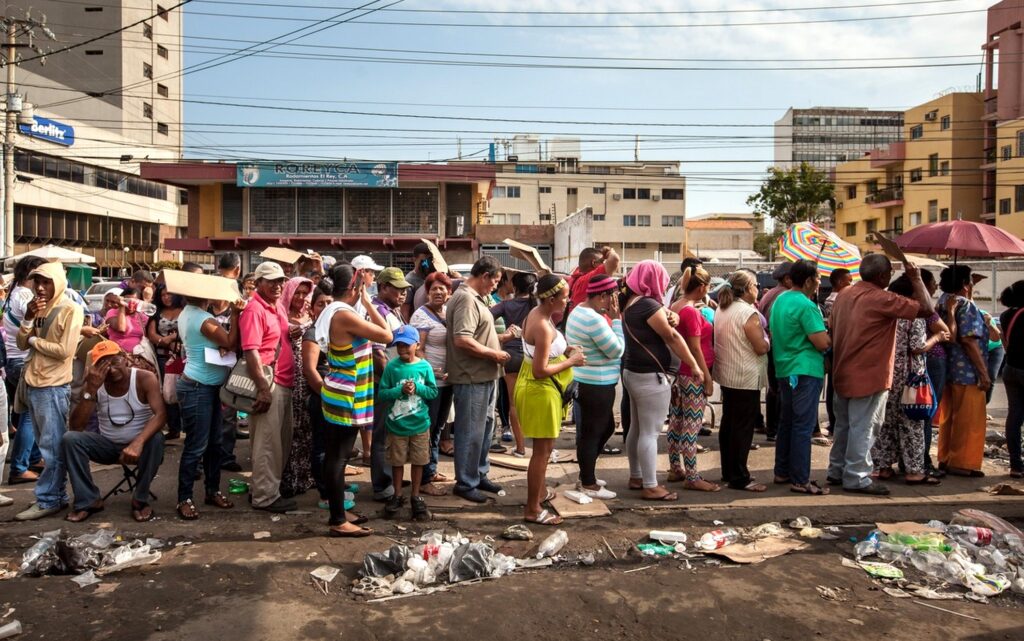
During those two years, people had to wait for hours in front of near-empty shops to get staples, such as meat, flour or corn, which are indispensable ingredients for making the country’s staple food arepa.
The shortages were caused by falling oil prices, Venezuela’s main supplier, a shortage of foreign currency for imports, and tight price and exchange controls that led to a decline in domestic production.
Seven million Venezuelans have migrated since 2013, according to the United Nations, a large part of them during that crisis.
The government has long attributed the crisis to an organized economic war, led by the private sector, the opposition, and US sanctions.
Washington has been imposing economic sanctions on Venezuela since 2017, and in January 2019 during Donald Trump’s first term, Washington imposed an oil embargo aimed at strangling the country’s economy.
Analysts say mismanagement of the economy, including exchange control and low-productivity public sector firms, has led to the crisis.
Sometimes we are afraid that the shortage will return,” adding, “If the oil sector doesn’t prosper, the country’s situation will deteriorate,” Bustamante said.
Shortages of basic materials in 2016-2017 contributed to the spread of the black market.
In December, US President Donald Trump announced a comprehensive and complete blockade of sanctioned oil tankers sailing to and from Venezuela.
The Coast Guard and the Ministry of Defense seized two tankers carrying more than 1 million barrels each.
According to ship-tracking website Tanker Trackers, there are about 17.5 million barrels of oil on tankers that cannot leave Venezuela due to the blockade.
Washington says the measure is aimed at stopping funding for drug trafficking, while Caracas argues that Trump wants to oust Maduro to seize the country’s oil reserves, the world’s largest, with the country’s future uncertain, citizens are scrambling to stock up on supplies.
But high inflation and the bolivar’s depreciation against the dollar prevent it from being able to store a large number of items.
Analysts expect the oil embargo to lead to a decline in Venezuelan exports and revenues, thereby reducing imports of raw materials needed for the production of hydrocarbons and food.
The 2020 gasoline shortage crisis is still on the minds of Venezuelans as well, with long lines of cars have reappeared in front of gas stations in the border states with Colombia in recent weeks.
The naval blockade won’t affect the domestic fuel market, as the state oil company PDVSA can refine the fuel using light Mesa 30 crude,” said Venezuelan pro-government lawmaker and oil expert William Hernández.
But Marquez appealed: “We don’t want to go back to shortages and queues, this is a catastrophic situation for the economy”.