Türkiye equips its F-16s with new local systems capabilities
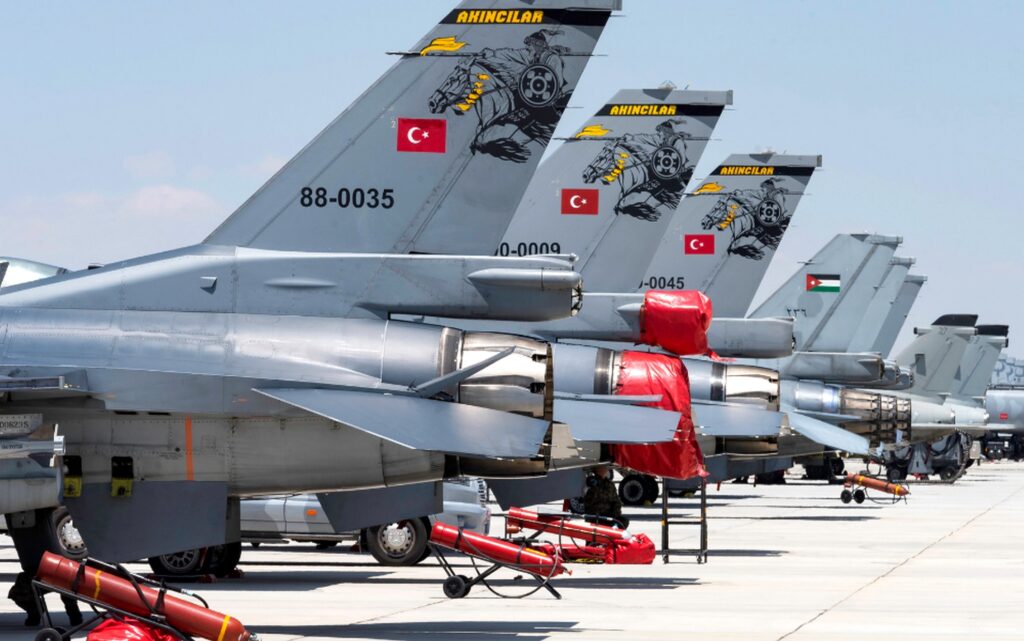
Türkiye has completed the adoption of a national air mission planning program within the Özgür project, which aims to modernize F-16 fighter jets with local systems and extend their operational life.
The program, developed by the Turkish Havelsan company, which specializes in defense software and systems, is one of the essential digital components in the aircraft modernization process.
It provides an integrated environment for planning, managing, and analyzing the results of air missions, which contributes to raising the operational efficiency of aircraft and pilots.
In modern air operations, the importance of an aircraft isn’t limited to its combat capabilities or the type of ammunition it carries, but also depends on advanced digital systems that help in preparing the mission before takeoff, managing it during execution, and evaluating its results after returning.
Based on this premise, Havelsan developed the Fleet-Level Planning (FSGP) program, which began in 2003 and entered actual service in the Turkish Air Force in 2007.
The program is used in preparing various types of air missions, whether for fighter jets, training aircraft, air transport, or early warning and control aircraft known as AWACS.
The system allows pilots and operations planners to set up flight paths, determine air navigation points, perform aircraft performance calculations, as well as analyze potential risks and threats before the mission is executed.
It also provides advanced capabilities including studying safe flight altitudes, analyzing airspace, planning the use of different munitions, conducting mission simulations before execution, as well as uploading and retrieving data on the aircraft and analyzing mission results after completion.
One of the program’s most notable advantages is its ability to work seamlessly with the Turkish Air Force’s information systems, allowing the use of air operations data, weather, intelligence information, and military and civilian aviation navigational notices during the planning process.
The program also has the ability to operate independently even if there is no connection to military networks, which is a feature of great importance in sensitive operational environments or during emergency situations.
At the same time, work continues on completing the full integration between the program and the Turkish Air Force information system, ensuring a more comprehensive and faster exchange of data.
The program, which is being implemented as part of the project, aims to develop the capabilities of the F-16s and reduce dependence on foreign systems.
The project seeks to achieve its goal of replacing a number of electronic components and systems with locally developed ones, giving Türkiye greater flexibility in managing and modernizing its air fleet without the need for external approvals or restrictions.
The project isn’t limited to software development only, but also includes upgrading electronic flight systems (avionics), integrating Turkish-made munitions and weapons, as well as introducing technical and structural improvements to the aircraft.
Through these steps, Türkiye seeks to keep its F-16 fighter jets in service with high efficiency for many years, in parallel with the development of new national air platforms such as the domestically produced Kaan fighter jet.
As part of the project, Türkiye developed mission planning solutions for a number of locally produced smart munitions, including the TEBER guided munition.
Several of the most prominent national weapons systems were also integrated into the new planning system, including HGK and KGK ammunition, the SOM cruise missile, and the TOLUN smart bomb.
This integration allows pilots and planners to prepare combat missions using national munitions within a unified digital environment, which enhances the effectiveness of operations and increases the independence of the Turkish Armed Forces.
The use of the new planning capabilities is not limited to F-16s only, as Türkiye is working to generalize them to other locally made air platforms, including the HURKUş and HURJET light attack and training aircraft, in addition to the national fighter Kaan.
Experts believe that these steps represent part of the accelerating digital transformation taking place in the Turkish defense industries, as the focus is no longer limited to the production of aircraft or ammunition, but has extended to the development of software, command and control systems, planning and data management.
With the completion of the mission planning program within the Özgür project, Türkiye has added a new element to the national capabilities system through which it seeks to enhance its technical and military independence in one of the most sensitive areas, namely military aviation and air operations management.