The EU opens the door to dialogue with Damascus
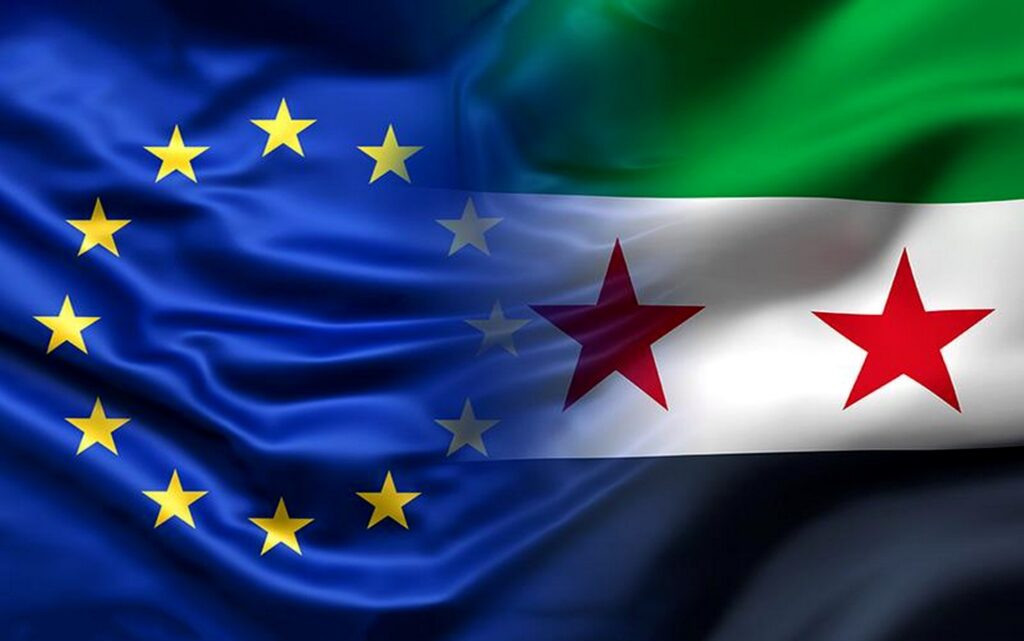
The Belgian capital, Brussels, will host the first high-level political dialogue between the European Union and the Syrian government on Monday, in a move that represents the first official platform at this level since the fall of the defunct Assad regime in December 2014.
The meeting, which European diplomats described as pivotal, reflects Europe’s tendency to redefine its relationship with Damascus within a new approach that combines political openness with specific human rights demands.
The meeting will be chaired by EU foreign policy chief Kaja Kallas and Syrian Foreign Minister Asaad al Shaibani, in a meeting expected to outline the next phase of relations between the two sides.
The acting head of the European Union mission in Damascus, Michael Onmacht, described the development of relations as having moved from below zero to a phase of shared success, noting that the upcoming dialogue in Brussels will discuss a comprehensive cooperation strategy that includes economic recovery and reconstruction.
The meeting comes after high-level visits that paved the way for it, most notably:
Visit of European Commission President Ursula von der Leyen and European Council President Antonio Costa to Damascus.
Syrian President Ahmed al Sharaa participated in the European-Arab summit in Cyprus last month.
The European Union is working to reactivate the cooperation agreement signed with Syria in 1978, after it had been suspended since 2011. The agreement, which formed a framework for trade, financial and technical cooperation within the Mediterranean agreements, is returning today as a legal reference for a new path.
The European Commission has proposed a full resumption of the agreement, in a move that reflects the EU’s strategy to support a comprehensive Syrian-led political transition.
According to European documents and statements by officials, the dialogue agenda includes several key topics.
The EU is focusing on supporting economic recovery and reconstruction, announcing a €620 million aid package for 2026-2027 to support economic recovery.
The two sides will also discuss reintegrating Syria into regional connectivity projects in the transport and energy sectors.
In May 2025, the European Union lifted sectoral sanctions on Syria, including those targeting the energy, aviation, and insurance sectors, while maintaining personal sanctions on individuals associated with the former regime.
Remaining sanctions include an arms embargo and export restrictions related to chemical weapons.
The issue of returning refugees, particularly the voluntary return of Syrian refugees, is a European priority, given that more than one million Syrians reside in Europe.
UNMAT confirmed that the political obstacles to return have disappeared following the political changes in Syria, but economic and social challenges remain.
The European Union is working to support voluntary return programs in cooperation with the Syrian government’s Syria Without Camps initiative.
Political dialogue between the European Union and Syria is reopening diplomatic channels, but human rights organizations, including Human Rights Watch, warn against separating normalization from transitional justice files.
The European Union, in its official statements, emphasizes the importance of holding those responsible for violations of international human rights law accountable, and supporting international investigation mechanisms such as the Independent Investigative Mechanism (IIIM) and the United Nations Commission of Inquiry.
Adding to that, ensuring women’s full participation in the political process, and protecting the rights of all Syrians without discrimination.
The European Union announced the reopening of its mission in Damascus as part of a diplomatic opening, after years of closure.
The EU Ambassador to Syria, described the move as very important” to ensure a European presence in Syria and prevent a vacuum that could be filled by other actors.
The Brussels meeting represents a strategic shift in European-Syrian relations.
On the one hand, the European Union wants to support stability in Syria to prevent new refugee flows and to capitalize on Syria’s geographical location as a trade and energy corridor between Europe and the Middle East.
On the other hand, its setting human rights conditions related to transitional justice, the protection of freedoms, and political participation.
The Syrian government, for its part, is seeking to break the diplomatic isolation imposed on it for decades and attract European investment for reconstruction.
The upcoming dialogue will determine whether this openness will evolve into a long-term strategic partnership or remain limited to humanitarian and economic cooperation.