Foreign Affairs: Trump’s War on Iran… Withdrawal Immediately or Vietnam’s Swamp

Three weeks after the US-Israeli war against Iran, a familiar and dangerous pattern is beginning to emerge.
For now, the current conflict may be vastly different from the US wars in Afghanistan, Iraq, or Vietnam, US ground troops have yet to be called in (the first Marine force arrives in the Gulf next Friday).
But the war on Iran shares a deeper strategic reality with its predecessors, as Washington is once again fighting a regional power that is weaker than its without clear goals, a specific vision of victory, or even an actionable exit from this war strategy.
The result is a different kind of swamp, but ultimately a swamp, US forces may become more involved in months or years of air, sea (and possibly land) operations, incur heavy additional costs to the global economy, destabilize the Middle East more than they do now, and inflict increasing civilian casualties.
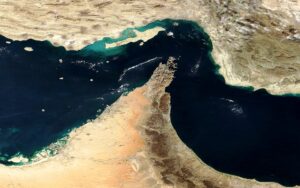
This war, like others, is tilted in favor of the weaker side because of inequality; For the United States to win, it must achieve near-impossible goals, such as regime change or weakening Iran to the point of crippling its ability to disrupt global oil markets, while it’s enough for Iran to hold out, and remain able to inflict damage on the global economy, by disrupting navigation in the Strait of Hormuz or targeting oil infrastructure in the Gulf states.
It has become increasingly clear that a US-Israeli military campaign won’t bring down the entrenched regime in the Islamic Republic of Iran.
Nor will it cripple Iran’s capabilities, Washington may be inclined to escalate, whether through direct ground intervention or support for separatist movements inside Iran, but the cost and risks of these options far outweigh any potential gains.
In light of the global economic turmoil and rising regional tensions, it seems that the most realistic option for Washington is to look for a way out, rather than get involved further in a war that it entered recklessly and according to miscalculations.
From the beginning, the US strategy has been characterized by confusion and confusion.
President Donald Trump launched military operations without preparing public opinion or setting clear achievable goals.
In his first remarks, he even called on the Iranian people to overthrow their regime, setting this goal as a criterion for success, an impossible goal to achieve.
In turn, this proposal gave the Iranian leadership an easy path to victory: resilience and survival.
Initial developments point to the opposite result, as the US-Israeli aggression has contributed to strengthening the influence of the hardline movement inside Iran, and this proves that the predictions of Washington and Tel Aviv were wrong.
Although senior leaders in the Iranian regime have been targeted, there are no signs of the security apparatus disintegrating.
In contrast, Iran’s military performance remains consistent, with command-command, and control structures still functioning.
The Iranian regime has also succeeded in decentralizing operations that allows the Iranian military to continue fighting despite the loss of some of its commanders.
In fact, the targeting of senior leaders, including the assassination of Supreme Leader Ali Khamenei, has increased the regime’s cohesion rather than weakened it.
Before the war, it was believed that the transition of power might open the door to internal revisions (especially with regard to the nuclear program) or more pragmatic approaches.
But that possibility is now nearly impossible, and what actually happened is quite the opposite: the appointment of Mojtaba Khamenei as the republic’s supreme leader, more hawkish than his late father, and with very strong ties to the Revolutionary Guards, strengthened the hardliners’ influence, established a more rigid approach, and boosted the regime’s long-term survival.
While regime change seems a slim prospect, at least in the short term, some still believe that war may succeed in neutralizing Iran as a military threat in the coming weeks!
From the outset, the US military has focused on specific goals, such as weakening Iran’s missile, naval and nuclear capabilities, and reducing Tehran’s regional influence.
While this is more realistic than the goal of regime change, it recalls a familiar dilemma Washington has faced in both Iraq and Afghanistan.
In this context, the United States needs to ensure the flow of energy (protecting oil-related infrastructure in the Gulf), and maintain regional stability.
Iran, on the other hand, is sufficient to carry out sporadic attacks, even if they are limited, to have a significant economic and psychological impact.
A successful attack on an oil tanker or a vital facility in the Strait of Hormuz could be enough to destabilize global markets.
In the face of these political and military realities, the United States may be inclined towards further escalation, whether by radically striking the nuclear program, attempting to overthrow the regime, or supporting local opposition forces.
But, as in previous wars such as Iraq and Vietnam, they may reach the same conclusion: escalation often exacerbates the crisis rather than resolves it.
The options on the table such as acquiring Iran’s highly enriched uranium, taking control of nuclear facilities, targeting economic infrastructure, or supporting local opposition forces carry significant risks, including direct military involvement, high casualties, Iran’s slide into internal chaos or civil war, opening the door to broad regional interventions and threatening the stability of the entire region.
According to available reports, uranium is stored as gas in containers hidden in tunnels that are difficult to transport or even reach after last June’s war caused the closure of its entrances.
If the United States were to attempt to seize these quantities (400 kilograms at 60% and 200 kilograms at 20%), it’s unclear whether this operation is feasible at all, especially since the United States wouldn’t have the element of surprise, as Iran would be expected to be prepared for such a scenario.
Iranian forces will rush into the area, forcing Washington to secure a vast land perimeter inside hostile territory, in the face of large numbers of Iranian forces.
The same is true of the other option that the Americans are considering to break the regime’s resilience, which is to target the economic artery. The United States may be able to control the island of Kharg (through which 90% of Iran’s oil exports pass), but the cost and risks of this option remain substantial.
First, it would require a large-scale ground military operation to control a well-fortified area, put US forces at significant risk, and could lead to significant casualties.
Second, fighting on the island could damage Iran’s energy sector, prompting retaliatory responses to global energy markets — a scenario Washington is essentially seeking to avoid (Washington and Tel Aviv targeted energy facilities in Isfahan and Khorramshahr at dawn on Tuesday).
More importantly, the strategic feasibility of this option remains in doubt, as the idea is that economic pressure will push Iran to change its behavior or accept US conditions.
But the regime in Tehran has repeatedly demonstrated its ability to withstand harsh economic pressures, as it has done during decades of blockade and sanctions.
He is likely to respond to any such move by escalating his attacks against energy facilities in the region.
The events of recent weeks have provided a clear example of this trajectory (including the targeting of Qatar’s LNG facilities that disrupted about 17% of their production capacity for a period of 3-5 years).
Tehran has also shown great awareness of Washington’s sensitivity to oil prices; Trump’s threat to target Iranian power plants is also unlikely to achieve his goals, as Tehran is expected to respond by targeting similar facilities in the Gulf states rather than bowing to US threats.
Even the path of threatening to destabilize the regime from within (supporting and arming opposition groups) carries significant risks, as it may not lead to regime change as much as it leads to the disintegration of the state and its slide into civil war.
The likely outcome in this case isn’t an orderly transition, but rather a protracted multilateral conflict, similar to those in Syria and Libya.
Regional powers would almost certainly intervene in such a scenario; Türkiye won’t stand idly by if Kurdish groups grow in influence, Pakistan will be concerned about the rise of Baloch activity, and Gulf states may support certain actors.
This will lead to the flow of weapons and funding into Iran, creating a highly volatile and unstable environment.
Although Israel may see Iran’s disintegration as a win-win, this scenario is a nightmare for the United States.
Iran is at the heart of a sensitive region that includes Afghanistan, Iraq, and Pakistan, and any broad internal collapse could open the door to extremist groups, disrupt regional trade, and export instability beyond borders.
Immediately after three weeks of war, the United States is faced with two options: either escalate into a war with no clear objectives, or reassess and seek to de-escalate in preparation for withdrawal.
The second option is the wisest, as Trump should declare that the US military has achieved limited goals and send signals for de-escalation.
It should also pair this with public assurances and statements that Washington will rein in Israel and will only support any future attacks on Iran if the latter resumes its nuclear program or launches attacks on regional partners.
It’s true that Iran may initially reject such an offer, however international pressure, especially from forces concerned with stabilizing energy markets, may later push for a cooldown.
It’s also true that this path doesn’t bring about a clear victory for the United States, but it does limit the inevitable losses.
The alternative – continued escalation – would lead to far worse outcomes and more serious outcomes: The United States would remain involved in the region, running Iran’s weaker but more aggressive affairs.
Its relationship with its Gulf partners, already strained by the economic and security fallout of a war they haven’t sought, will be damaged.
The resources directed to the Middle East to contain Iran, as well as resources spent during the war, will put the US military generally on the defensive, particularly in the Indo-Pacific.
American history is replete with the experiences of wars that began with reliable calculations and ended at great costs, when the insistence on an unrealistic victory deepened the crisis.
War on Iran wasn’t an inevitable choice, but a decision made without a well-defined political and military plan.
The consequences of this decision are now becoming clear, as the task ahead isn’t to achieve a far-fetched victory, but to limit the damage that has been done, and will be to American interests, stability in the region and civilian lives across the Middle East; this requires acknowledging an uncomfortable truth: in wars like this, the most responsible option isn’t to move forward in search of an uncertain victory, but to recognize that we must back down in time that is, before the costs outweigh the gains and the limited conflict becomes a destructive quagmire from which it’s difficult to get out and a chronic crisis that is difficult to contain.