Volkswagen is in talks to manufacture air defense parts for Israel
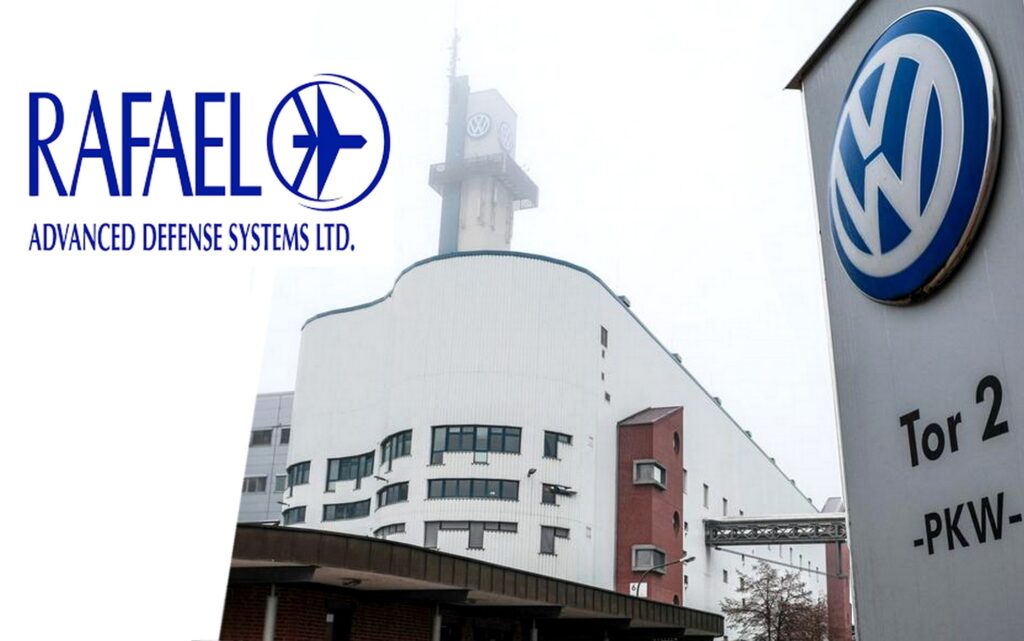
Volkswagen is assessing strategic options for its production plant in Osnabrück, Germany, including reported exploratory discussions with Israeli defense company Rafael Advanced Defense Systems about the potential future use of the facility.
Media reports have suggested that one scenario under consideration involved adapting parts of the plant’s manufacturing capacity to produce components associated with the Iron Dome missile defense system.
The German automaker Volkswagen has stated that it continues to examine market-based solutions for the Osnabrück site but has emphasized that its currently ruling out direct weapons production.
The company has confirmed that it’s in contact with various industrial partners as it evaluates restructuring or divestment options for the facility.
The Osnabrück plant employs approximately 2,300 workers and currently manufactures the T-Roc compact sport utility vehicle.
Volkswagen has already announced that production of the model at the site will be phased out by 2027 as part of a broader restructuring strategy aimed at improving cost efficiency and reallocating investment toward electric vehicle development, software capabilities, and digital mobility services.
The factory has a long industrial history and was previously associated with the coachbuilder Karmann before Volkswagen took full control of operations in 2010.
Discussions about the plant’s future have included earlier negotiations with German defense contractor Rheinmetall regarding a possible sale of the site.
Those talks reportedly stalled in late 2025, however, Volkswagen chief executive Oliver Blume has recently indicated that the company remains in dialogue with defense-sector firms and other potential partners as it seeks sustainable long-term solutions for underutilized production capacity.
The reported contacts between automotive and defense companies reflect broader structural changes affecting Germany’s car industry.
Profitability across parts of the sector has declined in recent years amid intensifying competition from Chinese manufacturers, particularly in the electric vehicle segment, and due to the high costs associated with the transition to electrification and digital transformation.
At the same time, defense spending across Europe has increased significantly in response to geopolitical tensions and NATO modernization initiatives, creating new industrial demand for engineering expertise, electronics manufacturing, and complex supply chains.
Industry analysts note that while the full conversion of automotive plants to weapons manufacturing remains politically sensitive in Germany, cooperation between the automotive and defense sectors is becoming more visible.
Such cooperation can include the production of specialized components, dual-use technologies, or the repurposing of industrial facilities for adjacent high-technology manufacturing.
Volkswagen hasn’t announced any final decision yet regarding the Osnabrück site, and the future ownership or operational model of the plant remains under review.