Newsweek: 5 Reasons why Venezuela’s scenario is difficult to be repeated in Iran
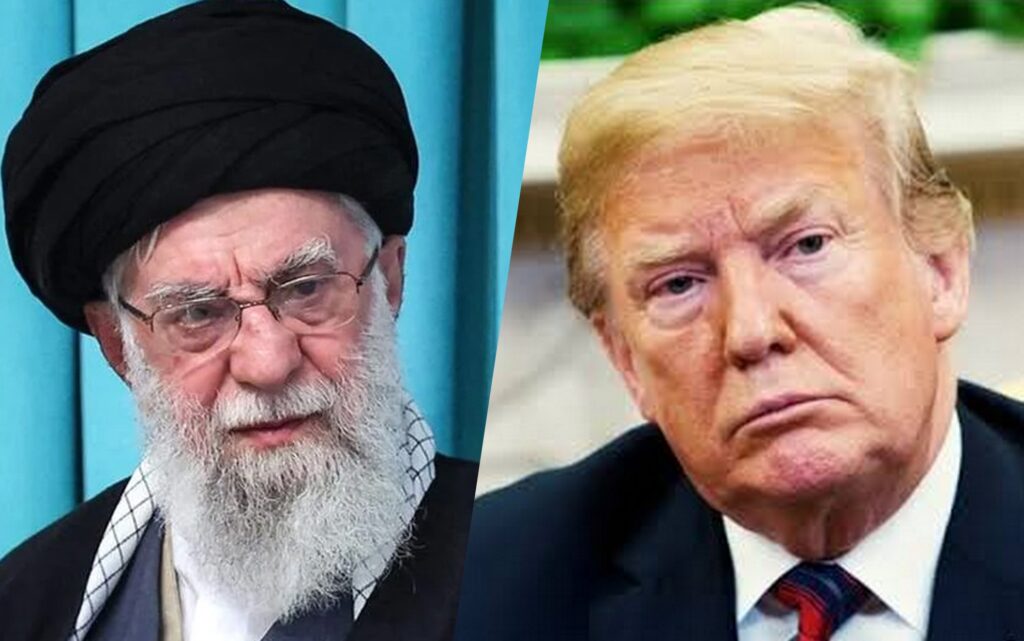
In the wake of the swift ouster of Venezuelan President Nicolás Maduro from power, there is a belief within political circles in Washington, particularly among Republicans, that the same scenario could be repeated in Iran.
Newsweek magazine published an analytical article written by its editorial board in which it warned that this comparison is misleading and dangerous, noting that Tehran is radically different from Venezuela in terms of political and military structure and readiness for conflict.
Although US President Donald Trump said on Monday that Chairman of the Joint Chiefs of Staff General Dan Caine had told him that any conflict against Iran would be easy to decide, the latter warned that the lack of ammunition and the lack of allied support made such an operation far more dangerous than the Venezuela one.
While Trump is making plans to topple Tehran, the situation inside Iran makes the repetition of what Newsweek calls the “Maduro moment” far more complicated than it was in Caracas.
According to Newsweek, there are 5 reasons that support this claim:
1 Khamenei isn’t an easy target
Unlike Maduro, Iran’s Supreme Leader Ali Khamenei isn’t a figure who can be surrounded or arrested.
Its surrounded by an elite security unit of the Revolutionary Guards, within a defensive structure specifically designed to prevent beheadings.
Former US officials say any serious attempt to capture him is likely to end in a bloody confrontation or death, rather than arrest, which could spark an all-out escalation rather than a political collapse.
2 Iran’s Governance structure doesn’t collapse by beheading
The analytical article suggests that the regime in Tehran is more cohesive than the one that surrounded Maduro.
Iran’s political, military, and religious institutions are deeply interconnected, and have been prepared for assassination or loss of leadership.
Newsweek quoted the New York Times as saying that Khamenei created four successive layers for each sensitive position, and reduced decision-making circles to ensure continuity even if communications were disrupted or senior leaders were killed.
3 Iran is ready for war
Unlike Venezuela, Iran has been preparing for months for the possibility of a direct military confrontation.
It has put its forces on high alert and redeployed rocket platforms on its western border and Gulf coasts.
Ali Larijani, head of the Supreme National Security Council, said: “We’ve reviewed and addressed our weaknesses… If war is imposed on us, we will respond”.
Satellite images shows extensive fortification and repair work at nuclear and missile facilities.
4 The war won’t remain within Iran’s borders
Newsweek warns that the confrontation with Iran won’t remain confined to its territory.
Tehran has a network of allies and militias that stretches from Lebanon to Iraq and Yemen, opening the door to a multi-front conflict against US and Israeli interests.
Analysts fear that any sudden collapse in Iran could lead to power vacuums that threaten the stability of the entire Middle East.
5 Complex geographical and logistical challenges
Finally, geography, distance, and a lack of allied support make any strike against Iran more complicated than the Venezuela operation.
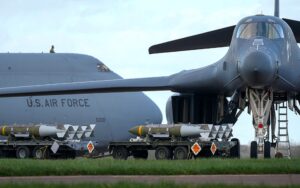
In Newsweek’s view, Iran is located deep in the Middle East, forcing US forces to operate through a broad theater of operations from bases in Europe or the Gulf, under the command of US Central Command (CENTCOM).
The issue has been further complicated by Britain’s refusal to allow its strategic bases to be used for potential strikes without clear legal cover.
In summary, Newsweek estimates that Venezuela’s experience may tempt decision-makers in Washington, but it doesn’t serve as an example for Iran.
The Iranian regime is more entrenched and ready, and any attempt to change it by force could open the door to a regional war and shocks in global energy markets, at a cost far beyond Iran’s borders.