The Russian president in an official visit to the former Soviet Union republics in central Asia
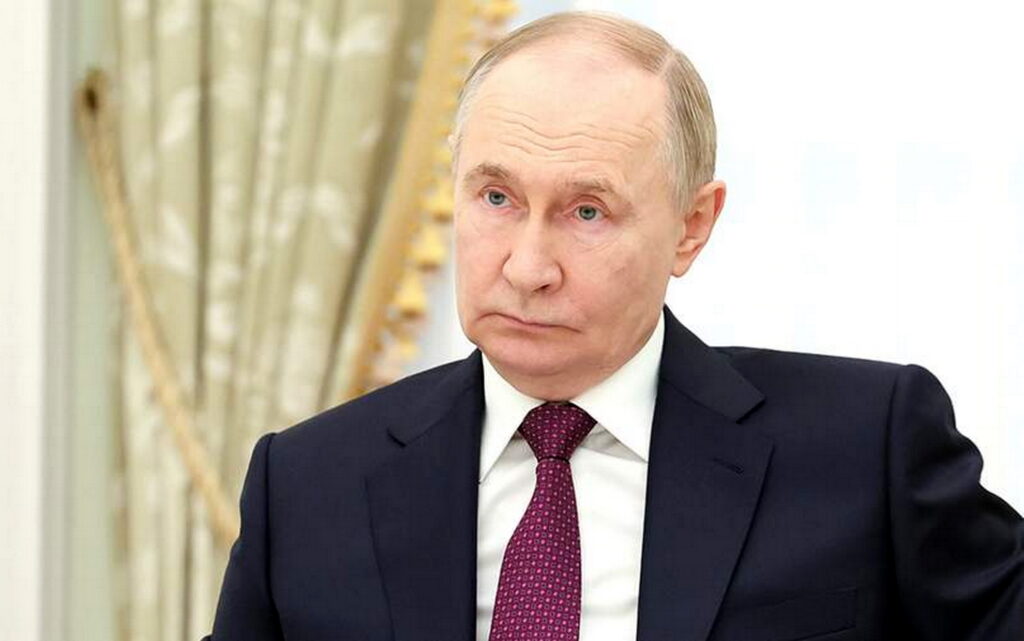
Following European and Chinese officials, Russian President Vladimir Putin heads to Central Asia for a summit on Thursday with leaders of the resource-rich region, where Moscow’s traditional influence is under threat.
Dushanbe is hosting a summit between Russia and the former Soviet republics of Central Asia (Kazakhstan, Kyrgyzstan, Uzbekistan, Tajikistan, and Turkmenistan), only the second of its kind since the fall of the Soviet Union in 1991.
These countries’ relations with China are growing closer, and they maintain good ties with the West.
During the first summit in 2022, Putin denounced “external attempts to obstruct the development of integration (between Russia and Central Asia) and to break the close ties and deep cooperation that have formed over the course of history”.
Western powers considered Central Asia a marginal region subject exclusively to Russian influence from the mid-nineteenth century until the fall of the Soviet Union.
But since Russia’s invasion of Ukraine in February 2022, Central Asia has become a scene of unprecedented diplomatic activity.
It hosted two summits this year, with the European Union in April and with China in June, and it also held a summit with Turkey last year.
“This (5+1) format is an effective and preferred platform for interaction, allowing Central Asian countries to discuss and express their positions in a coordinated manner on regional and global issues”.
Russian official source stressed the utmost importance of the summit, considering that “the agreements reached will contribute to strengthening trust and partnership between the Central Asian countries and Russia”.
Putin will pay a state visit to Dushanbe on Thursday, where he will meet with his counterpart, Emomali Rahmon, according to Russian presidential diplomatic advisor Yuri Ushakov.
The Russia-Central Asia summit is scheduled to begin the same afternoon.
Central Asia is roughly the size of the 27-member European Union, but its landlocked and has a population of only 80 million.
This region is trying to regain its historical role as a trading center.
China has had a strong presence in its neighboring region since launching the Belt and Road Initiative in 2013, a massive infrastructure project reshaping the transportation network between Asia and Europe.
Kyrgyzstan-based researcher Ilya Lomakin believes the current power struggle is the latest version of the ‘new Great Game’ for Central Asia, following the rivalry between the Russian and British empires over it in the nineteenth century.
According to Lomakin, “Alongside Russia, a traditional partner, China and the European Union have become active participants in this ‘new great game’ in recent years, and that while Russia is directing enormous resources toward Ukraine, China’s rapid expansion in the region is on the rise”.
“There is no competition, only cooperation,” Putin said last year… This doesn’t hinder the development of our traditional ties with the region”.
Russia is trying to maintain its presence in Central Asia, which it considers a vital area of influence, through energy agreements, including gas shipments and the construction of nuclear plants.
Lomakin believes that the efforts made to maintain these ties are insufficient, and that Central Asian leaders are exploiting this to seek alternatives away from Russian influence.
During the 2022 summit, Tajik President Emomali Rahmon asked Putin for respect, a rare public gesture between allies.
According to the latest Russian data for 2023, Central Asia’s trade with Moscow amounted to approximately $44 billion, compared to approximately $64 billion with the European Union in 2024.
China has become Central Asia’s main partner, but figures vary.
According to regional authorities, it will reach $66.2 billion in 2024, compared to $94.8 billion according to Chinese customs.
Russia is no longer alone in its security dealings with Central Asia, as the armies of the region’s countries are now arming themselves with China and Türkiye.