SDF official reveals details of the negotiations between the SDF and the Syrian government
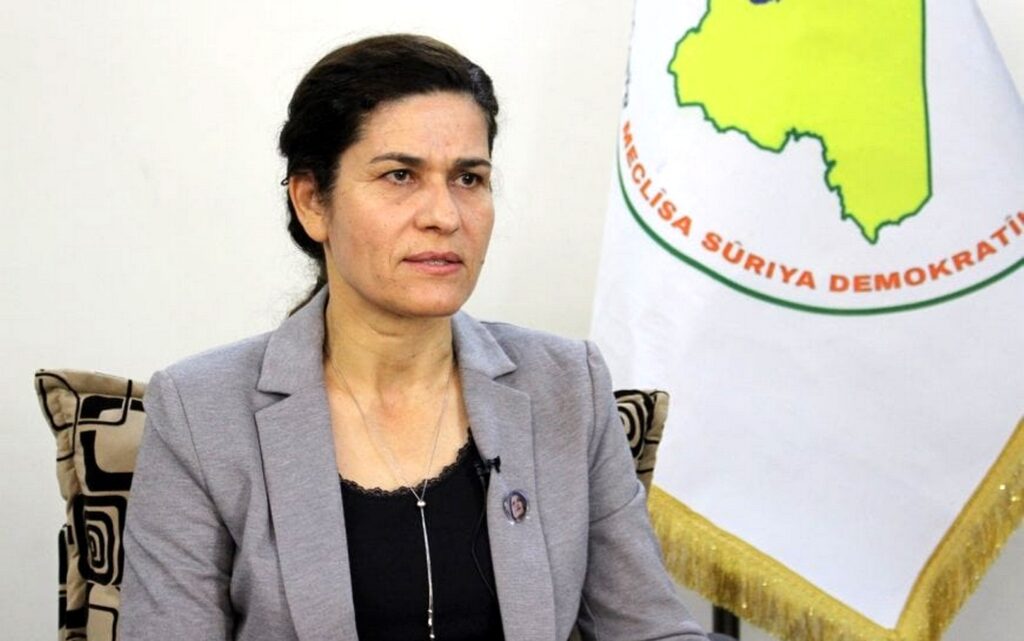
Amid the stalemate in implementing the March 10 agreement between the Syrian transitional government and the Syria Democratic Forces, Ilham Ahmed, the foreign affairs official for the Autonomous Administration of North and East Syria, revealed the most prominent points of contention that continue to hinder reaching an understanding with Damascus.
Ahmed explained that the two main outstanding issues are:
- The future of the relationship between the SDF and the new Syrian army;
- The nature of the country’s political system—will it be centralized or decentralized?
Ahmed indicated that there are proposals to appoint SDF leaders, such as General Mazloum Abdi, to senior positions in the Ministry of Defense or the Chief of Staff within the new army structure, but she confirmed that Damascus has not yet officially responded to these initiatives.
She also emphasized that representation of the regions of north and east Syria in state institutions, particularly in the capital, Damascus, is a major priority for the “Autonomous Administration,” based on the principles of community partnership and cultural diversity in Syria.
Regarding the Constitutional Declaration, Ahmed stressed the importance of reaching a genuine consensus on it, including explicit and clear guarantees regarding rights and representation.
She also emphasized that adopting a decentralized system of government has become a fundamental requirement to ensure the distribution of powers and representation of various social and linguistic components, including allocating seats for women in decision-making positions.
Regarding the possibility of integrating the SDF forces with the Syrian army, Ahmed emphasized that the process must be gradual to avoid destabilizing military and security conditions.
She explained that the proposed constitutional declaration allows for the formation of joint corps within the new army structure, allowing for an organized integration process without the sudden dismantling of existing formations.
Ahmed also revealed that the number of SDF and Asayish internal security forces is estimated at around 100,000 fighters, making any integration process a complex matter requiring careful coordination.
Regarding the future of the Women’s Protection Units (YPJ), Ahmed affirmed that these forces will remain present in the future military structure, emphasizing that the role of women in defense is considered “strategic and indispensable”.
She noted that these units have played a pivotal role in the fight against terrorism and will remain an active part of the security and military system in northern and eastern Syria.
The autonomous administration is demanding sovereign ministries, in addition to amending the constitutional declaration to ensure genuine political participation.
Meanwhile, discussions are underway regarding the participation of representatives from north and east Syria in the upcoming session of the Syrian People’s Assembly.
In response to allegations attributed to Syrian transitional President Ahmed al Sharaa that he had set a deadline for reaching an agreement, or else Türkiye would intervene militarily, Ahmed said that “threats don’t serve the political process,” emphasizing that resolving Syria’s complex issues cannot be limited to a narrow timeframe.
Priority is given to building a new Syria based on national partnership.
Ahmed concluded her remarks by emphasizing that Syria’s future must be built on the foundation of national participation, not on top-down or centralized decisions.
She emphasized that a return to a centralized system contradicts the sacrifices made by Syrians over the past years, and that reaching an understanding on the nature of the new political system is key to stability and building a democratic state that represents all its components.