Syria and Israel are close to reaching a security agreement under US pressure
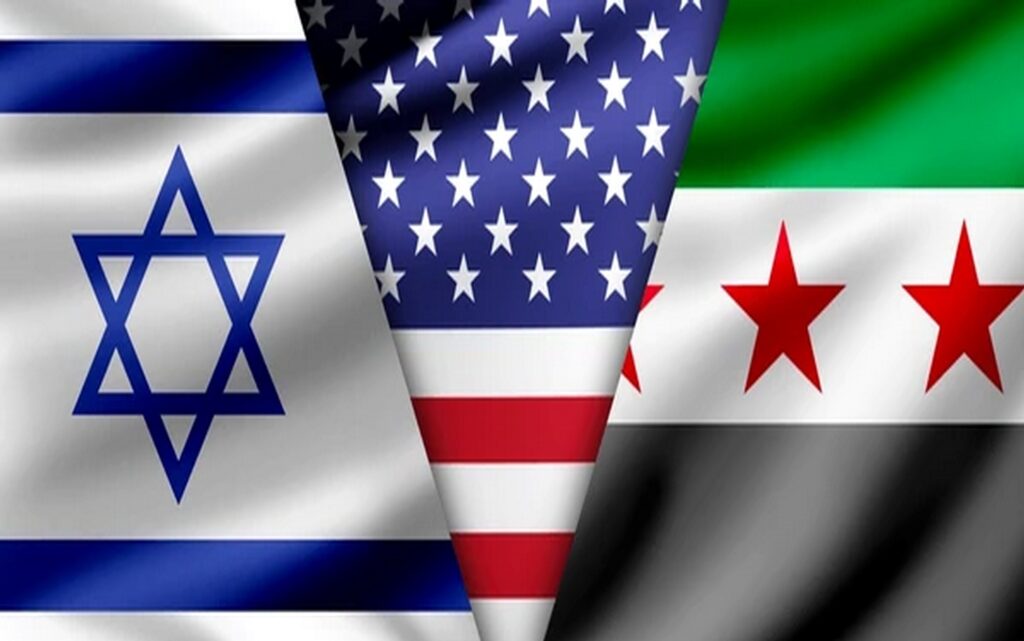
Syria is accelerating talks with Israel, under US pressure, to reach a security agreement that it hopes will lead to the return of lands recently seized by Israel, but will fall short of a comprehensive peace treaty.
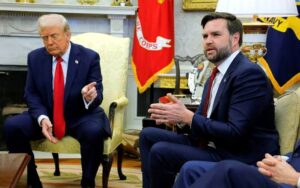
According to Reuters that Washington is pushing for sufficient progress to be made by the time world leaders gather in New York at the end of the month for the UN General Assembly sessions, which would allow US President Donald Trump to announce a breakthrough.
Reaching a modest agreement would be an achievement in itself, pointing to Israel’s tough stance in the months-long talks and Syria’s weak position following sectarian violence in the south that sparked calls for the country’s partition.
In the details, the Syrian proposal aims to withdraw Israeli forces from territories seized in recent months, restore the buffer zone agreed upon in the 1974 armistice to its demilitarized state, and halt Israeli airstrikes and ground incursions into Syria.
The talks didn’t address the status of the Golan Heights, which Israel occupied in the 1967 war, as Damascus’s position said that this issue would be left for the future.
The two sides have been effectively at war since the establishment of Israel in 1948, although there are occasional periods of calm. Syria doesn’t recognize the State of Israel.
After months of incursions into the demilitarized zone, Israel abandoned the 1974 armistice on December 8, the day the Syrian opposition overthrew Bashar al Assad, and later Israel bombed Syrian military assets, bringing its forces within 20 kilometers of Damascus.
In this regard, Israel showed reluctance to give up these gains during the closed-door talks.
An Israeli security source said, “The United States is pressuring Syria to accelerate the process of reaching a security agreement… Trump considers this a personal matter”.
The source stated that the US president wants to present himself as the architect of a major diplomatic success in the Middle East, but the source went on to say, “Israel isn’t offering much”.
A US State Department official said that Washington continues to support any efforts that will achieve lasting stability and peace between Israel, Syria, and its neighbors.
The US State Department official didn’t respond to questions about whether the United States wanted to announce a breakthrough during the UN General Assembly.
Israel has been vocal in its hostility toward the Islamist-led Syrian government, citing President Ahmed al Sharaa’s past ties to jihadists, and has been pressuring Washington to keep Syria weak and decentralized.
But the United States is encouraging the talks, keen to expand the scope of countries that have peace agreements with Israel under the Abraham Accords concluded during Trump’s first term.
Exploratory contacts began in Abu Dhabi following al Sharaa’s visit to the UAE, which has ties with Israel, in April, where the two sides then met in Baku, the capital of Azerbaijan, in July.
Days later, the talks faltered when Syrian forces deployed to the Sweida region in southwestern Syria to confront a wave of sectarian violence between Bedouins and Druze.
Israel claimed the deployment violated its implementation of a “demilitarized zone” and bombed the Defense Ministry in Damascus, and Sharaa accused Israel of seeking pretexts to intervene in southern Syria.
A US-brokered ceasefire ended the violence, and a month later bilateral negotiations resumed in Paris, marking the first time Syria publicly acknowledged direct talks with Israel.
However, the atmosphere during the talks was tense due to the lack of trust between the two sides, according to two Syrian sources and a Western diplomat.
Negotiators are following a gradual process similar to the agreements reached by Israel with Egypt that paved the way for a historic normalization of relations in 1980.
This included the return of the Sinai Peninsula, which Israel captured in the 1967 war, to Egypt.
Six sources familiar with the talks said that Israel wouldn’t be prepared, even in the long term, to return the Golan Heights, over which Trump unilaterally recognized Israeli sovereignty during his first term.
Instead, Israel presented a proposal to US Special Envoy for Syria Tom Barrack that it withdraw from southern Syria in exchange for Sharaa’s relinquishing the Golan, according to the Israeli official.
“Our indications through the Americans indicate that this proposal isn’t feasible,” the official said.
According to a Syrian official, Ahmed al Sharaa realized that any concession regarding the Golan Heights would mean the end of his rule, and informed Barak that the security agreement must be based on the borders of the 1974 disengagement agreement between Israel and Syria.
According to a Western intelligence official, an Israeli official, and a Syrian source, Sharaa is willing to accelerate talks with Israel to please Washington, but he remains cautious.
He informed the US envoy Tom Barrack that conditions were not yet ripe for a broad peace agreement.
The Syrian official said that the basic elements of trust were simply not present.
Trump made it clear when he met with Ahmed al Sharaa in May in Riyadh that he expects Syria to work toward peace and normalization with Israel and its neighbors.
Thus, the US administration has actively supported this position ever since, as Trump wants peace throughout the Middle East.
Facts on the ground have narrowed the options available to the Syrian president.
On the one hand, officials say that Israel’s incursion and support for the Druze has hardened Syrian public opinion against any agreement, a factor that weighs heavily on Sharaa.
On the other hand, Israel’s seizure of territory in Syria poses a threat to Damascus, making a ceasefire agreement all the more important for Sharaa.
A Syrian military official stationed near the border with Israel, who requested anonymity, said that Syrian army patrols in the south avoid encountering Israeli forces, which frequently raid villages and knock on doors to collect information about residents and search for weapons.
The Israeli military said its operations had led to the discovery of “numerous weapons,” the thwarting of smuggling attempts, and the arrest of “dozens of suspects involved in the growing terrorist activity,” without providing further details.
The statement said that the Israeli military is conducting operations in southern Syria to protect Israel and its citizens.
Israel has threatened to launch airstrikes on any significant Syrian military or intelligence presence near the border without its consent.
Israel uses the Mount Hermon site, which it seized after Assad’s fall, to monitor the area, as the Israeli Defense Minister Israel Katz said last month that Israel wouldn’t relinquish the site.
Israel’s position has been strengthened by developments in Sweida, where Syrian forces are accused of executing Druze civilians.
Druze leaders are demanding independence and the establishment of a humanitarian corridor from the Golan Heights to Sweida, challenging Sharaa’s pledge to centralize control over Syrian territory.
Two senior Druze figures, who requested anonymity due to the sensitivity of the matter, said that since the Sweida fighting, Israel has helped unite the divided Druze factions and provided them with military supplies, including weapons and ammunition.
The two Druze leaders and a Western intelligence source said that Israel also pays the salaries of many of the approximately 3,000 Druze militia fighters.
Syrian Foreign Minister Asaad al Shaibani rejected the possibility of establishing a humanitarian corridor during the Paris talks, saying it would violate Syria’s sovereignty, according to a Syrian official familiar with the discussions.
The two sides agreed that stability in southern Syria is essential to preventing the resurgence of covert agents linked to Iran, the Lebanese militant group Hezbollah, or Palestinian armed groups, who represent common enemies of Israel and Syria’s new leaders.
Israel agreed to allow Interior Ministry forces to deploy checkpoints in Sweida, as a Syrian official said, “The two sides are discussing areas of common ground”.
A close aide to Sharaa, speaking on condition of anonymity, said the Syrian president is careful not to provoke Israel, aware of the extent of the damage its military could cause.
He added that “avoiding confrontation is essential to his plan for reconstruction and governance”.