An Iranian-European meeting is expected amid the possibility of activating the trigger mechanism
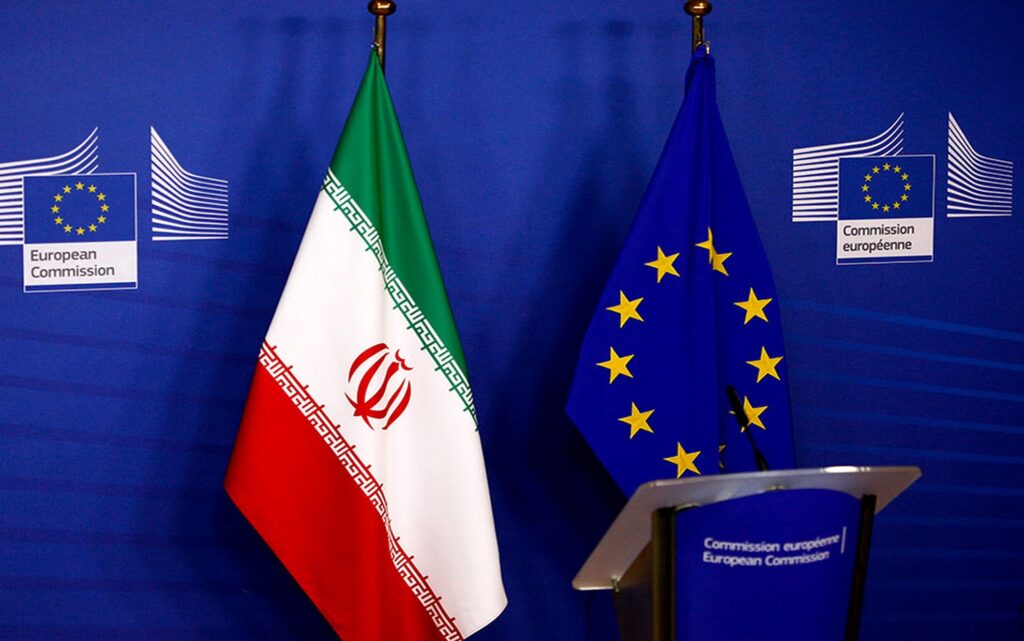
Iran will meet next week with Britain, France, and Germany to discuss its nuclear program, the parties announced on Friday, as European powers urged Tehran to quickly resolve the crisis to avoid the re-imposition of sanctions.
Iran suspended its cooperation with the International Atomic Energy Agency (IAEA) in July following the 12-day war waged against it by Israel, citing the UN agency’s failure to condemn the Israeli and US strikes on its nuclear facilities.
The three European countries party to the 2015 nuclear agreement with Iran threatened to activate the “trigger mechanism” by the end of August unless Iran agreed to limit uranium enrichment and resume cooperation with IAEA inspectors.
This mechanism allows for the re-imposition of UN Security Council sanctions on Iran that were lifted under the nuclear agreement.
A statement issued by the Iranian Foreign Ministry following a phone call between Minister Abbas Araghchi and his European counterparts stated that it was agreed to continue talks with the three European countries and the European Union next Tuesday at the foreign ministers’ level.
France confirmed the talks were taking place and warned Iran that time is running out to reach a negotiated solution.
French Foreign Minister Jean-Noël Barrot said via X, “We just had an important call with our Iranian counterpart regarding the nuclear program and the sanctions on Iran, which we are preparing to reactivate”.
He noted that the call was also attended by his British and German counterparts and the European Union’s foreign policy chief.
“Time is running out… A new meeting on the issue will be held next week,” he added.
German Foreign Minister Johann Wadephul said his country remains committed to diplomacy, but time is very short, stressing that Iran needs substantial cooperation to avoid activating the trigger mechanism.
“We’ve made it clear that we won’t allow the sanctions trigger mechanism to expire unless there is a verifiable and lasting agreement,” he added.
For her part, European Union foreign policy chief Kaja Kallas said, “With the trigger mechanism approaching its expiration, Iran’s willingness to cooperate with the United States is crucial… Iran must also fully cooperate with the International Atomic Energy Agency”.
It wasn’t immediately clear though, where the talks, the second since the Iran-Israel war, would take place.
Iran and the three countries, known as the European Troika, held talks in late July at the Iranian consulate in Istanbul, which Tehran described as frank.
Iran has since criticized Europe for not fulfilling its obligations under the agreement.
Araghchi stressed on Friday the “incompetence and legal and moral incapacity of these countries to resort to the aforementioned mechanism,” warning of the repercussions of such a measure.
Araghchi added that this is a decision that must be taken by the UN Security Council, and the Islamic Republic of Iran has no role in this process, although Iran has its own principled positions and opinions on this issue.
From his part, Ali Larijani, secretary of Iran’s Supreme National Security Council, said in an interview published Friday that the Europeans are carrying out part of America’s operations by threatening to activate the trigger mechanism.
Iran had previously threatened to withdraw from the Nuclear Non-Proliferation Treaty if European countries triggered the mechanism.
In the interview published on the Iranian Supreme Leader’s website, Larijani added that the possibility always existed for Iran to withdraw from the Non-Proliferation Treaty, but that it remained committed to it despite the fact that it brings no benefit to Tehran.
Larijani rejected the possibility of an extension, saying, “Iran does not accept it”.
Tehran insists that its membership in the Non-Proliferation Treaty gives it the right to enrich uranium, a move Washington considers a red line, while Iran insists its non-negotiable.
The trigger mechanism expires in October, although the Europeans had set a deadline of late August for its activation if diplomatic efforts failed.
They also offered to extend the deadline to allow time for talks.