New details revealed about the Israeli military’s plan to attack and occupy Gaza City
As the Israeli war on Gaza continues, news has begun to emerge about the details of Tel Aviv’s plan to occupy the Strip. This comes after Israeli Chief of Staff Eyal Zamir approved the plan in a meeting yesterday, Sunday.
He is scheduled to present the plan to Defense Minister Israel Katz, Tuesday.
During his visit to the Southern Command in Gaza, Zamir said that the next phase of Operation Gideon will begin soon, in accordance with a well-thought-out and balanced strategic operation.
He added that the Israeli army will use all its capabilities on land, at sea, and in the air to deliver powerful blows to Hamas.
It’s worth noting that the plan to occupy Gaza is intended to besiege and invade the few areas of the Strip that weren’t completely destroyed, which constitute approximately 25% of its area.
The Israeli army is expected to send ground forces into the Gaza and North governorates first, to isolate them once again from the rest of the Strip, after which it will begin the incursion from several axes.
The ground incursion into the heart of Gaza City is also likely to begin on October 7th and is expected to last for four or five months, given that approximately one million Palestinians are currently in central and western Gaza City.
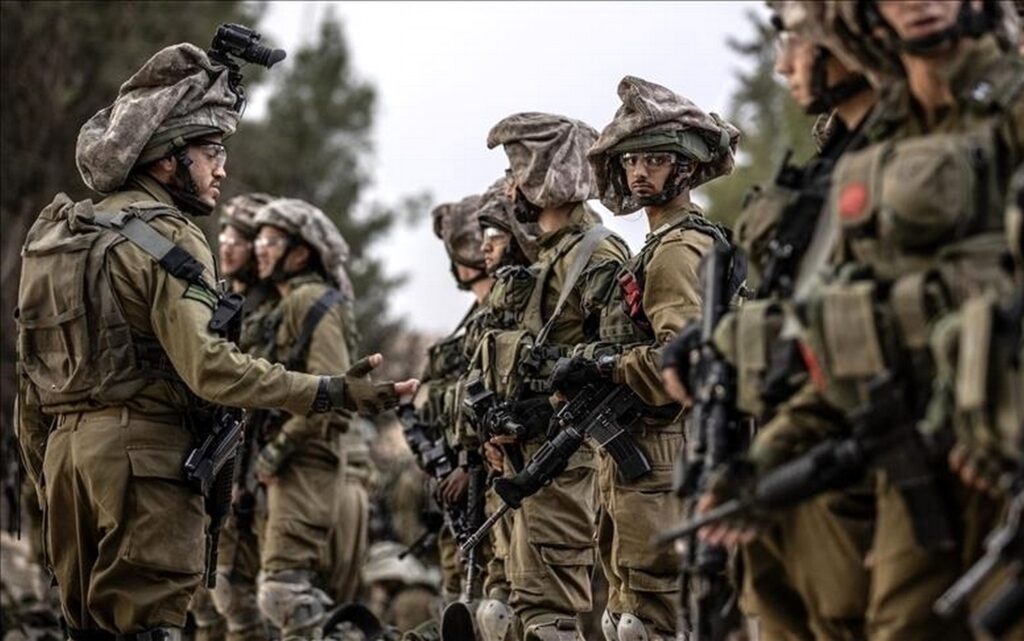
According to the Israeli Broadcasting Authority, at least four military divisions will participate in this operation, representing a mix of permanent brigades and mobilized reserve forces.
The list of brigades expected to participate in this operation includes the Golani and Givati brigades, both elite infantry corps, in addition to the Paratroopers brigade trained in urban combat, armored brigades equipped with Merkava tanks, and combat engineering units specializing in breaching fortifications and combating tunnels.
Israel intends to call up between 80,000 and 100,000 reservists to support expanded operations in Gaza.
As the war approaches its second year, and fighting rages between Israel and Hamas, the Israeli military says it controls about 75% of Gaza.
The United Nations says more than 86% of Gaza is within the Israeli military zone or under evacuation orders.
The main part outside Israeli control is a coastal strip stretching from Gaza City in the north to Khan Yunis in the south.
Many of Gaza’s two million residents are crowded into tents, temporary shelters, and apartments in this area.
Through the Gaza occupation plan, Israeli Prime Minister Benjamin Netanyahu is working to end the war based on five principles, including the disarmament of Hamas, the return of detainees, the demilitarization of Gaza, the establishment of Israeli security control over the Strip, and the establishment of an alternative civil administration.
In the same context, the Israeli Broadcasting Authority reported that the General Staff of the Israeli occupation army and the Southern Command met to develop a plan for occupying Gaza City.
The initial mission is to evacuate approximately one million civilians from the city, and to this end, the Israeli army is preparing to deploy all regular brigades.
The Israeli Broadcasting Authority confirmed that the US administration had requested to see plans to occupy Gaza City.
The Israeli army would then be required to conduct an underground maneuver in an area where detainees are known to be present, and the likelihood of releasing the detainees alive in a military operation is very low.
Therefore, its estimated that the detainees will only be released as part of a deal.
Hamas has sent messages in recent days expressing interest in a partial deal, while senior Israeli officials insist, they want a comprehensive deal.
However, if a genuine deal exists for half of the detainees, Israel is unlikely to formally reject it.
Several sources confirmed that senior officials in the Trump administration, including Special Envoy Steve Witkoff, are currently focused on the talks between Russia and Ukraine, and that they are not available to follow developments in Gaza.
If progress is made in the talks with mediators, Witkoff may return to work in the region.