Russian forces in southern Syria… Marking the return of Moscow to the Syrian stage
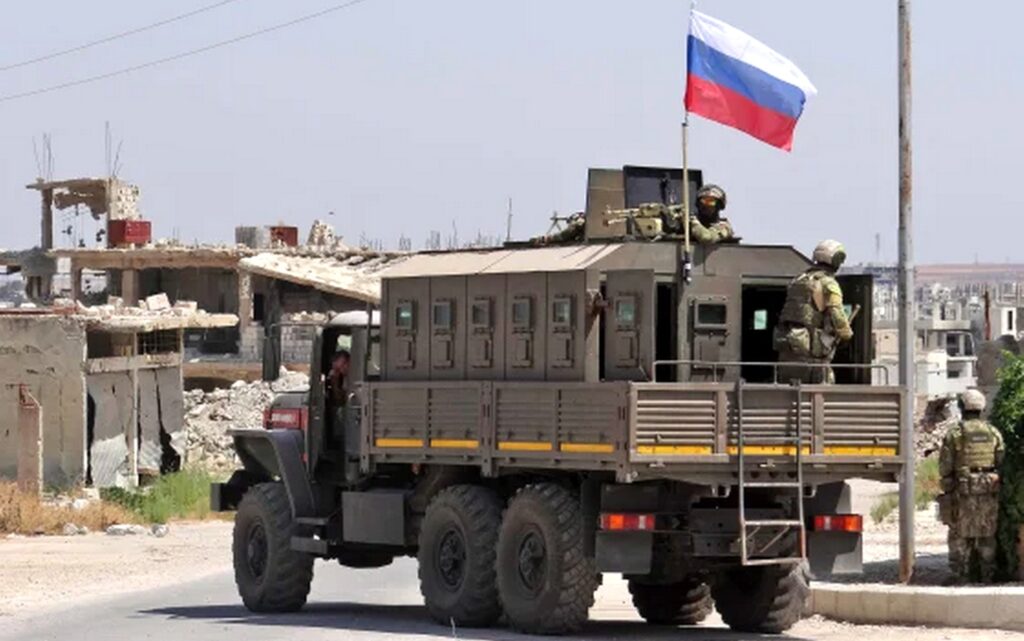
A few weeks before the collapse of former Syrian President Bashar al Assad’s regime, the Syrian Arab News Agency (SANA) reported that Russia had strengthened its military presence in southern Syria by establishing nine observation points in the Quneitra and Dara’a countryside’s, near the separation zone with Israel.
This move raised questions at the time about the possibility of increased Russian support for the Syrian government in the face of Israeli escalation, especially after the October 2023 war in Gaza, which was followed by a series of Israeli threats and attacks against sites inside Syria.
However, the reality on the ground was different, as Russia began reducing its military presence in Syria, withdrawing its forces from several locations, and concentrating their deployment in its main bases in Tartus and Lattakia, specifically the Hmeimim base.
Talk of a possible Russian intervention in southern Syria has recently resumed, this time at the request of the new authorities in Damascus.
This comes amid escalating tensions in the region, particularly following attacks launched by government forces, backed by tribal militias, on the Sweida Governorate, and the accompanying violations that have raised widespread concerns about the country’s unity.
So far, no official announcement has been issued confirming the redeployment of Russian forces in the south, except for a report published by the Russian newspaper Kommersant, citing a source who attended Syrian Foreign Minister Asaad al Shaibani’s meeting with the Syrian community in Moscow.
According to the source, the Syrian government expressed its desire for the return of Russian military police patrols to the southern provinces.
The Russian newspaper didn’t clarify whether Moscow had responded to this request, especially since Russia’s return to its previous positions could limit Israeli interference in Syrian affairs.
This may not be in line with Russian interests at the present time, given the significant shifts in the balance of power within Syria since last December, which have allowed Israel to expand its influence in the south, including establishing bases and checkpoints, amidst the near-total absence of any Iranian presence or its allies.
Since its military intervention in Syria in 2015, Russia has played a mediating role between the various conflicting forces, maintaining balanced relations with the former Syrian regime and its opponents.
In 2018, Moscow began participating in UN patrols in the disengagement zone in Quneitra Governorate.
Its presence didn’t conflict with Israeli interests, but rather provided a counterbalance to Iranian influence in that sensitive region.
However, after the fall of Assad and the near-withdrawal of Iran’s role, no regional power in Syria remained that could pose a challenge to Israel, with the exception of Türkiye, which maintains close ties with the new government in Damascus.
Some analysts believe that Ankara may have been behind the Syrian delegation’s visit to Moscow, with the aim of exploring the possibility of expanding Russia’s role to serve as a barrier to Israeli expansion in southern Syria.