Details of the largest Israeli intelligence operation that took place inside Iran
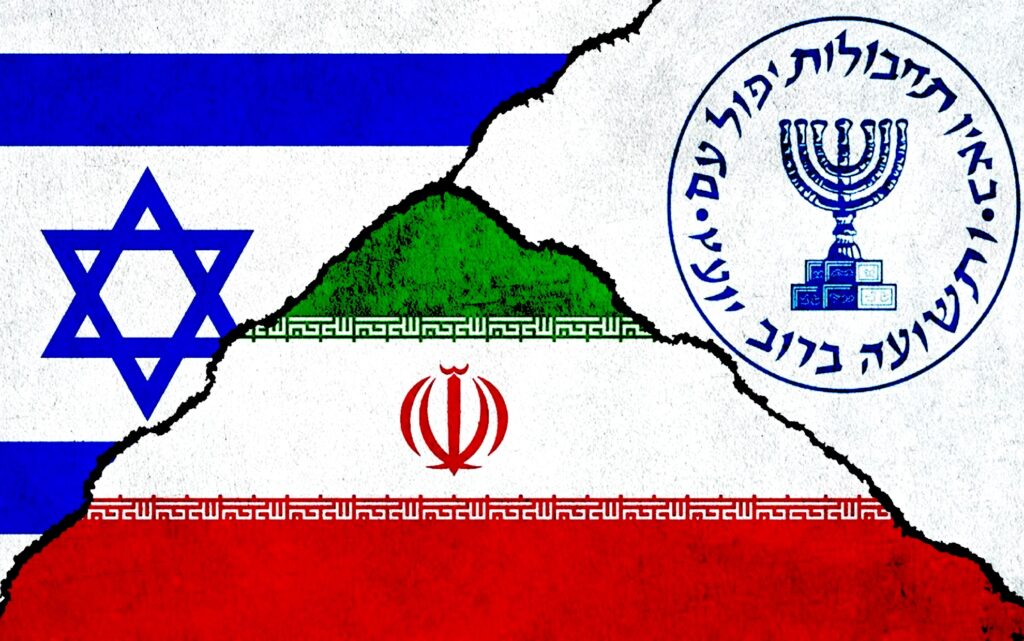
A report by ten current and former senior Israeli intelligence officials reveals details of a complex operation carried out by the Mossad inside Iran, involving Iranians of various nationalities and infiltrators from neighboring countries.
According to the report, the infiltrating force included Ahwazi Arabs, Kurds, Baluchis, and Azeris, in addition to other ethnic groups.
They were recruited over the years through a combination of inducements and pressures, most notably medical treatment for the families of collaborators or opportunities to study at Western universities, and in cases of refusal, threats or blackmail were resorted to.
The report indicated that the operation occurred during the 12-day Israeli-Iranian war, at a time when the world’s attention was focused on the confrontation in Gaza and its humanitarian repercussions.
During that period, Mossad carried out a unique operation codenamed “Rise of the Lions,” targeting Iran’s nuclear infrastructure.
The operation, carried out with direct air support, constituted one of the most daring intelligence and military operations in recent decades.
At the dawn of June 13, it was the Zero Hour, when approximately at 3:00 Am (local Iranian time) a coordinated attack was launched, involving 70 Mossad-trained commandos deployed between Tehran, Isfahan, and Semnan.
The goal was to destroy Iranian air defense systems, ballistic missile launchers, and command centers.
The attack was carried out using drones and precision-guided missiles, based on up-to-date intelligence.
The next day, a second wave followed, supported by local elements and reinforcements from neighboring countries, with a tactical structure similar to the Mossad’s operations against Hezbollah in 2023.
Mossad relied on a regional smuggling network spanning seven countries, used to transport fuel, medicine, electronic equipment, and weapons.
Attack groups were also trained in countries such as Armenia, Azerbaijan, India, and Thailand, in addition to training inside Israel on models simulating Iranian targets.
The nuclear facility at Fordow, fortified 90 meters deep inside a mountain, was the most important target.
The initial plan was to infiltrate it, detonate centrifuges, and steal enriched uranium, but Mossad chief David Barnea rejected this due to the danger of the mission, preferring to rely on future cooperation with the Trump administration if he wins the November 2024 election.
Within the first hours, Israeli forces destroyed air defense systems around Tehran and targeted missile launchers, confusing the Revolutionary Guards’ response.
Eleven nuclear scientists were also killed after their bedrooms were bombed with guided missiles.
Days later, Iran responded with a barrage of missiles, most of which were intercepted by Israeli defenses.
The strikes killed 30 civilians and caused losses exceeding $12 billion.
Trump declared that the strike destroyed Iran’s nuclear program, while Israeli and US experts warned that Tehran could rebuild its capabilities within two years, and that the operation could increase its determination to possess nuclear weapons.