What about the Russian transfer of forces and equipment to Qamishli Airport?
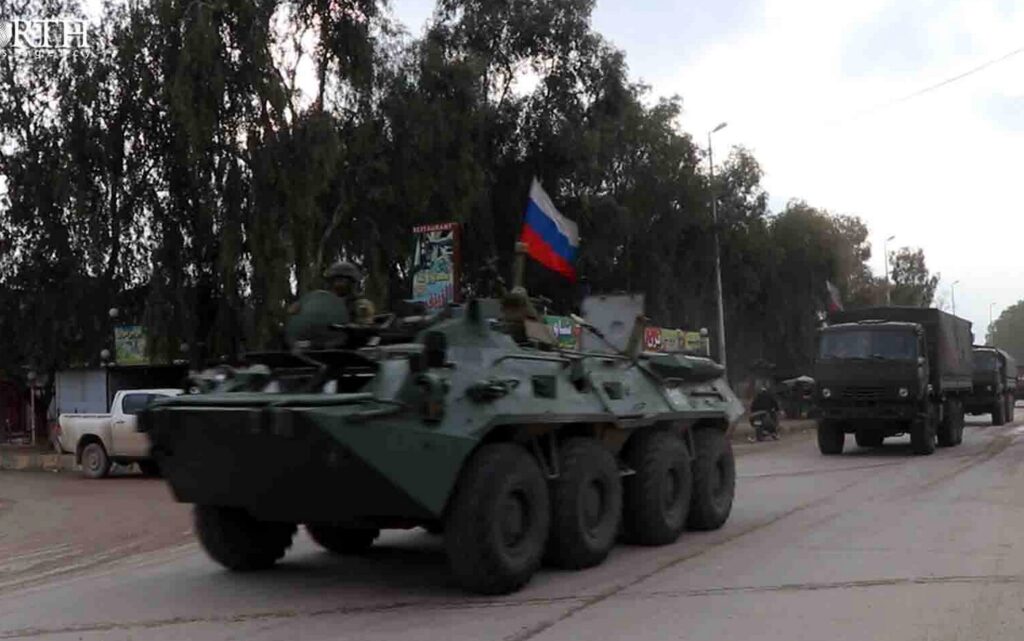
Amid the political and military transformations in Syria, military movements aren’t limited to the mere transfer of troops or equipment.
They carry important strategic messages directed to several parties on the regional and international scene.
Since December 8, 2024, Qamishli Airport in northeastern Syria has witnessed unusual activity by Russian forces, marked by the arrival of military reinforcements, air defense systems, and advanced logistical equipment.
This reflects Moscow’s vision of a complex landscape that combines local, regional, and international dimensions.
Qamishli Airport isn’t just a military base; it represents a vital strategic point on the map of intersecting interests between Türkiye, the United States, the Syrian government, and the Syria Democratic Forces (SDF).
Russia has chosen to strengthen its presence in this vital location amid a relative vacuum in some Syrian state institutions in the country’s northeast, particularly with the decline of the US presence in the region.
This legal and administrative vacuum has created an opportunity for Moscow to expand its influence, as it seeks to fill the security and political vacuum by strengthening its presence in Qamishli.
This comes at a time when relations between Washington and the SDF are experiencing some tension, while Iran suffers from relative isolation within the Kurdish scene.
The Russian move in Qamishli isn’t limited to military reinforcements alone, but also carries several strategic objectives, including:
Consolidating influence east of the Euphrates: With the decline of the US presence, Russia is attempting to become the primary player in the region, providing security support and coordinating with local actors without engaging in direct confrontation.
Containing Turkish influence: Moscow’s growing presence in Qamishli enhances its ability to pressure Ankara, particularly in areas such as Manbij and Tal Rifaat, complicating the Turkish military’s calculations in its dealings with Kurdish areas.
Preparing the Groundwork for Political Negotiations: Strengthening Russia’s role gives the Kremlin additional leverage at the international negotiating table in forums such as Astana and New York, especially with the resumption of political settlement efforts.
Following the collapse of state institutions on December 8, North and East Syria entered a clear administrative vacuum.
The SDF attempted to fill this void with a local administration not recognized internationally, paving the way for Moscow to present itself as an organized and alternative force.
Russia, through its coordination with the remnants of the state apparatus, seeks to impose a model of “decentralized governance” over which it effectively controls the country, while keeping the Syrian regime as a mere formal face.
In doing so, Qamishli Airport is becoming a model that can be replicated in other areas of Syria.
The Russian deployment in Qamishli was characterized by high-quality equipment and supplies:
The deployment of the Pantsir-S1 air defense system at the airport sends a clear message to Israeli and American aircraft that no violations will be tolerated.
The arrival of specialized electronic warfare units indicates Moscow’s readiness for an electronic and information confrontation, alongside its traditional military presence.
Strengthening cooperation with officers who defected from the Syrian regime within SDF-controlled areas, with the aim of attracting local expertise to bolster Russian influence.
Although the Russian moves in Qamishli don’t represent a direct military escalation, they are raising concerns in Washington, which may reconsider the size of its remaining forces in Syria.
Ankara, meanwhile, is monitoring the situation cautiously, attempting to balance its fear of empowering the SDF with its desire to reduce Iranian influence.
This may push it to reach limited understandings with Moscow that preserve its border interests.
Russia’s moves in Qamishli reflect Moscow’s attempt to redraw the map of influence in Syria amid a declining US presence, the disintegration of state institutions, and the challenges facing Türkiye.
Russia isn’t content with merely positioning itself militarily; it’s also investing in building political and administrative influence that opens up broader horizons for negotiation and influence.
However, the scene remains open to changing possibilities, as control over influence in Syria isn’t something that is granted, but rather is seized through careful tactical and strategic moves, and Russian silence often carries a stronger message than official statements.