The New York Times: Pakistan’s most powerful man steps out of the shadows to confront India
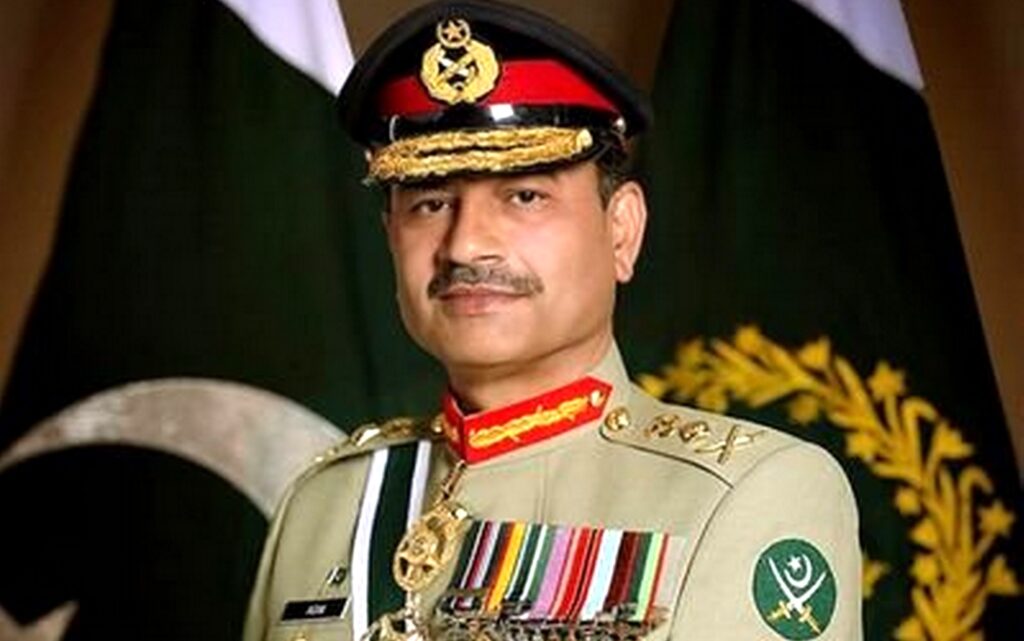
The New York Times published a report on a Pakistani military commander who has long remained in the background, but has recently begun to emerge into the public eye amid escalating tensions between his country and its neighbor, India.
The report said that this commander, whom she described as the most powerful man in Pakistan, had until recently preferred to stay out of the spotlight, contenting himself with appearing at military events to deliver speeches.
But after the attack nearly two weeks ago in the town of Pahlgam in Indian-administered Kashmir that killed 26 local tourists, Pakistan’s army chief, General Syed Asim Munir, stepped back from the scenes.
Last Thursday, the general stood atop a tank during a military exercise and delivered a speech to his soldiers, warning India that Pakistan would meet any miscalculated military adventure with a swift, lightning, and decisive response.
According to the New York Times report, this statement was viewed in India and Pakistan as evidence of a desire to demonstrate his strength and rally popular support to his side after his country suffered for years from political divisions and economic hardship.
The New York Times concluded that these problems have weakened the Pakistani people’s deeply held loyalty to the military establishment, which has long had a hidden hand in directing the country’s policy.
General Munir’s speech to be more than just political calculations, noting that analysts described him as taking a hardline approach to India, and that his views were shaped during his time commanding Pakistan’s two main military intelligence agencies, and his belief that the long-standing conflict with India is essentially a religious one.
In other remarks he made to a crowd of Pakistani expatriates in the capital, Islamabad, six days before the Pahlgam attack, General Munir described Kashmir—controlled jointly by Pakistan and India—as his country’s “jugular vein”.
His portrayal of Kashmir in this manner sparked particular sensitivity in India.
In the same speech, General Munir said, “We’ll not abandon our Kashmiri brothers as they wage their heroic struggle against Indian occupation”.
The New York Times reported that General Munir has been speaking in overtly ideological terms since the Pahlgam attack, indicating that he isn’t inclined to believe that long-term peace with India is possible.
On April 26, he addressed a graduation ceremony for officers at the Military Academy, citing the “Two-Nation Theory,” under which Pakistan was founded in 1947, which asserts that Hindus and Muslims are two separate nations that require two separate homelands.
This theory, according to the New York Times report, has long shaped Pakistan’s national identity and foreign policy, with its generals in the past embracing this ideological discourse during times of tension with India and reversing it when diplomacy required it.
But many Indians interpreted General Munir’s revival of this theory and other comments as a clear shift in Pakistan’s attitude towards India.