Reuters: Documents reveal details of Iran’s dream plan in Syria that faded away after Assad regime collapse
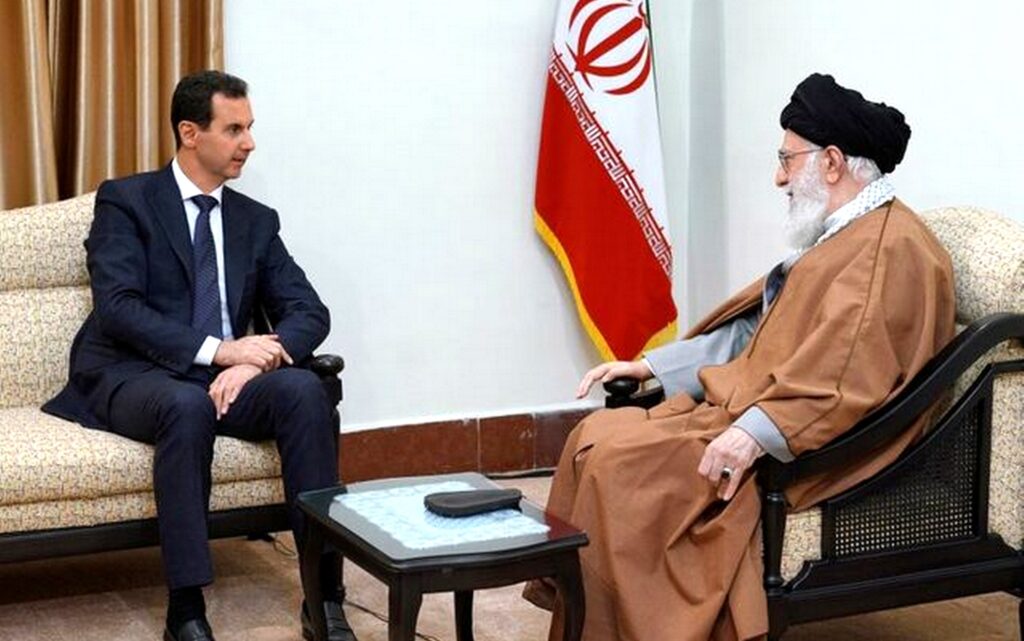
The fall of Assad’s regime wasn’t just the loss of a key ally for Iran, as for Iran, “Assad of Syria” was a major economic dream, especially after the revelation of secret official documents from the Iranian embassy in Damascus, which were found in December 2024.
According to these documents revealed by Reuters, Iran had a grand plan for Syria; and what’s striking is that it was directly inspired by the strategy of its archenemy, the United States, in Europe.
Just as Washington consolidated its hegemony by investing billions of dollars in the reconstruction of Europe after World War II, Iran was planning to do the same in the Middle East by rebuilding war-torn Syria.
The ambitious program, detailed in a 33-page official Iranian study found at the embassy, repeatedly referred to the Marshall Plan, the US plan to revive post-war Europe.
That strategy, according to a presentation accompanying the study, succeeded in making Europe “dependent on America” by “creating economic, political, and cultural dependency”.
The document, dated May 2022 and prepared by an Iranian team specializing in economic policy in Syria, was found by Reuters correspondents at the looted Iranian embassy in Damascus during their visit to the building.
It was among hundreds of documents they discovered there and elsewhere in the capital, revealing how Tehran planned to recover the billions it spent to save Assad’s regime during the long years of war.
According to the experts who wrote the documents, Iran’s plan represents a dream to build an economic empire, while simultaneously deepening Iranian influence in Syria. One of the study’s subheadings reads, “A $400 Billion Opportunity”.
But these imperial hopes collapsed when the Assad regime was overthrown by factions opposed to Damascus and Tehran last December.
The ousted president fled to Russia, and Iranian forces and allied groups, along with diplomats and economic companies, withdrew.
In parallel, Reuters interviewed dozens of Iranian and Syrian businessmen and investigated a network of Iranian companies operating in several Syrian regions.
These investments faced numerous obstacles: militant attacks, local corruption, Western sanctions, and airstrikes.
Among these investments is a $410 million power plant in Latakia on the Syrian coast, which was being built by an Iranian engineering company but is now completely halted.
Another oil extraction project in the eastern Syrian desert has been abandoned, and a $26 million railway bridge over the Euphrates River, built by a charity linked to Supreme Leader Ali Khamenei, was destroyed in a US-led coalition airstrike years ago and has neither been repaired nor fully repaid.
Files found at the embassy show approximately 40 projects, representing only a small fraction of total Iranian investments.
However, Reuters found that debts owed to Iranian companies at the end of the war amounted to at least $178 million.
Former Iranian lawmakers estimated the Assad government’s total debt to Iran at more than $30 billion.
Ultimately, Iran’s hopes of replicating the US Marshall Plan and building an economic empire in Syria went up in smoke, resembling the US failures in Iraq and Afghanistan.
With its early intervention in the Syrian war on Assad’s side, Iran deepened its influence in the Mediterranean country, but the story of the wasted investments reveals the financial risks this intervention brought and how it harmed the governments in both Syria and Iran.
For Tehran’s rulers, the fall of Assad and the collapse of Iranian plans in Syria came at a critical time.
They were weakened by Israel’s attacks on the Islamic Republic’s main allies, such as Hezbollah in Lebanon and Hamas in Gaza.
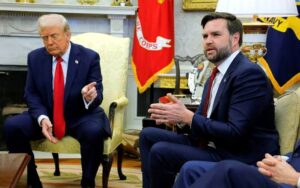
They were also under pressure from US President Donald Trump to negotiate a deal to limit Iran’s nuclear program, under the threat of military action.
In contrast, rival regional states such as Türkiye and Israel rushed to fill the vacuum left by Iran’s withdrawal from the scene.
Meanwhile, the nascent Syrian government, led by Hay’at Tahrir al Sham, faces enormous challenges with stalled infrastructure projects as it seeks to rebuild the devastated country.
Iranian Foreign Ministry spokesman Esmail Baghaei said in December that he expected the new Syrian leadership to respect the country’s commitments, but this isn’t a priority for the new government, led by Ahmed al Sharaa.
“The Syrian people bear a wound inflicted by Iran, and it will take a long time to heal it,” the transitional president said in a December interview.
For most Syrians, the departure of Assad and the Tehran-backed military groups was a cause for celebration, but those who worked with the Iranians have mixed feelings about the departure of Iranian companies, many of whom were left without a livelihood.
“Iran was here, that was the truth, and I made a living from it for a while,” a Syrian engineer who worked at the now-defunct Latakia power plant told Reuters.
The engineer requested anonymity for fear of retaliation for working with an Iranian company, especially after a series of revenge killings last month of Syrians linked to the former regime.
He noted that the Latakia project had been hampered by financial problems, Syrian corruption, and often unqualified Iranian workers, but he saw its completion as an opportunity to bolster the country’s struggling electricity grid.
He added, “The power plant was something for Syria’s future”.
In this context, the man charged with implementing Iran’s economic plans in Syria was Abbas Akbari, a construction manager affiliated with the IRGC.
In March 2022, he was officially appointed to head the “Headquarters for the Development of Economic Relations between Iran and Syria,” with the goal of promoting trade and recovering Iranian investments.
His team prepared the study, which cited the Marshall Plan as a model to emulate.
Akbari enlisted the help of his colleagues in the Revolutionary Guard, Iran’s elite military force, to assist with logistics on civilian projects.
Reuters found letters signed by Akbari at the Iranian embassy, detailing the projects he supported and the funds spent.
Near the scattered papers were a safe and a package of plastic explosives (C4), found by fighters guarding the building.
Iranian projects have faced major challenges since they began operating in Syria.
The agency’s information indicates that the Syrian regime insisted on using contractors linked to the Assad family, who hired unqualified workers and engineers.
It also indicated that the Iranian companies’ staff included both competent employees and others who obtained their jobs through connections with regime officials.
In addition, Iranian companies suffered significant losses due to thefts occurring within factories and during the transportation of goods.
Syrian money transfer companies also used outdated exchange rates, inflicting additional losses on Iranian companies.
Despite these setbacks, Iran has doubled its investments, signing a free trade agreement with Syria in 2011 and extending a $3.6 billion credit line in 2013 and another $1 billion line in 2015.
In 2015, the United Nations estimated Tehran’s annual spending in Syria at $6 billion, although the Islamic Republic rejects the official figures and doesn’t offer precise alternatives.
Between 2015 and 2020, debt repayment agreements were signed, granting Iran agricultural land, telecommunications licenses, housing projects, phosphate mining rights, and oil exploration contracts, but all faced similar problems.
By 2022, Iran began to realize the meager returns it had generated.
A study prepared under Akbari identified major problems: banking and transportation difficulties, insecurity, and bureaucracy.
The study suggested that Iran rely on the USAID model, which it viewed as an effective tool for soft influence, to achieve its regional goals and neutralize US sanctions.
However, there was little appetite among Iranian companies to invest in Syria.
In 2022 and 2023, only 11 Iranian companies were registered in Syria.
Akbari blamed the “complex Syrian bureaucracy” and suggested in a presentation found by Reuters at the embassy, “Get to know the influential people and the Syrian economic mafias”.
Akbari continued his efforts, meeting with Syrian officials to revive stalled projects.
Tehran signed new agreements with Damascus in 2023 and 2024, including the establishment of a joint bank, customs-free trade, and a second attempt to use local currencies instead of the dollar to circumvent sanctions.
But time ran out… With the fall of Assad, Israel had effectively destroyed the Iranian “axis of resistance” targeting the leadership of Hamas in Gaza, Hezbollah in Lebanon, and Revolutionary Guard commanders in Syria.