Le Figaro: Why does the fall of Assad in Syria worry Russia’s African allies?
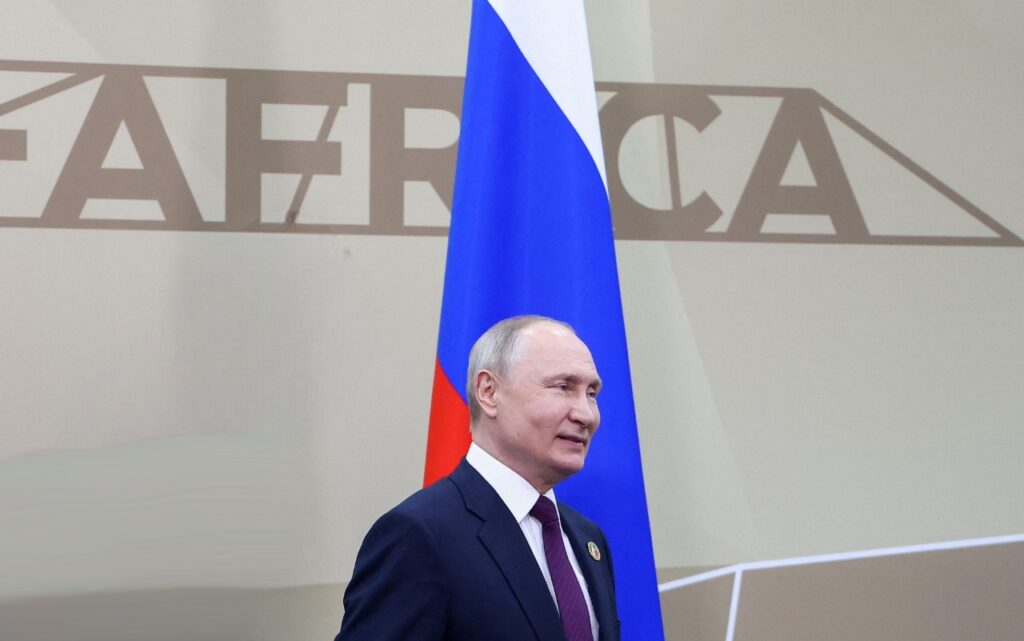
A report in the Le Figaro newspaper said that the sudden fall of the Baath government in Syria and Russia’s abandonment of former President Bashar al Assad raised concerns in several African capitals about Russia’s credibility as a strategic ally, and may threaten its influence in the region.
According to the report, the consequences of the event are still difficult to estimate, but it raised questions that the Russian authorities must answer, otherwise its influence in Africa will suffer a serious decline.
The report pointed out that the first of these questions relates to logistical aspects, as the future of Russian military sites in Syria, such as the naval base in Tartus on the Mediterranean and the Hmeimim air base, isn’t at all guaranteed, given Russia’s hostile dealings with the Syrian transitional government.
The report stressed that the Russian army, deployed in Syria since 2015, used its bases there for its operations in North Africa, the Sahel region and Central Africa, because large Russian aircraft cannot make direct flights between Russia and Africa due to their limited flight range.
The loss of the Tartus base in Syria would disrupt supply lines for Wagner units and the African Corps, which could weaken the Russian military presence and affect Russia’s influence and credibility.
The ruling military council in Mali relies heavily on these two private military companies in its political and military conflict with the Azawad fighters in the north of the country.
In Niger and Burkina Faso, logistical complications could hamper Russia’s plans to expand its military presence, and this will also affect the Central African Republic, where Wagner forces are an essential part of the country’s military assets, protecting and supporting the government against security threats.
The Russian military groups – which number 3,000 fighters – need secure and sustainable logistical supply lines, and if this cannot be achieved through bases in Syria, Moscow may be forced to redeploy its forces to eastern Libya, a region that is less logistically convenient, as the port of Benghazi lacks the facilities and infrastructure found in the Syrian port of Tartus.
If that fails, the author believes that Moscow may seek to accelerate its negotiations with Sudan, which resumed in 2019, with the aim of realizing its old dream of establishing a naval base on the Red Sea.
In Sudan, the government of General Abdel Fattah al Burhan has so far rejected Moscow’s requests for fear of a US reaction, despite Russian promises to supply Sudan with S-400 missile systems and provide oil.
The collapse of the Assad regime is attributed to the failure of his army and the absence of his “traditional ally,” the Lebanese Hezbollah, due to its preoccupation with the war with Israel, but it’s also attributed to the absence of Russian air intervention, which saved the Syrian regime in 2015.
The report stressed that this inaction sparked mixed and angry reactions in Mali, Burkina Faso and Niger, where the ruling military regimes there wondered why Moscow had abandoned its friend.
Finally, the report asked… Was the Russian army, preoccupied with its war in Ukraine, unable Moscow to provide assistance? Or was it fed up with Assad and refused to make any concessions?
According to the report, Russia’s actions have undermined the credibility of its loyalty to its allies in Africa, especially with tensions already existing. In the Central African Republic, the 2023 rebellion of Wagner security company chief Yevgeny Prigozhin raised questions about Wagner’s relationship with the Kremlin.
In Bamako, last summer’s attack in northern Mali, in which about 60 Malian soldiers and Wagner fighters were killed, has led to severe tensions between the two sides.
The report concluded, quoted a European diplomat as saying, “We can understand why the military regimes in Burkina Faso and Mali are worried about seeing the Kremlin abandon its ally, because the main reason that African militaries have allied with Moscow is to consolidate their power based on a strong partner that guarantees their security without many demands… thus, if that changes, the current alliance is over”.
These developments may weaken Wagner’s attractiveness, which may prompt countries that Russia seeks to attract to reconsider its offers.