Turkish Foreign Minister: We convinced Russia and Iran not to intervene militarily to support Assad
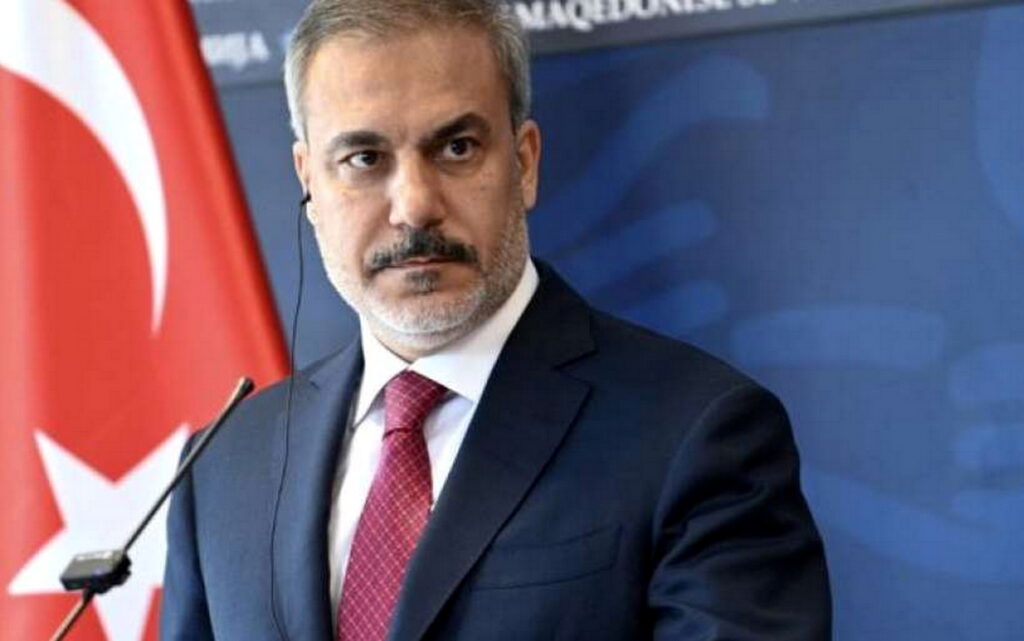
The Turkish Foreign Minister confirmed on Friday that his country convinced Russia and Iran not to intervene militarily in Syria during the opposition factions’ attack that led to the fall of Bashar al Assad.
“The most important thing was to talk to the Russians and the Iranians and make sure that they wouldn’t militarily intervene in the equation… We talked to the Russians and the Iranians and they understood,” Hakan Fidan said in a live interview broadcast by the private Turkish channel NTV.
“In order to minimize the loss of life as much as possible, we have sought to achieve the goal without bloodshed by continuing targeted negotiations with two important players capable of using force,” he added.
The Turkish minister considered that if Assad had received the support of Russia and Iran, “the opposition’s victory would have taken a long time, and this matter would have been bloody”.
“But the Russians and the Iranians saw that this no longer made any sense… The man they had invested in was no longer a man worthy of investment… Moreover, the conditions in the region and the conditions in the world were no longer the same,” he said.
After an 11-day attack, the Syrian armed factions led by Hay’at Tahrir al Sham were able to topple Assad on Sunday, who fled to Russia with his family.
The Turkish Foreign Minister expected in his television interview that the number of Syrians returning to their country will gradually increase as the situation in Syria stabilizes.
The Turkish Foreign Minister pledged to open his country’s embassy in Syria tomorrow, Saturday, after a 12-year hiatus.
He announced that the embassy staff had already left for Syria to start work.
The Turkish foreign minister’s statements are likely to spark a crisis with Moscow and Tehran, both allies of Assad.
For its part, Tehran stressed that it did its best to support Assad, but it could not fight the militants instead of the Syrian army.
Moscow also blamed the collapse of the Assad regime on the performance of the Syrian army, which fled its positions in the face of armed factions.
Before its fall, the Assad regime suffered from declining support, especially after the devastating war that erupted between the Lebanese Hezbollah and Israel last month.