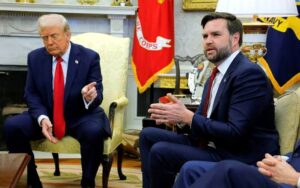
Bloomberg: Europe fears Trump’s return to the White House
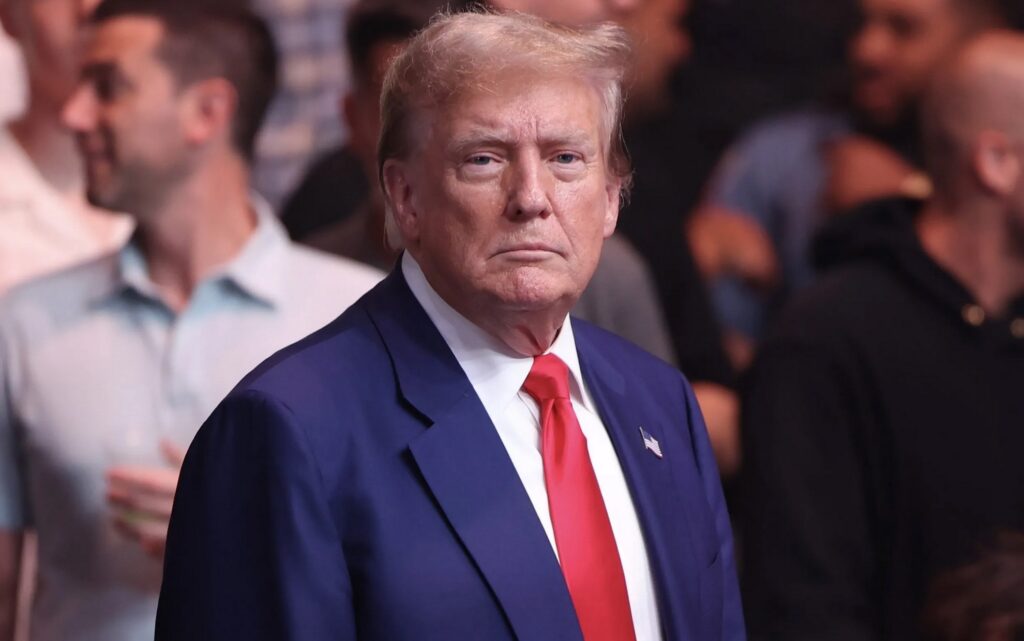
European monetary and financial policymakers fear that Donald Trump could return to the helm of the United States again, starting early next year, if he wins the presidential election against his Republican rival Kamala Harris, scheduled for next November.
In early October, Trump reiterated his intention to impose a 60% tariff on goods from China, and up to 20% on all goods outside of it.
Currently, European Union governments, including the Eurozone, are struggling to achieve economic recovery after two years of high inflation and high interest rates, which affected growth, employment and exports.
Total trade in goods and services with the EU was $1.36 trillion in 2023, with US exports of $620 billion and imports of $743.3 billion, according to US Commerce Department data.
The US trade deficit in goods and services with the European Union reached $124 billion in 2024, which Trump seeks to eliminate by reaching a trade formula that ends the deficit.
Trump aspires to transfer part of European companies’ factories to the American market in many vital sectors, as part of a plan to reach the lowest unemployment rate ever, which is the other aspect that the Europeans fear.
By 2022, US foreign direct investment in the EU amounted to $2.7 trillion, up 5.5% from 2021.
US direct investment in the EU is led by non-bank holding companies, manufacturing, finance and insurance.
While EU FDI in the US reached $2.4 trillion in 2022, up 4.0% from 2021.
EU direct investment in the United States is led by manufacturing, finance and insurance, and wholesale trade.
On Tuesday, European Central Bank President Christine Lagarde said fair trade was “something we shouldn’t get rid of,” in response to former US President Trump’s comment that tariffs was his favorite word.
Lagarde’s statements came from the heart of the US capital, Washington, where she is participating in the fall meetings of the International Monetary Fund and the World Bank, which began on Tuesday, and will conclude next Saturday.
“Fair trade is a fundamental driver of growth, employment, innovation and productivity,” she said.
“I would say it’s something we shouldn’t give up on, because any period of time in which this country has flourished has been one of trade, not trade wars,” she added.
Realizing this, many central bankers across the continent are worried that a Trump victory in the November 5 election could complicate their task of taming inflation without collapsing their economies.
Bloomberg quotes financial officials as saying that the unknown future puts central banks, from Frankfurt to London and Stockholm, in front of a more uncertain horizon than the period before the war between Russia and Ukraine, referring to the US elections.
Central bankers are the first line of defense for inflationary economies; the European Central Bank fears that a Trump victory and his imposition of taxes of up to 20% on European exports will affect the labor market, raise production costs, and lead to a European response of reciprocity, thus causing inflation.
Europe also fears that Trump will reassess relations with allies to secure more favorable terms for the United States; enhance American superiority over adversaries such as China and Russia; and extricate the United States from obligations arising from its participation in international organizations, such as NATO.
One of Europe’s main concerns is that unilateral US measures, such as imposing taxes and European countries pivoting to Asia, will lead Washington to reduce its commitment to its allies.
It’s noteworthy that Trump, during his first term, showed hesitation towards NATO and criticism of European defense spending, and he may raise these issues again more sharply if he wins a second presidential term.
In late August, Trump said NATO member states should spend at least 3% of their GDP on defense, up from the current 2%.