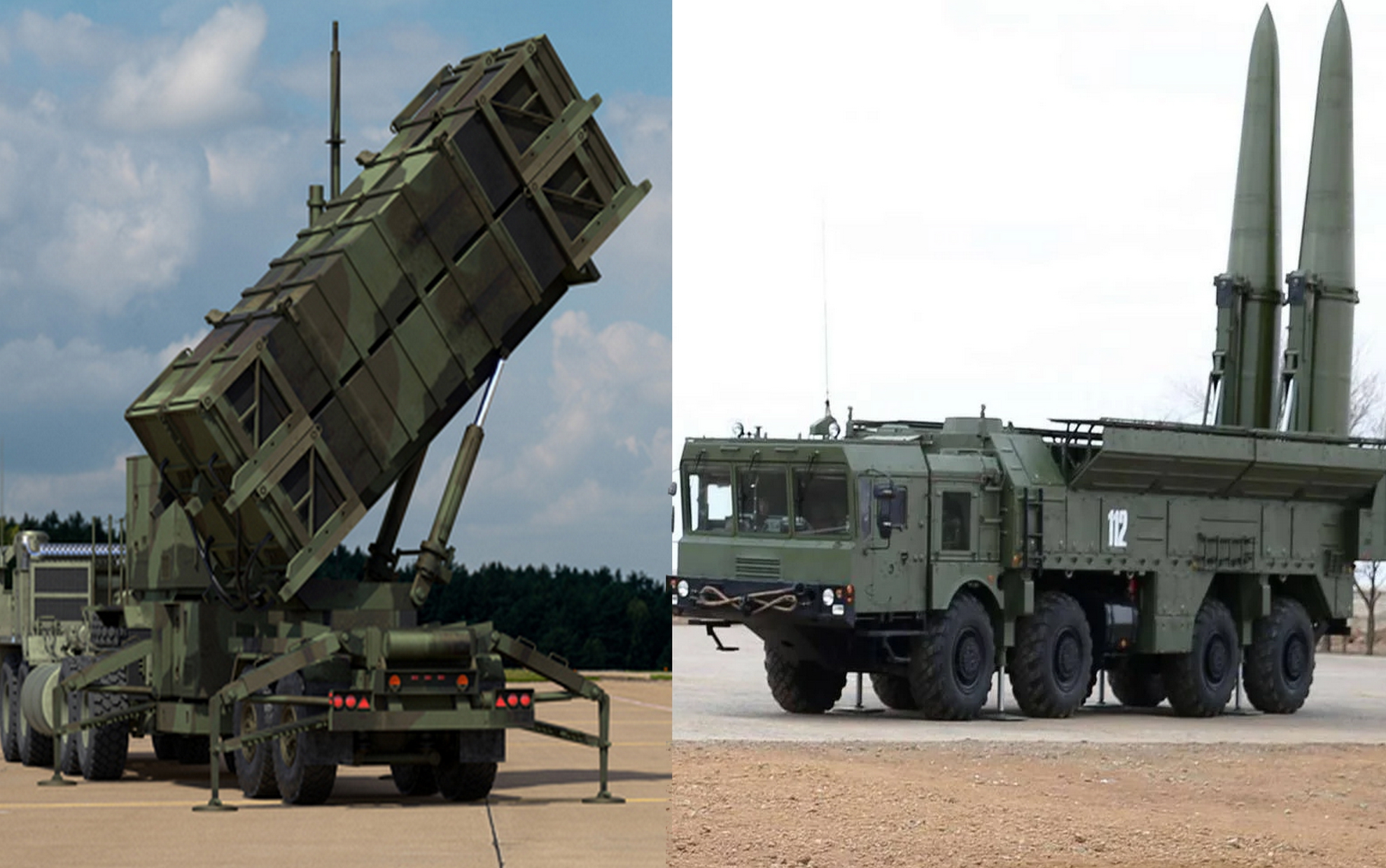
American Patriot vs. Russian Iskander
After US officials announced that they had finalized plans to supply Ukraine with Patriot air defense missiles, the Russian embassy in Washington said in a statement that sending any shipment of these missiles could “lead to unpredictable consequences” and that it represented a threat to global security.
According to US officials, Washington intends to announce the dispatch of these missiles within the next week, provided that the Ukrainians will be trained to use them at a US army base in Germany.
This important decision reflects that the greatest threat to Ukraine currently comes from the air, not from the ground.
Russia regularly targets critical infrastructure with missiles and drones, leaving millions without electricity, running water or heat even as winter sets in.
In recent months, Ukraine has been supplied with advanced air defense systems from the United States and European countries, but it still needs more.
It needs air defenses not only to intercept missiles fired at its infrastructure, but also to prevent Russia from achieving air superiority near the front line.
It’s likely that the supply of Patriot batteries to Ukraine will be limited in terms of quantity, as there are many requests from many countries around the world to obtain it, and it is also expensive, and requires great training to operate it.
For all these reasons, the decision to send the Patriots wasn’t quick, and Ukraine’s initial pleas for such missiles were ignored.
The Patriot air defense system is currently owned by 12 countries, including a number of Arab countries.
Each Patriot battery consists of a missile launcher, radar, command and control center, and other support vehicles, and requires a large team to operate and maintain them.
Matthew Whalen, CEO of the American Security Project – a think tank focused on military affairs – considers that the Patriot missiles won’t “make a difference in the short term because it is a complex system that takes months of training”.
Matthew Whalen points out that “every Patriot piece require a crew of 90 soldiers, despite the need for only 3 soldiers to operate it directly.
In the American case, the Patriot crews and trainers have years of experience, which helps them operate effectively.
Ukraine doesn’t have any of this, and it will take a long time to train and build experience, and in the medium term, maybe 6 months to a year or more”.
Steve Pifer, an expert on European affairs and disarmament at the Brookings Institution, said in an interview with Qatari alJazeera.net that “the Patriot air defense system will be the most advanced for the Ukrainians, and it is designed to engage aircraft, cruise missiles and ballistic missiles… This is what Ukrainians desperately need at this stage of the war”.
Defense affairs expert Michael Beck also agrees – in an interview with alJazeera.net also that the arrival of the Patriot to Ukraine would “strongly enhance Kiev’s air and missile defenses, but I am not sure that it will change the rules of the game.
It will take some time for Ukraine to train on the Patriot and integrate this weapon into its defenses”.
Regarding the capabilities of the Patriot to counter advanced Russian missiles, Whalen indicated in his speech, “This depends on the missile systems that Russia uses… The Patriot will be effective against certain types of cruise missiles, combat aircraft, and some short-range ballistic missiles… However, the Patriot missiles themselves cost millions and may not be economically or tactically suitable for shooting down small missiles, or cheap drones.
As for Pifer, he admitted, “We’ve to wait and see how effective the Patriot system will be on the battlefields, and if it works as advertised, it should be able to successfully engage Russian ballistic missiles such as the famous Iskander missile”.
For his part, Beck noted, “It remains to be seen how effective the Patriot will be against advanced Russian missiles, including hypersonic missiles… We also don’t know how many missiles Ukraine will receive, or how many missiles the United States can send to Ukraine without depleting its stockpiles.
He said the Patriot wouldn’t stop the Iranian-made kamikaze drones being launched by Russia, especially since each Patriot missile costs about $4 million per missile, “and it might be easier for Moscow to try to overwhelm the Patriot systems with large numbers of missiles and drones”.
Following the announcement of Washington’s intention to supply Kyiv with Patriot missiles, Russian Foreign Ministry spokeswoman Maria Zakharova said on Thursday, that the possible delivery to Washington would increase the risk of direct US military involvement in the Ukrainian conflict, according to the Russian Tass agency.
Since the start of the Russian war on Ukraine last February, many experts fear the repercussions of providing advanced US weapons to the Ukrainian side, especially with the fear that it will lead to an escalation of the conflict and increase the risk of drawing the US army directly into the fighting.
And Steve Pifer returned to say, “Of course, the Russians won’t welcome this step, and they may try to destroy the Patriot site to obtain an important psychological and practical victory… But the systems the Russians will use to attack the Patriot (airplanes, cruise missiles, ballistic missiles) are what the Patriot is designed to defend against, engage and shoot down”.
“My guess is that the Ukrainians will keep some other air defense systems near the Patriot as well to provide additional protection… For example, in order not to waste Patriot missiles on Iranian drones, they will have to use cheaper defense systems in these cases”.
In his response to the nature of the expected Russian position on the US move, the military expert, Wallen, said, “Russia stands firmly against efforts by NATO to arm Ukraine, and Moscow escalates the rhetoric any time Washington and its allies discuss granting Ukraine any weapons”.
But it remains to be seen if the Russian anger will turn into any other reaction that Moscow wasn’t really planning anyway… Does this mean that Russia will increase its missile attacks against Ukraine?
They’re already doing that.
Does that mean Russia will attack a NATO ally?
I suspect it doesn’t go well with a small opponent that you have a lot of advantage over on paper.