Türkiye and Saudi Arabia are among top countries buying tens of tons of gold
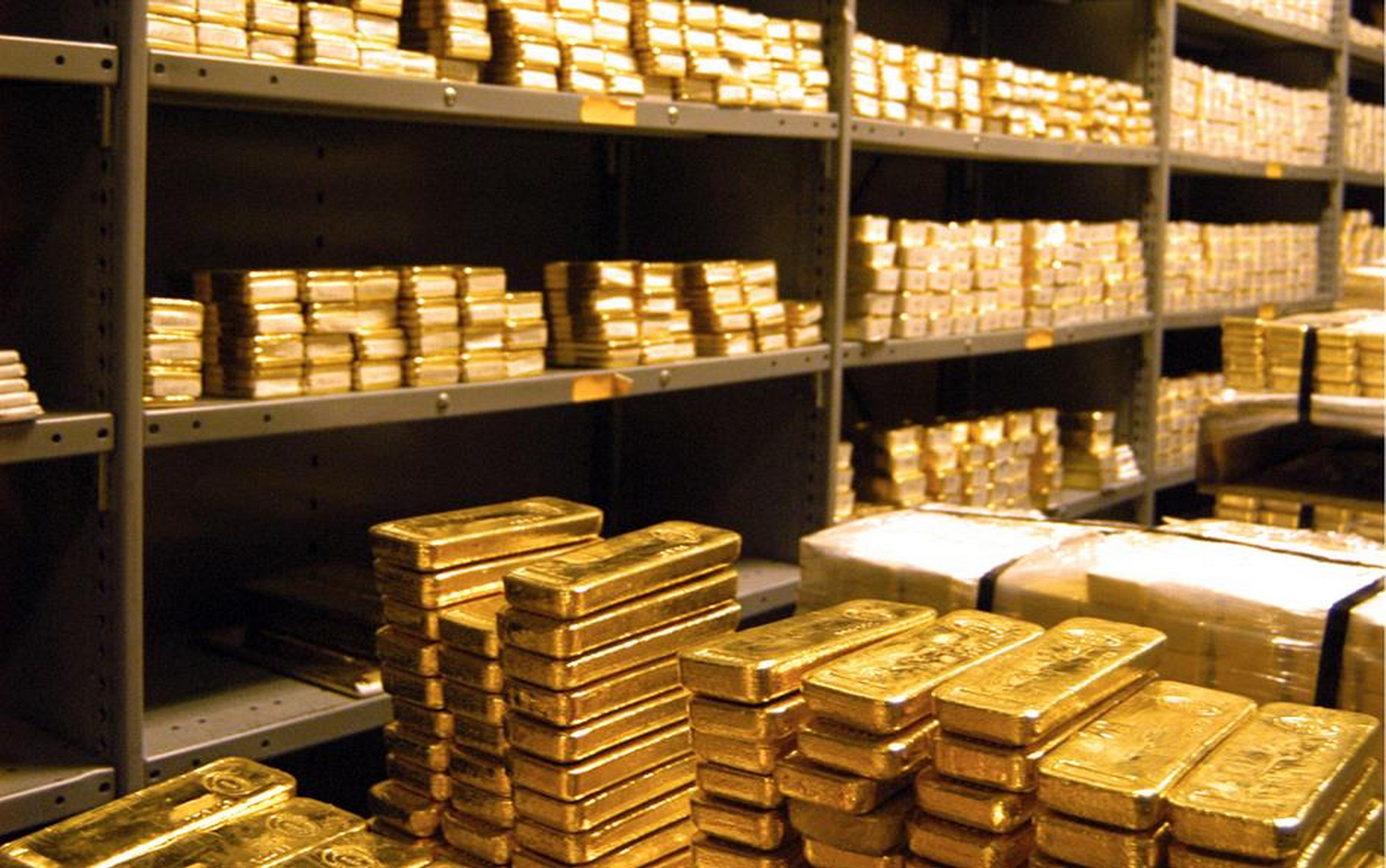
With the significant decline in gold prices globally, the demand for gold from eastern countries is increasing, while Western investors are getting rid of bullion.
This comes as high interest rates reduce the attractiveness of gold as an investment, and mean that large quantities of the metal are withdrawn from vaults in financial centers such as New York heading east to meet the demand in the gold market in Shanghai or the Grand Bazaar in Istanbul.
Data by Bloomberg showed that large quantities of gold bought by Türkiye and Saudi Arabia in the Middle East, since last April, amounted to 62 tons for Türkiye, and 20 tons bought by Saudi Arabia.
The metal’s rotation around the world is part of a gold market cycle that has repeated for decades: when investors pull back and prices fall, Asian buying rises and precious metals flow east – helping to set a floor for the price of gold during times of weakness, and when gold eventually rises again, much of it comes back.
To languish in bank vaults under the streets of New York, London and Zurich.
Since an ounce of gold peaked in March, gold prices have fallen by 18% as massive interest rate increases by the Federal Reserve caused a mass liquidation by financial investors.
More than 527 tons of gold have flowed from the vaults of New York and London, which support the two largest Western markets, since the end of last April.
Meanwhile, shipments to big Asian gold consumers such as China, whose imports hit a four-year high in August, are on the rise.
And while a lot of gold heads east, it’s still not enough to meet demand.
Gold has been trading in Dubai, Istanbul or the Shanghai Gold Exchange at a multi-year premium over the London benchmark in recent weeks, according to MKS PAMP, indicating that buying is outpacing imports.
In India, silver is seeing a large insurance premium.
The spread recently rose to $1, more than three times the usual level, according to consultancy Metals Focus Ltd.
Gold is currently considered primarily as a hedge, and investors are rushing to buy it in large quantities when their country experiences high levels of inflation or with turbulent stock markets thanks to its high ability to retain value as a rare metal.
The Dutch central bank says in one of its reports: “We trust gold, and it gives us a sense of security… If the entire financial system of the country collapses, the gold reserves will be an opportunity to start over”.
The value of a country’s currency is strongly related to its exports and imports.
If the value of a country’s imports exceed its exports, this will put downward pressure on its currency, and vice versa.
From this point of view, the world gold prices affect the exporting and importing countries.
Thus, the country that exports gold will witness a strengthening in the value of its currency when the prices of the precious metal rise, because this increases the total value of its exports and can create a trade surplus for it and compensate for the deficit.
As for the countries that buy gold, they print more currency for this task and may risk higher inflation rates for this reason.
But if it makes good use of the playing cards at the right time, hoarding gold will serve as a solid safety barrier for its economy and currency in times of crisis.
Countries deal with gold similar to what any ordinary merchant does, trying to buy when it is abundant and cheap, and sell it when its price increases and their need for it increases.
This brings us to the second point that one of the main benefits of gold, apart from being a hedge against inflation, is that it can be a shield against the deterioration of the currency value of the country that owns it.
We see an example of this, Türkiye and India, which are trying to resort to gold to base their currencies on a solid economic ground.
The central banks of America’s competitors, especially those in Russia and China, have been increasing their gold reserves as much as possible lately.
This trend is expected to continue due to trade tensions and market uncertainty.
And we see on the list of the largest gold reserves in the world, Russia in sixth place and China in seventh, considering the International Monetary Fund in third place.
What Russia and China are aiming for is not just hoarding for hedging or investing or the like, but sooner or later they want to challenge the hegemony of the US dollar.
History proves that a country that supports its currency with huge reserves of gold must be taken seriously, and it won’t be possible to think of challenging a currency that possesses the power and dominance of the dollar without banks and stores full of gold.