Yedioth Ahronoth: This is how Trump turned Israel into a banana republic
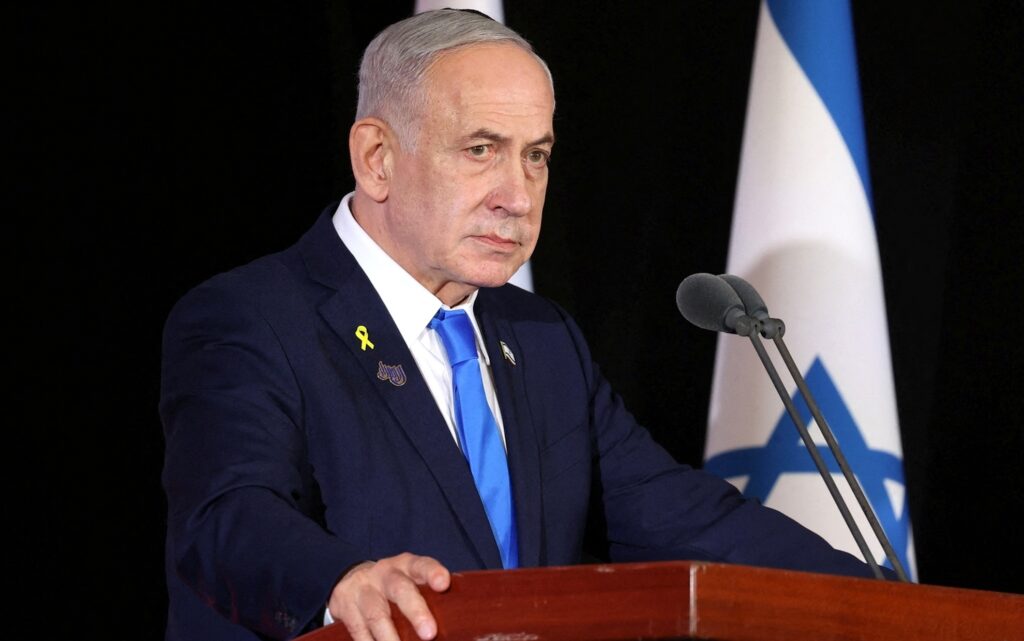
Prominent Israeli writer Ben-Dror Yemini wrote in Yedioth Ahronoth newspaper, that the US administration has succeeded in imposing its dictates on Prime Minister Benjamin Netanyahu regarding the war on Gaza.
Yemini asserted that the fateful decisions in recent weeks weren’t made in Jerusalem, but in Washington, and that Israel has effectively become a “banana republic” subject to the will of the White House.
Yamini said that what happened over the past few weeks—most notably the ceasefire and prisoner exchange deal—would not have happened without direct US pressure, but rather as a result of forced intervention and clear dictation from US President Donald Trump.
He explained that US envoys Steve Witkoff and Jared Kushner personally attended the Israeli government meeting to oversee decision-making and ensure there were no surprises.
He noted that the majority of Israelis supported these steps, but that this didn’t change the fact that the crucial decisions were not made in Israel.
To confirm his view, Yemini recalled that the Prime Minister’s Office had announced five basic principles for ending the war on August 14, which were:
- Complete disarmament of Hamas.
- Recover all prisoners, living and dead.
- Disarming the Gaza Strip and ensuring that weapons aren’t smuggled into it.
- Imposing complete Israeli security control over the Gaza Strip.
- Establishing an alternative civil administration without the participation of Hamas or the Palestinian Authority.
However, according to Yemini, many of these conditions haven’t yet been met.
Hamas hasn’t been disarmed, the promise of security control hasn’t been fulfilled, and it has become clear that the Palestinian Authority will be a partner in managing the Gaza Strip, something Netanyahu completely rejected.
Yemini believed in his article that Netanyahu had no intention of backing down from the conditions he had announced himself, but was forced to do so under the pressure of American dictates.
He said that if the prime minister had adhered to the conditions set by him, the war would have continued for months, hundreds of soldiers would have been killed, and possibly all the prisoners would have been killed.
But Netanyahu, despite his conviction that a war without end was necessary, was forced to sign the ceasefire agreement, whose 19th clause included recognition of the Palestinians’ right to self-determination and the establishment of an independent state.
Yemini added that this retreat was not an expression of conviction, but rather the result of direct pressure from Washington, which, he describes, “stopped Netanyahu and forced him to obey”.
He points out that Witkoff and Kushner said in an interview with “60 Minutes” that after the attack in Doha they felt they had been tricked and that the Israelis were losing control.
However, Yemini responds that the problem isn’t with the Israelis, but rather with Netanyahu specifically, “who lost control and handed it over to the Americans”.
Yemini acknowledges that American coercion may be beneficial in the short term, as it aligns with the recommendations of the security leadership and the desires of the majority of the Israeli public.
However, he warns that this approach sets a dangerous precedent, making Israel hostage to external pressures that may later conflict with its national interests.
Yemini explained that the imposed settlement strengthened the position of Qatar and Türkiye, which share broad economic and security interests with Washington, but described them as “Muslim Brotherhood states”.
He pointed out that Qatar continues to invest huge sums in campaigns to distort Israel within American universities and in propaganda projects that have even reached the office of the Israeli Prime Minister himself.
He added that these developments could set a precedent in which the United States would force Israel to take steps that wouldn’t be in its interest in the future.
Yemini believes that the core of the problem lies not in pressure from the United States or friendly countries, but rather in Netanyahu’s complete submission to these pressures and his prioritization of his political interests over national interests.
He said the prime minister created a complete contradiction between the conditions he announced for ending the war and what actually happened, stressing that complete compliance with American coercion made Israel look like a banana republic.
Yamini concludes that Netanyahu failed to act out of pure national interest, and that by accepting external dictates, he has set a precedent that could reproduce the same state of subservience in the future, even when its consequences are disastrous for Israel.
He concludes that US President Trump appeared at the last minute as a lifeline for Netanyahu, but the core of the crisis remains, as the one who made Israel a banana republic when it was in its interest has opened the door to being treated like a banana republic even when it’s against its interests.