Wall Street Journal: Trump advised military action won’t topple the Iranian regime
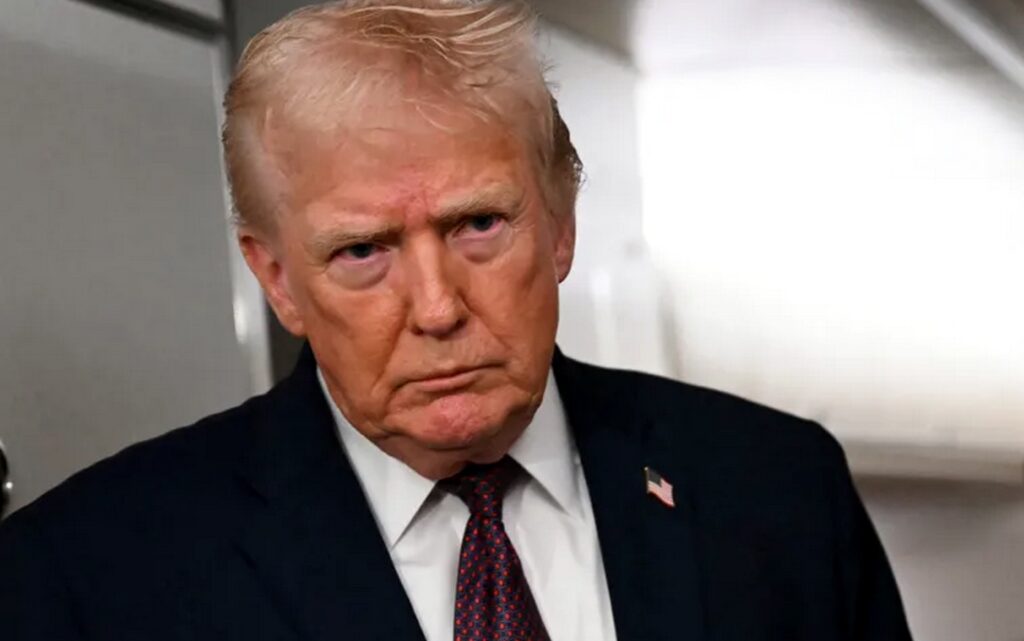
US officials say President Donald Trump has been advised that a large-scale strike against Iran is unlikely to lead to the fall of the ruling regime there and would spark a broader conflict in the region.
The Wall Street Journal reported that President Trump will now monitor how Tehran deals with the protesters before deciding on any military attack, while his advisers have said Washington will need more military capabilities in the Middle East to launch a large-scale strike or to protect US forces and allies such as Israel if Iran responds.
US officials and their partners in the Middle East have told the White House that the Iranian regime may not be toppled by an intensified bombing campaign, but that such a move could trigger a broader conflict.
According to the same US officials, smaller attacks on Iranian targets would lift the morale of the protesters, but ultimately wouldn’t change the Iranian regime’s insistence on suppressing them.
In summary, Wall Street quotes the same sources as saying that President Trump hasn’t made a final decision on what action he will take against Iran, but he has asked for the military capabilities to be prepared in anticipation of ordering a major attack.
White House spokeswoman Karoline Leavitt told reporters on Thursday that President Trump and his team had told the Iranian regime that if the killing continued, there would be dire consequences.
As for the timing of any possible US strike, Leavitt said only that only President Trump knows what he is going to do, and a very small team of advisers knows what his plans are.
The Leavitt confirmed that Trump recently had a conversation with Israeli Prime Minister Benjamin Netanyahu, without revealing the content and date of the conversation, but US officials said Israel had raised concerns about a possible strike.
The Wall Street Journal, citing NBC, reported that President Trump’s advisers were not convinced that the Iranian regime could collapse quickly as a result of a US military strike.
Senator Lindsey Graham (R-South Carolina and a staunch Trump ally) told reporters on Thursday that the scale of the operation against Iran was still being discussed, but that the days of the Iranian regime were numbered.
Regionally, the Wall Street quoted a diplomat familiar with the talks as saying that Iranian officials have in recent days contacted the governments of Türkiye, Qatar, the United Arab Emirates and Oman to warn them that if Iran is attacked, it will strike US bases in the region.
In the same vein, US allies in the region, including Türkiye, Qatar, and Saudi Arabia, have urged President Trump in recent days not to attack Iran.
According to US officials and another person familiar with the situation, President Trump will order the Pentagon to send the aircraft carrier USS. Abraham Lincoln from the South China Sea to the Middle East, and the trip is expected to take about a week.
Internal discussions in US decision-making circles show the complexity of President Trump’s implementation of his pledge not to allow Iran to kill protesters and that he finds himself faced with options that wouldn’t topple the regime and provide strong support to the protesters.
Trump said Tuesday that help is on its way to the protesters and urged them to keep up the pressure on the regime, but said the next day that Iran would stop killing and not execute protesters, a sign that he might not order strikes as long as the crackdown stops.
On Thursday morning, Trump, in the eyes of the Wall Street Journal, seemed pleased with reports that Iran wouldn’t execute protesters.
He posted on social media that read: “Good news… We hope this continues!”
The WSJ learned from US and other Middle Eastern officials that President Trump may be procrastinating to buy time while military equipment is being moved to the Middle East in anticipation of hitting Iran.