The Trump administration officially begins imposing new tariffs on imports from more than 60 countries
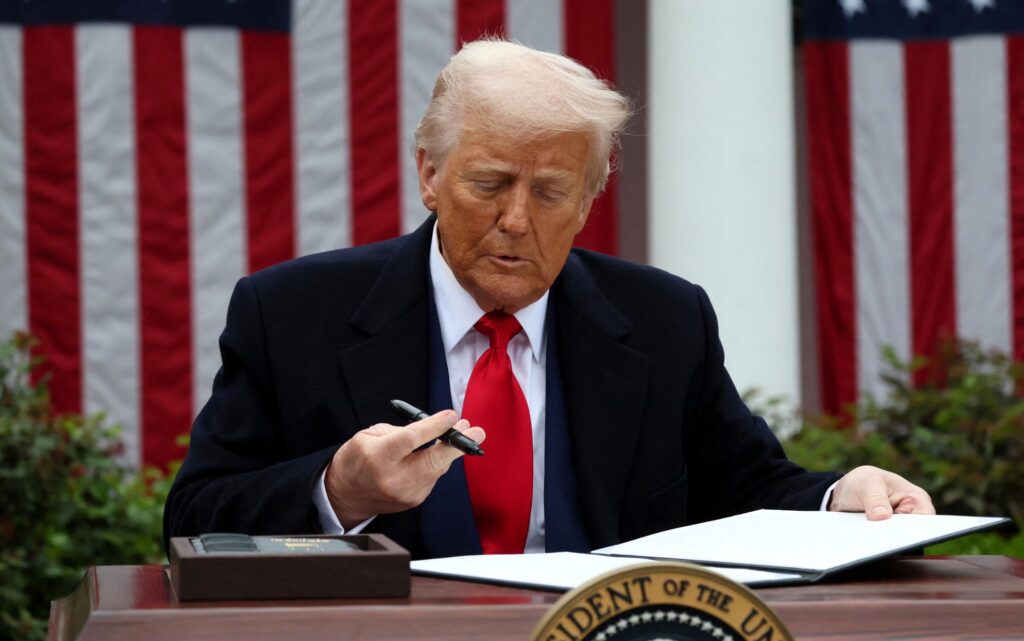
A new round of trade escalation between the United States and the world began, Wednesday, with additional tariffs on American imports officially taking effect, a move announced by US President Donald Trump last week.
China is the primary target of these measures, with tariffs on its imports rising to 104%, the highest rate among all the affected countries, as the new customs duties rates will be imposed on more than 60 trading partners.
The new tariffs affect more than 60 US trading partners, with rates ranging from 11% to 50%, with the exception of China, which has the highest tax rate.
The first tariffs, starting at 10% on a wide range of imports, took effect last Saturday, while the higher tariffs began at midnight on Wednesday.
The US administration relied on several factors to calculate these tariffs, including the trade deficit, domestic support, and exchange rate control policies.
European Union countries haven’t been spared the repercussions of US tariff policies, with new 20% tariffs imposed on imports from Germany and other European countries as part of Trump’s strategy to reduce the trade deficit and boost American industry.
The US move sparked widespread concern in global markets, with economic experts warning of the possibility of a full-scale trade war that could lead to a global economic crisis, with several countries announced their intention to take countermeasures, while confidence in the stability of financial markets declined.
Trump and his economic team attribute this move to what they see as “trade injustice” to the United States under World Trade Organization rules, which they consider biased against the American economy.
Criticism wasn’t limited to the affected countries, but also extended to the United States.
Businessman Elon Musk described Trump’s trade advisor, Peter Navarro, as an “idiot,” in a clear criticism of the White House’s aggressive economic policies.
In this context, a number of economists expressed surprise at the timing of the measures, especially since Trump inherited a US economy at the height of its power.
Despite mounting criticism, President Trump and his advisors maintain their position, arguing that the current trade system is unfair to the United States.
However, economists argue that the obsession with the trade deficit represents a superficial reading of broader concepts in the global economy, and they fear that these policies could lead to disastrous consequences, both domestically and globally.
Amid this escalation, global markets are awaiting the outcome of these measures, amid significant questions about their impact on the future of the international economy and the stability of the global trading system.