The Syrian President abolishes the position of Mufti of the Republic and enhances the powers of a jurisprudence council
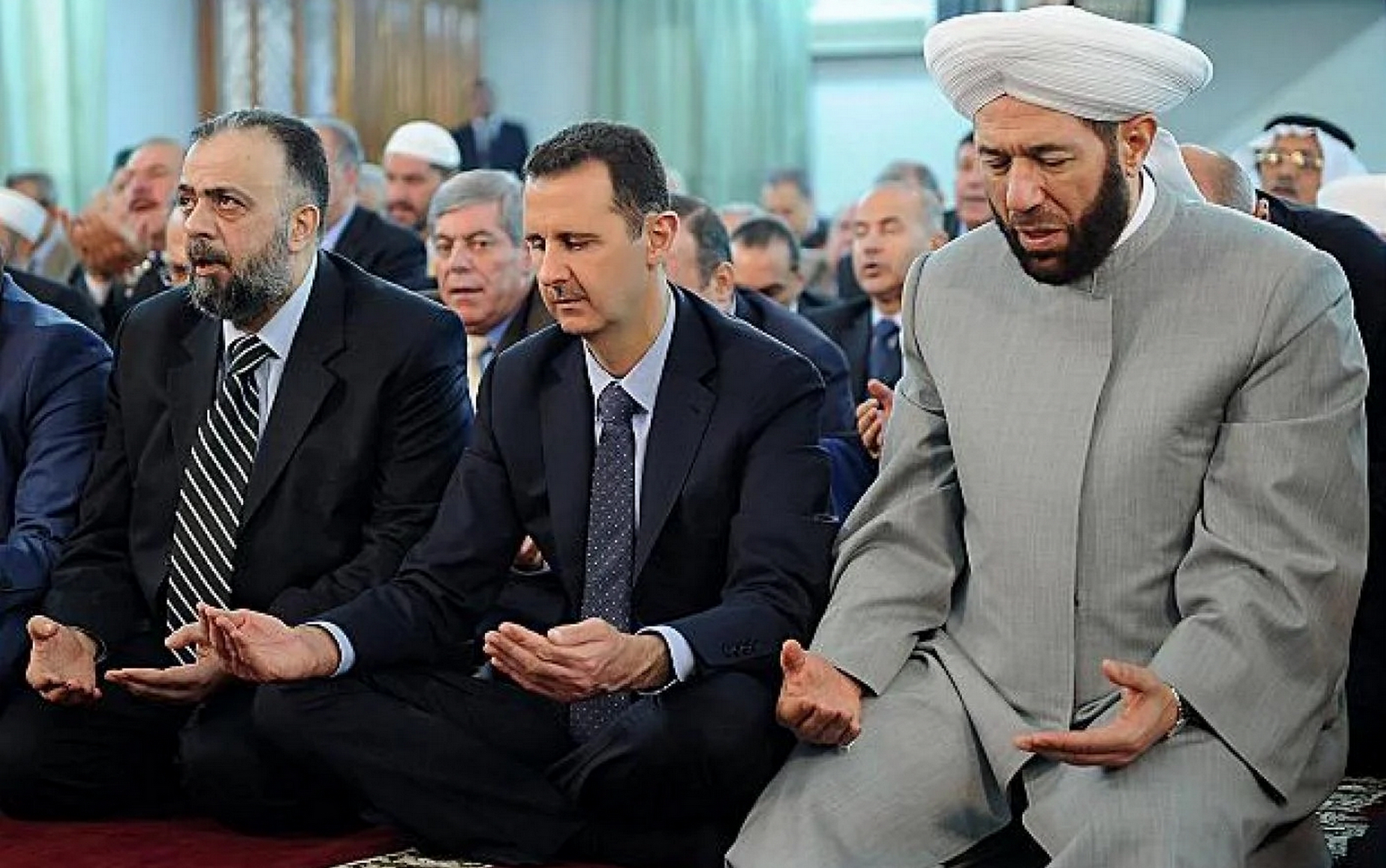
Syrian President Bashar al Assad abolished, by decree, the position of Mufti of the Republic, without clarification of the reasons for the decision and its background, at the same time reinforcing the powers of a jurisprudential council within the Ministry of Endowments.
Assad issued Legislative Decree No. 28, stipulating the abolition of Article No. 35 of the law regulating the work of the Ministry of Endowments, according to which the Grand Mufti of the Republic is named.
The new decree also strengthened the powers of the Jurisprudence Council in the Ministry of Endowments, which is headed by the minister and of which the mufti is a member.
The decree assigned the council the tasks that the Mufti was entrusted with, which is “setting the dates of the beginning and end of the lunar months, seeking and proving the new moons, and declaring the consequent jurisprudential rulings related to Islamic religious worship and rituals,” as well as “issuing fatwas… and setting the foundations, standards, and mechanisms necessary for their regulation and control”.
The reasons for canceling the position of Mufti of the Republic, which Ahmad Badr al Din Hassoun had held since 2004, and who is known for his positions in support of the Syrian president, were not clear.
This is not the first time that Assad has made an amendment to the organization of the work of Islamic endowments.
In 2018, he issued a law granting wide powers to the Minister of Endowments, and specifying the term of the Mufti of the Republic with three years, subject to extension, provided that he is named by decree based on the minister’s proposal.
While the former President of the Republic was the one who appointed the Mufti, without specifying the term of his term.
The law sparked controversy after its issuance, and some believed that by granting it wide powers to the Ministry of Endowments, it consecrated the authority of religious institutions, and some considered it to strengthen the authorities’ grip on the religious institution in Syria completely.
The decision to abolish the position of Mufti of the Republic came days after a harsh response issued by the Jurisprudence Scientific Council to Mufti Hassoun’s interpretation of one of the Qur’anic verses.
The Council considered the interpretation a “misrepresentation” and stressed “not to be drawn into strange personal interpretations”.
Some saw this as evidence of the strengthening of the authority and role of the Ministry of Endowments, which is the official government body that responsible for religious affairs in the country.